
Quick answer: Storm sewer lining — also called CIPP, or cured-in-place pipe — is a trenchless method for rehabilitating failing stormwater pipes without digging them up. A resin-saturated liner is installed inside the existing pipe and cured into a new, seamless, jointless pipe. For Louisiana, where a high water table and unstable soils make excavation slow, costly, and disruptive, CIPP is often the ideal fix: it restores structural integrity and stops groundwater infiltration from inside the pipe, with no major excavation and in a fraction of the time of open-cut replacement.
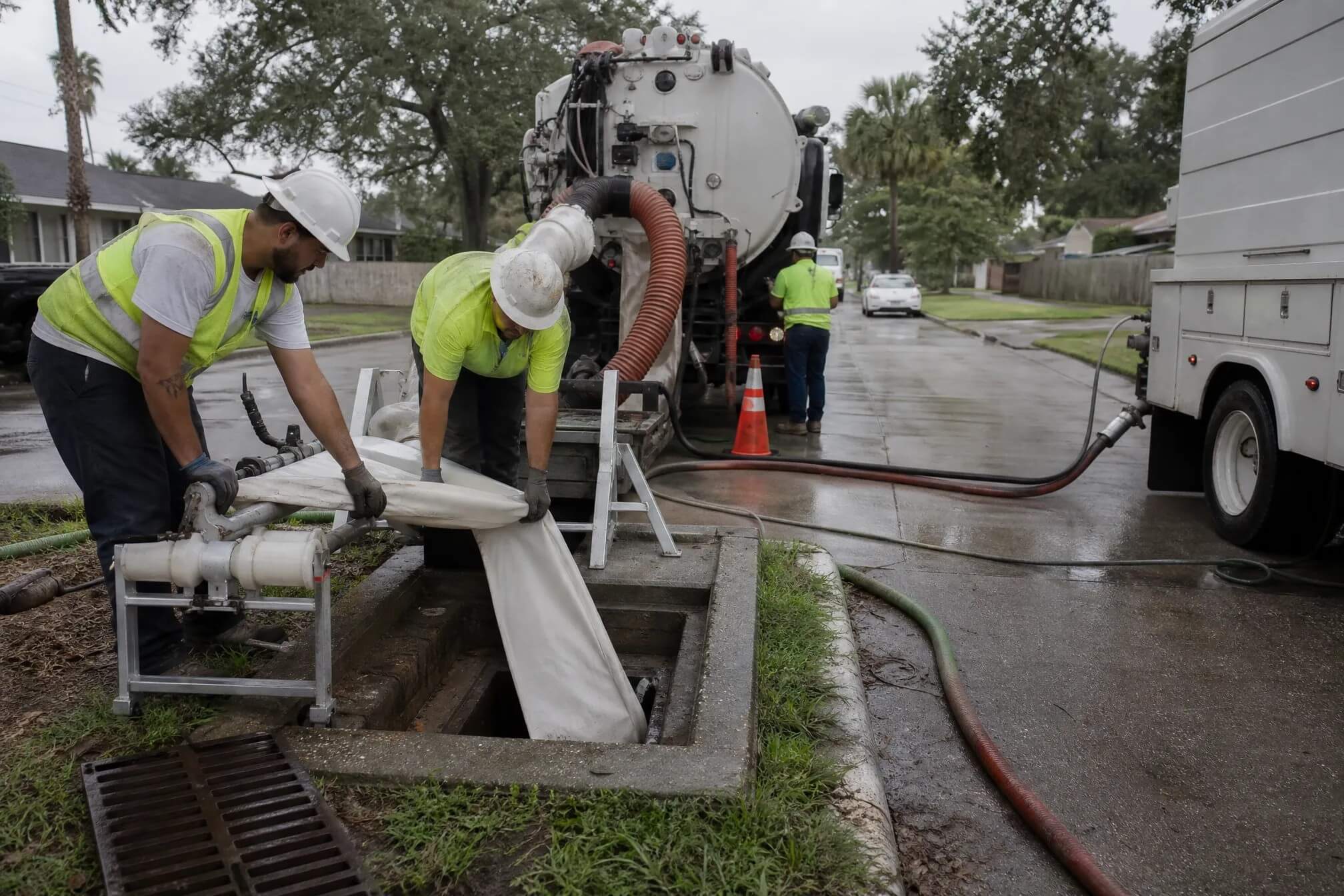
Across Louisiana, aging storm sewers are quietly failing — cracking, leaking, and letting in the groundwater and soil that lead to sinkholes and street flooding. The traditional fix, digging up and replacing the pipe, is especially brutal here, where a high water table turns every trench into a dewatering project. That’s why CIPP lining has become the go-to solution for rehabilitating storm sewers across the region.
This guide explains what storm sewer lining is, why Louisiana’s stormwater pipes fail in the first place, how the CIPP process works, why it’s so well suited to our soils and water table, how it compares to open-cut replacement on cost and disruption, and how to tell whether your storm sewer is a candidate. Whether you manage a municipal system, a commercial property, or an industrial site, the goal is the same: a structurally sound storm sewer without tearing up the surface above it.
Key Takeaways
- Storm sewer lining (CIPP) rehabilitates failing stormwater pipes from the inside — no excavation.
- It’s ideal for Louisiana’s high water table, where digging requires costly dewatering and shoring.
- A resin liner is cured into a new, jointless pipe that seals out infiltration and roots.
- A properly installed liner is engineered to last 50+ years.
- Total project cost often beats open-cut once restoration and dewatering are counted.
What Is Storm Sewer Lining (CIPP)?
Storm sewer lining is the application of cured-in-place pipe (CIPP) technology to stormwater pipes. Instead of excavating and replacing a failing pipe, a flexible liner saturated with resin is inserted into the existing pipe through an access point, inflated against the pipe walls, and cured into a hard, structural pipe-within-a-pipe. CIPP is one of the most widely used trenchless rehabilitation methods in the world, and it works on storm sewers just as well as it does on sanitary sewers.
The result is a new, seamless, jointless pipe formed inside the old one. It’s not a patch or a temporary coating — a cured liner is a standalone structural pipe that restores the line’s strength, smooths the interior to improve flow, and seals out the groundwater infiltration and root intrusion that caused the failure. For storm systems specifically, that infiltration control matters enormously, because a leaking storm sewer doesn’t just lose water — it draws in soil, undermines the surface above, and can trigger sinkholes.
It’s worth clearing up a common point of confusion: storm sewers and sanitary sewers are different systems. A sanitary sewer carries wastewater to treatment; a storm sewer carries rainwater runoff to drainage outfalls, canals, or pump stations. In a flood-prone, heavy-rainfall region like southern Louisiana, the storm system does enormous work, and when its pipes degrade, the consequences show up fast as ponding, washouts, and surface collapse. CIPP applies to both systems, but the stakes for keeping a storm sewer structurally sound and watertight are especially high here.
Why Louisiana’s Storm Sewers Are Failing
Storm sewers everywhere age, but Louisiana stacks the deck against them. Several local factors accelerate failure:
- High water table: groundwater sits close to the surface across much of southern Louisiana, putting constant pressure on pipes and infiltrating through any crack or joint.
- Soil subsidence: the region’s soft, settling soils shift and sink, pulling pipe joints apart and cracking rigid pipe over time.
- Aging infrastructure: much of the storm sewer network is decades old, built from materials that have corroded, cracked, or deteriorated.
- Heavy rainfall and flooding: intense storms and hurricane-driven surges repeatedly overload and stress the system.
- Root intrusion: roots find the cracks and joints in aging pipe, working in and blocking flow.
Left alone, a failing storm sewer gets worse fast. Infiltration washes soil into the pipe, voids form in the surrounding ground, and the surface above — a street, a parking lot, a yard — begins to sink or collapse. Rehabilitating the pipe before it reaches that point is far cheaper than dealing with a sinkhole and an emergency dig.
How CIPP Storm Sewer Lining Works
The process is methodical, and according to the trenchless-industry authority NASSCO, a properly installed CIPP liner becomes a structural pipe with a design life of 50 years or more. Here’s how a storm sewer lining project unfolds:
- Camera inspection: a CCTV sewer camera inspection maps the pipe, locates the damage, and confirms the line is a candidate for lining.
- Cleaning: hydro jetting clears debris, sediment, roots, and scale so the liner can bond to a clean pipe wall.
- Liner installation: a resin-saturated felt or fiberglass liner is inserted into the pipe through a manhole, catch basin, or access pit, then inflated against the walls.
- Curing: the liner is cured — using hot water, steam, or UV light — hardening it into a new, solid pipe inside the old one.
- Final inspection: a post-installation camera pass confirms the new liner is smooth, seamless, and sealed end to end.
From start to finish, a typical run can often be completed in a day or two, and the storm sewer is back in service quickly — a stark contrast to the weeks an open-cut replacement can take in saturated ground.
Why CIPP Is Ideal for Louisiana’s High Water Table
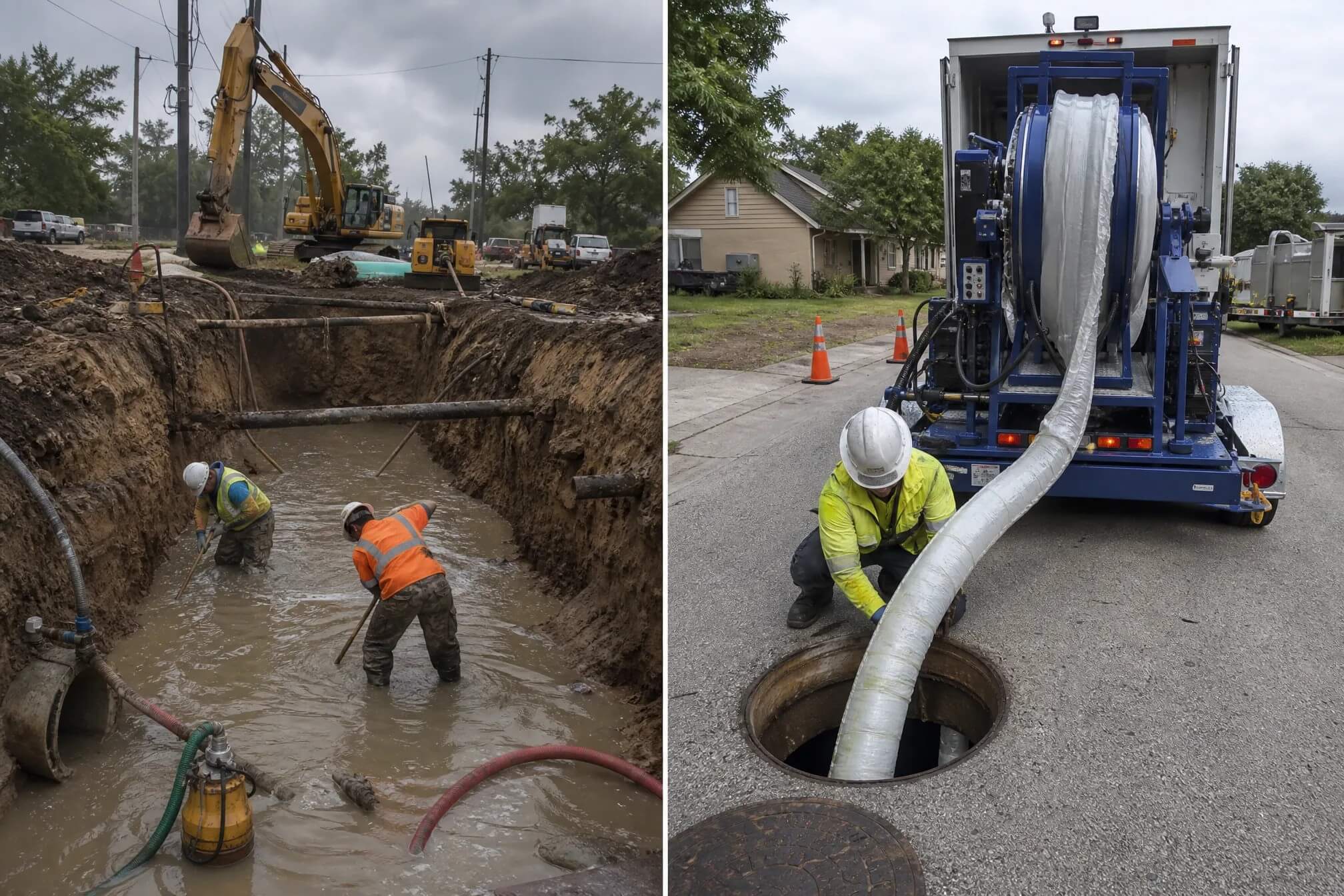
This is where storm sewer lining truly earns its place in Louisiana. When you open-cut a pipe in southern Louisiana’s soils, you’re almost always digging below or near the water table — which means the trench fills with water. Crews have to install well points and run pumps to dewater the excavation, shore the trench walls to keep them from collapsing in the soft soil, and manage all of it while traffic and the surface above wait. It’s slow, expensive, and risky. Trenchless pipe repair sidesteps nearly all of it.
Because CIPP works from inside the pipe through existing access points, there’s no long trench to dewater or shore, no street or parking lot to demolish and rebuild, and far less risk from unstable, saturated soil. The water table that makes excavation a nightmare barely affects a lining crew. That single advantage — avoiding the dig in ground that fights every dig — is why trenchless lining is so often the most practical option for rehabilitating Louisiana storm sewers.
Storm Sewer Lining vs. Open-Cut Replacement
For a Louisiana storm sewer, the contrast between lining and digging is dramatic. Here’s how they compare on the factors that matter to a property owner or public works manager:
| Factor | Open-Cut Replacement | CIPP Storm Sewer Lining |
|---|---|---|
| Excavation | Full trench along the pipe | None (works through access points) |
| High water table | Requires dewatering & shoring | Largely unaffected |
| Surface disruption | Streets, lots, landscaping torn up | Surface stays intact |
| Timeline | Days to weeks | Often 1–2 days per run |
| Restoration cost | High (repave, regrade, re-sod) | Minimal to none |
| Traffic / access impact | Significant closures | Limited |
| Service life | New pipe | 50+ year liner |
Open-cut replacement still has its place — a fully collapsed pipe or one that needs upsizing may require it. But for the cracked, leaking, root-infiltrated storm sewers that make up most failures, lining delivers the same structural result with a fraction of the disruption and, once you count restoration, often a lower total cost.
There’s a hidden risk to digging in Louisiana worth naming, too: every open trench in saturated, unstable soil is a chance for a cave-in, a hit utility line, or settlement around the excavation once it’s backfilled. Working inside the existing pipe removes those variables almost entirely. For a public works manager weighing liability and for a property owner weighing downtime, that lower-risk profile is part of the real value of lining — not just the dollars on the estimate.
Who Needs Storm Sewer Lining? Municipal, Commercial & Industrial
Storm sewer lining isn’t just a municipal tool — though municipalities rely on it heavily. It serves three broad groups across Louisiana:
- Municipalities and public works: cities and parishes use CIPP to rehabilitate aging public storm mains and culverts without closing streets. Municipal sewer line repair is a core trenchless application.
- Commercial properties: shopping centers, office parks, and HOAs line the storm drains and pipes under their parking lots without losing the lot to weeks of excavation.
- Industrial sites: plants and facilities rehabilitate stormwater systems that have to keep operating, with minimal interruption to the site.
In every case, the appeal is the same: keep the property functioning while the pipe underneath gets a new life. For any of these owners, lining fits into a broader storm water management strategy that protects the surface and the system at once.
Signs Your Storm Sewer Needs Lining
Storm sewers fail out of sight, but they leave clues above ground. Watch for:
- Ponding or standing water that drains slowly after rain.
- Sinkholes, soft spots, or depressions forming in streets, lots, or yards.
- Cracked or separated pipe and joints visible on a camera inspection.
- Sediment or soil collecting in the system, a sign of infiltration.
- Recurring backups or flooding that cleaning alone doesn’t solve.
The surest way to know is a camera inspection. If you’re seeing any of these signs, getting eyes inside the pipe tells you whether lining is the right fix and exactly where it’s needed — before a small failure becomes a sinkhole.
What Storm Sewer Lining Costs in Louisiana
Because storm sewers vary so widely — from small property drains to large municipal mains — storm sewer lining is quoted by the project rather than a flat fee. The main factors that drive cost are:
- Pipe diameter and length: larger and longer lines use more material and labor.
- Depth and access: how easy it is to reach the pipe through existing manholes or access points.
- Pipe condition: heavy cleaning or spot repairs before lining add to the scope.
- Bends and connections: complex runs with junctions take more work than a straight pipe.
Here’s the key point on cost: while the per-foot price of lining can be similar to excavation, the total project cost is frequently lower in Louisiana once you add in everything digging requires here — dewatering, shoring, traffic control, and rebuilding the surface afterward. Those open-cut extras are exactly what CIPP avoids. For a deeper look at numbers, see our guide to CIPP lining cost in Louisiana, and remember that a camera inspection is what turns these factors into an exact quote.
Where to Invest, and Where You Can Save
Storm sewer rehabilitation rewards spending in the right places and avoids false economy in the wrong ones.
Worth investing in
- A full camera inspection up front, so you line by priority and confirm the pipe is a candidate.
- Thorough cleaning before lining, so the new liner bonds correctly and lasts.
- A NASSCO-certified installer who documents the work for your records.
Where you can save
- Lining proactively, before infiltration causes a sinkhole and an emergency dig.
- Choosing trenchless to avoid the dewatering, shoring, and restoration costs of open-cut.
- Bundling nearby pipe runs into one mobilization rather than separate call-outs.
Storm Sewer Lining in Louisiana, at a Glance
- CIPP rehabilitates failing storm sewers from the inside — no excavation needed.
- It’s ideal for Louisiana’s high water table, avoiding dewatering and shoring.
- A cured liner is a new, jointless, 50+ year pipe that seals out infiltration and roots.
- Total cost often beats open-cut once restoration and dewatering are counted.
- Have a failing storm sewer? Call Pelican Underground at (504) 400-8817 or request a camera inspection.
Frequently Asked Questions
What is storm sewer lining?
It’s CIPP (cured-in-place pipe) applied to stormwater pipes — a trenchless method that installs a resin liner inside the failing pipe and cures it into a new, seamless, jointless pipe, restoring strength and sealing out infiltration with no major digging.
Why is CIPP a good fit for Louisiana storm sewers?
Our high water table and unstable soils make open-cut digging slow and costly, requiring dewatering and shoring. CIPP works from inside the pipe through access points, sidestepping most of that — so it’s often the most practical option in southern Louisiana.
How long does a storm sewer liner last?
A properly installed CIPP liner is engineered for 50 years or more. The new pipe is jointless and corrosion-resistant, and it seals out the roots and groundwater that caused the original pipe to fail.
Can it be done without digging up the street or parking lot?
In most cases, yes. CIPP is installed through existing manholes, catch basins, or access points, so streets, lots, and landscaping usually stay intact. At most, small access pits may be needed — far less than trenching the whole run.
How much does storm sewer lining cost in Louisiana?
It’s quoted per project based on diameter, length, depth, and access. While per-foot pricing can be similar to digging, total cost is often lower once dewatering, shoring, traffic control, and surface restoration are counted. A camera inspection produces an exact quote.
Related Guides
- Storm Water Management in Louisiana
- CIPP Lining Cost in Louisiana
- Pipe Lining in New Orleans, LA
- Microtunneling vs. Open-Cut Excavation in Louisiana’s High Water Table
- Trenchless Pipe Repair Services
The Bottom Line on Storm Sewer Lining in Louisiana
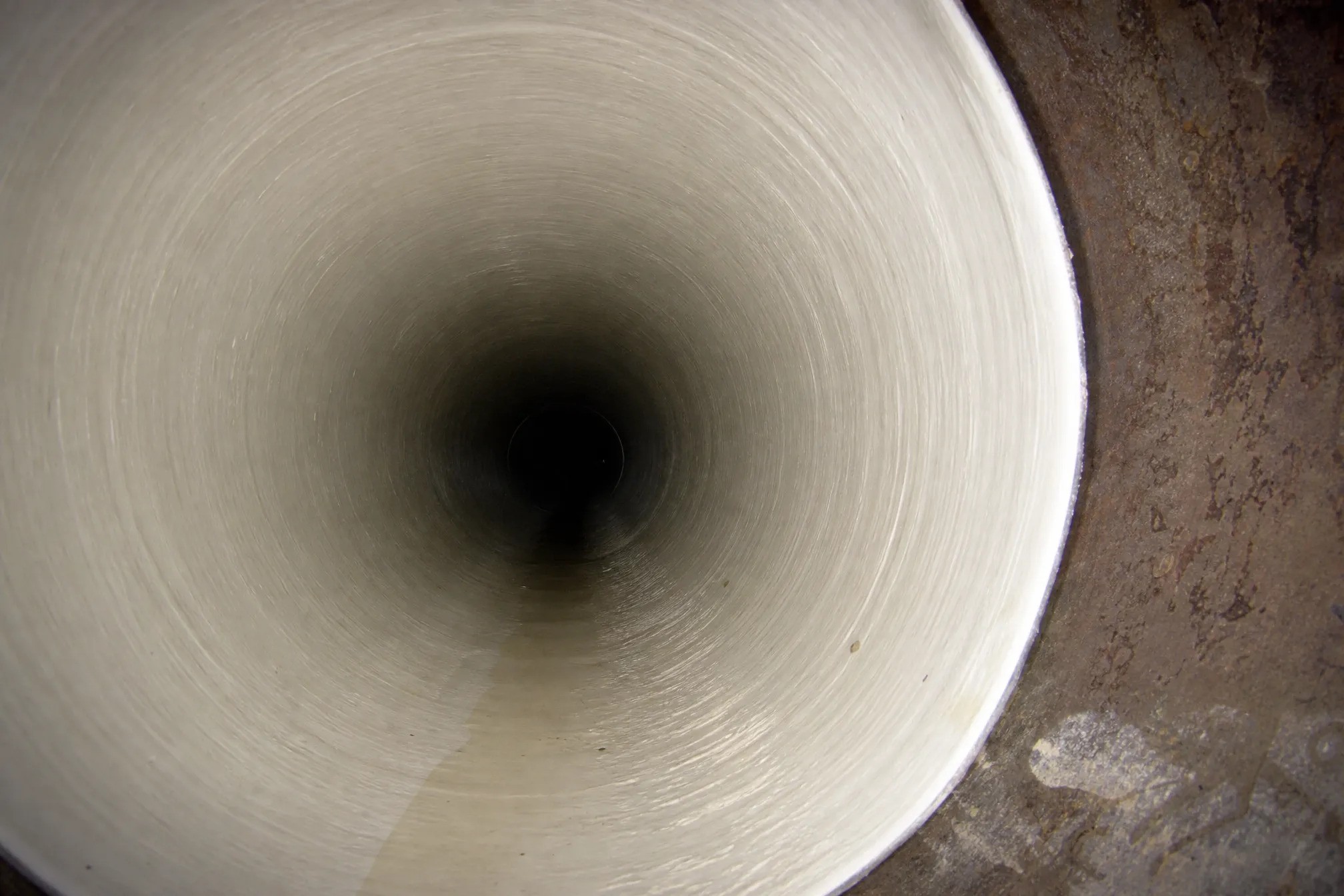
Louisiana’s storm sewers face a tough combination of age, soft soils, and a high water table — and the old way of fixing them, digging them up, fights every one of those conditions. Storm sewer lining with CIPP rehabilitates failing stormwater pipes from the inside, restoring a 50-year structural pipe while leaving the surface above intact. For most failing storm sewers in our region, it’s faster, less disruptive, and often lower in total cost than open-cut replacement.
If you manage a storm system that’s showing its age anywhere in New Orleans or across Louisiana, the best first step is a camera inspection. Contact Pelican Underground for a no-pressure assessment — we’ll show you what’s happening inside your pipe and tell you honestly whether lining is the right fix.
About Pelican Underground: Pelican Underground LLC is a family-owned trenchless sewer and stormwater specialist based in New Orleans, serving Louisiana, Mississippi, and Alabama for over 15 years. Fully licensed, insured, and bonded, with NASSCO-certified technicians, Pelican rehabilitates failing storm and sanitary pipes using CIPP lining, pipe bursting, and camera-guided trenchless methods built for the Gulf Coast’s high water table. Call (504) 400-8817 to schedule a camera inspection.