
Imagine tearing open walls from the basement to the roof just to replace one corroded drain pipe. That’s what fixing vertical plumbing stacks used to mean—weeks of demolition, displaced tenants, sky-high costs, and massive disruption. For multi-story buildings, condos, hospitals, and commercial properties across Louisiana, failing vertical drain stacks were nightmares waiting to happen.
Vertical stack lining changes everything. This advanced trenchless technology repairs deteriorating soil stack pipes, sewer risers, and waste stacks from the inside—no demolition required. At Pelican Underground, we specialize in this precise, proven method that saves Louisiana property owners time, money, and headaches. The Pelican Underground team features professionals certified by NASSCO in PACP, MACP, and LACP standards, delivering high-quality trenchless sewer repair services throughout Louisiana, Mississippi, and Alabama. Alexandria and Central Louisiana residents benefit from our professional vertical stack lining, CIPP services, and drain cleaning for multi-story buildings and residential properties.
We provide trenchless sewer repair services in Covington and the Northshore region, focusing on solutions for aging pipe systems in established neighborhoods. Houma and Terrebonne Parish receive expert trenchless services from our team, addressing unique coastal challenges with no-dig pipe repair solutions. Slidell‘s multi-family residential and commercial buildings rely on our dependable stack lining and pipe repair services.
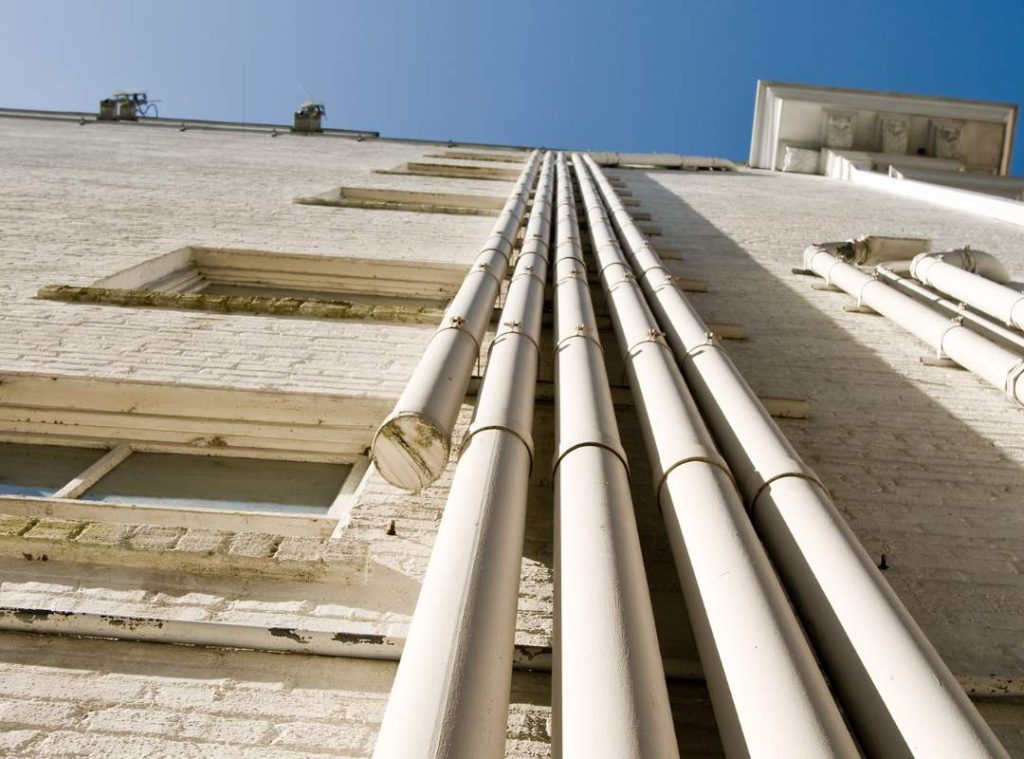
Vertical stack lining is a trenchless pipe rehabilitation method for multi-story building drain stacks — the vertical pipes running floor-to-floor that carry wastewater from upper levels to the main sewer connection. An epoxy-saturated felt liner is inserted into the damaged vertical stack and cured in place, creating a new seamless pipe without demolishing walls, ceilings, or floors. Vertical stack lining is the preferred rehabilitation method for hotels, apartment buildings, hospitals, and commercial high-rises.
Vertical Stack Lining is one of our specialized trenchless rehabilitation techniques for critical vertical assets like manholes and wet wells, forming part of Pelican Underground’s comprehensive suite of commercial underground infrastructure solutions for non-disruptive repair and asset longevity.
The process is remarkably straightforward, though it requires specialized equipment and expertise:
Step 1: Inspection and Preparation
We start with video camera inspection to assess your stack’s condition. Then we perform thorough cleaning. Precede vertical stack installation with industrial-grade drain cleaning to ensure optimal adhesion and performance of renewal liners in contaminated environments.
Step 2: Liner Installation
We insert a flexible liner saturated with epoxy resin into your vertical stack. The liner gets positioned precisely from top to bottom, ensuring complete coverage of all damaged sections.
Step 2: Liner Installation
We insert a flexible liner saturated with epoxy resin into your vertical stack. The liner gets positioned precisely from top to bottom, ensuring complete coverage of all damaged sections. access points. Most installations cure in 2-6 hours.
Step 3: Curing Process
Depending on your building’s needs, we use hot water curing, steam curing, or UV curing to harden the epoxy. The curing method depends on stack height, diameter, and access points. Most installations cure in 2-6 hours.
Step 4: Final Inspection
Once cured, we trim excess liner at connection points and perform final video inspection to verify a perfect installation. Your new pipe is ready for immediate use.
The entire process typically completes in 1-3 days, depending on the stack’s height and complexity. No walls torn open. No floors ripped up. No tenants displaced.
This versatile no-dig plumbing solution works across various property types:
Condominiums and Apartments
Repair waste stacks without disrupting residents
Hotels and Hospitality
Maintain operations while fixing plumbing infrastructure
Hospitals and Healthcare
Critical facilities can't shut down for repairs