
Across New Orleans, aging sewer lines create headaches for both homeowners and businesses. Traditional repairs usually mean big trenches, torn-up yards, and longer timelines — not ideal in a city full of historic homes and tight lots. Fortunately, no-dig sewer repair, especially pipe lining, offers a modern alternative that reduces disruption and often lowers total cost. Below, we explain how trenchless technology works, what cured‑in‑place pipe (CIPP) lining involves, the practical benefits for New Orleans properties, and how to pick the right contractor. You’ll get a clear view of the process, environmental and cost advantages, and the next steps to take.
What is no‑dig sewer repair, and how does trenchless technology work?
No‑dig sewer repair covers methods that fix or renew pipes without extensive digging. Trenchless technology uses specialized tools and techniques to repair or replace lines while keeping the surface largely intact — a major plus in dense, landscaped, or historic neighborhoods. One common approach is cured-in-place pipe (CIPP) lining, where a resin‑saturated liner is pulled into the existing pipe, expanded, and cured to form a new pipe inside the old one. The result is a stronger, longer-lasting pipe with far less mess than open excavation.
How does cured‑in‑place pipe lining restore sewer pipes?
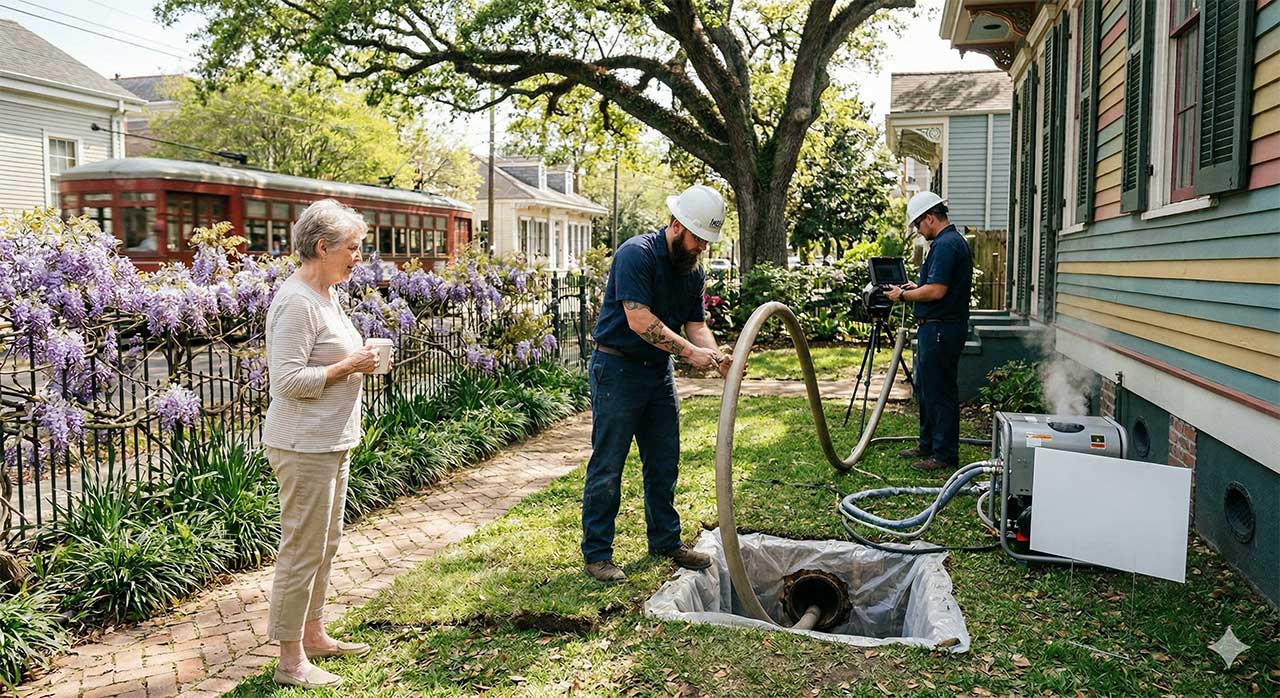
Cured‑in‑place pipe lining (CIPP) repairs damaged sewer lines from the inside. First, technicians inspect the line with a video camera for sewer camera inspection to map problems. Next, the pipe is cleaned to remove debris and buildup. A liner soaked in resin is then inserted and expanded so it presses against the pipe walls. Heat or steam cures the resin, hardening it into a new, seamless pipe. CIPP fixes leaks and cracks, improves flow, and reduces the chance of future blockages — all without digging a continuous trench.
What are the key steps in trenchless sewer rehabilitation?
Trenchless repairs follow a predictable sequence to ensure lasting results:
- Initial Inspection: Technicians run a camera through the line to pinpoint cracks, blockages, and root intrusions.
- Cleaning and Evaluation: High‑pressure water jets and other tools clear grease and debris so repairs can bond properly.
- CIPP Installation: The resin‑saturated liner is placed, expanded, and cured to form the new internal pipe.
- Final Inspection: A post‑installation camera check confirms the repair meets quality standards and restores flow.
These steps make trenchless technology efficient and effective, restoring pipes with minimal impact to the surface.
What are the benefits of trenchless pipe lining in New Orleans?
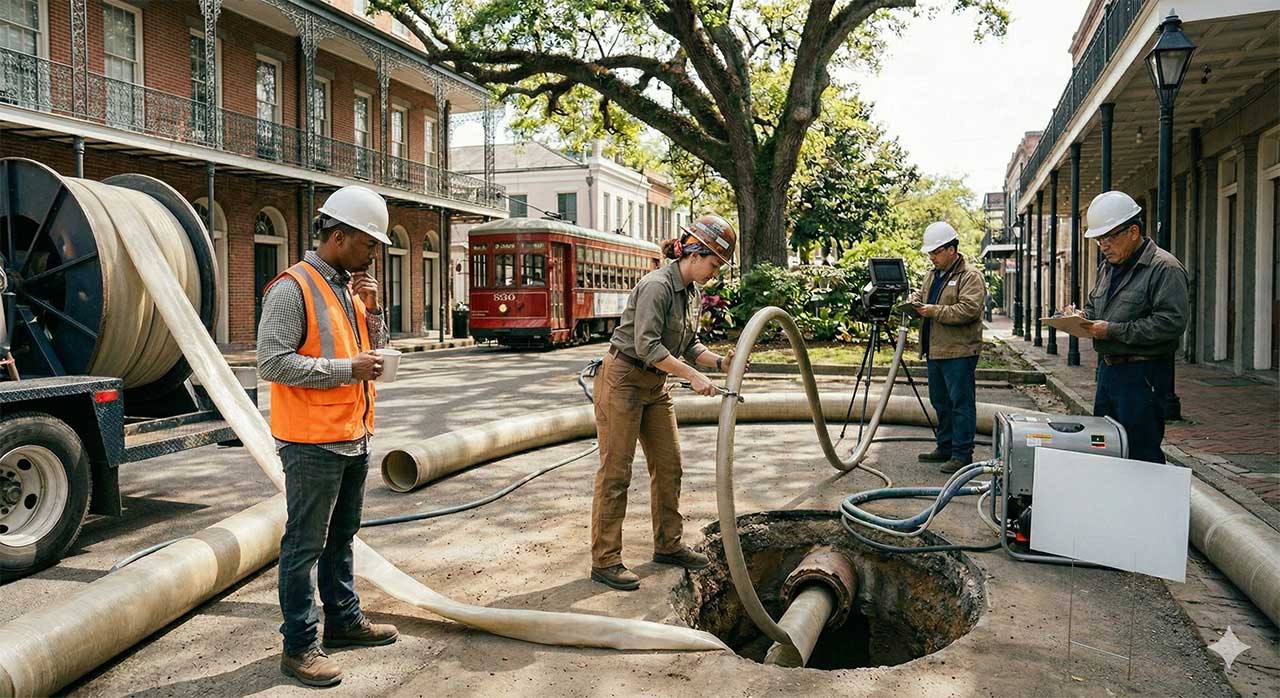
Trenchless pipe lining delivers a number of advantages that fit New Orleans’ needs:
- Minimal Disruption: With little or no trenching, you preserve landscaping, driveways, and historic features.
- Cost‑Effective: Lower labor and restoration costs often make trenchless options less expensive overall than full excavation.
- Faster Completion: CIPP projects are usually finished much quicker than traditional digs, so service is restored sooner.
For many New Orleans homeowners and businesses, those benefits make trenchless pipe lining a practical, sensible choice.
How does no‑dig repair reduce property disruption and save time?
No‑dig methods avoid long trenches, so yards, gardens, and paved areas stay intact. Traditional repairs can require days or weeks of work plus extensive restoration afterward; trenchless repairs often finish in hours or a few days. The smaller footprint and faster turnaround mean less inconvenience and lower restoration costs for property owners.
What environmental and cost savings does pipe lining offer?
Trenchless lining reduces the amount of soil moved and the need for heavy equipment, which lowers environmental disturbance. Materials used in CIPP can also offer durability that reduces the frequency of future repairs. Financially, homeowners benefit from lower labor, restoration, and indirect costs tied to property damage — making trenchless methods attractive from both ecological and budget perspectives.
A life cycle cost perspective of trenchless technologies helps quantify these long‑term financial and environmental trade‑offs.
Life Cycle Cost Analysis of Trenchless Technologies
This research highlights the value of using life cycle cost analysis (LCCA) to compare the economic and environmental trade‑offs between excavation and trenchless CIPP methods.
Evaluation of life cycle cost of excavation and trenchless cured-in-place pipeline technologies for sustainable wastewater applications, G Thakre, 2025
How does pipe lining address New Orleans’ unique sewer infrastructure challenges?
New Orleans’ combination of soft soils, shifting ground, mature trees, and historic structures creates specific challenges for sewer lines. Trenchless pipe lining provides a flexible, durable repair that reinforces existing pipes without heavy excavation. Because CIPP adapts to the current pipe conditions, it’s often the preferred solution in areas where digging could harm streetscapes or foundations.
The city has incorporated trenchless approaches into broader rehabilitation programs to protect historic areas while upgrading sewer performance.
New Orleans Trenchless Sewer Rehabilitation Program
A case study of the City of New Orleans’ sewer upgrades describes a program that emphasizes trenchless technology to limit impact in historic and critical areas, uses a public GIS for transparency, and applies decision‑support tools to speed design and rehabilitation. New Orleans Sewer System Evaluation and Rehabilitation Program Success Through Vision and Innovation, 2005
What common sewer problems in New Orleans does trenchless repair solve?
Trenchless methods are effective against several common issues found locally:
- Corroded Pipes : Older pipes can corrode, causing leaks and reduced capacity.
- Root Intrusion : Tree roots can penetrate lines, creating blockages and structural damage.
- Soil Shifting : Movement in the ground can cause pipes to settle, crack, or misalign.
Trenchless repairs can address these problems quickly and with far less surface disturbance than open‑cut methods.
How do local regulations influence sewer rehabilitation choices?
City codes and environmental rules affect which repair methods are allowed or encouraged. Because trenchless technology minimizes surface and environmental impact, it often aligns well with local requirements — especially in areas the city wants to protect. Homeowners and contractors should confirm permit needs and compliance before starting work.
What are the costs and pricing options for pipe lining in New Orleans?
Prices vary with pipe length, condition, and job complexity. Homeowners can generally expect trenchless repairs to cost between $80 and $250 per linear foot, depending on the scope. Smaller spot repairs will be less, while longer or more complicated runs can increase the price. Always request a detailed estimate so you understand what’s included.
Additional cost studies offer deeper analysis of trenchless rehabilitation expenses.
Trenchless CIPP & SAPL Rehabilitation Cost Analysis
This paper analyzes construction cost data for trenchless CIPP and spray‑applied pipe lining (SAPL) renewal methods in larger conduits to inform budgeting and method selection.
Construction cost analysis of trenchless cured-in-place pipe and spray-applied pipe linings rehabilitation methods in gravity conveyance conduits, R Serajiantehrani, 2021
| Service Type | Price Range | Description |
|---|---|---|
| CIPP Lining | $80 - $250 per linear foot | Restores existing pipes from the inside with minimal surface disruption. |
| Pipe Bursting | $100 - $300 per linear foot | Replaces old pipe by fracturing it while pulling in a new pipe. |
| Spot Repairs | $500 - $1,500 | Localized fixes that target problem areas without full replacement. |
This table summarizes common pricing scenarios to help homeowners compare options and plan budgets.
How does pipe lining cost compare to traditional sewer repair methods?
Trenchless options are often more economical than full excavation once you factor in labor, restoration, and downtime. Traditional digs can add significant costs for removing and replacing landscaping, driveways, and pavements. CIPP and other no‑dig solutions typically reduce those additional expenses and lower total project cost over time.
What pricing differences exist between residential and commercial sewer repairs?
Commercial jobs tend to involve larger diameter pipes and more complex systems, which raises costs. Residential trenchless repairs commonly fall in the $80 to $250 per linear foot range, while commercial projects often start around $100 per linear foot and increase with scale and complexity. Scope, accessibility, and regulatory requirements all influence final pricing.
How long does pipe lining last and what maintenance is required?
Properly installed CIPP linings can last for decades — many manufacturers and installers cite service lives of 50 years or more. Longevity depends on material quality and installation conditions. Lined pipes resist corrosion and roots, so maintenance needs are low; routine inspections are recommended to verify ongoing integrity.
How can you choose the right pipe lining service provider in New Orleans?
Picking a reliable contractor makes a big difference in outcome. Look for these qualifications:
- Experience and Expertise : Choose firms with a proven track record in trenchless installations and local projects.
- Customer Reviews : Read testimonials and online reviews to learn about past clients’ experiences.
- Certifications : Verify licenses, insurance, and industry certifications that show professionalism and safety.
Considering those factors will help you find a provider who delivers quality, transparent results.
What questions should you ask about trenchless sewer repair services?
Asking the right questions protects your investment. Start with these:
- What methods do you use for sewer repair? : Make sure the techniques match the problem and the site conditions.
- Can you provide references or case studies? : Examples of past projects show the contractor’s experience and outcomes.
- What warranties do you offer on your work? : Clear warranty terms give you confidence in the repair’s longevity.
These inquiries will help you compare bids and choose a contractor you trust.
Frequently Asked Questions
What types of materials are used in cured-in-place pipe (CIPP) lining?
Cured-in-place pipe (CIPP) lining typically utilizes a resin-saturated felt or fiberglass liner. The resin is often a thermosetting polymer, which hardens when cured, creating a strong, durable inner pipe. Common materials include epoxy, polyester, and vinyl ester resins, each chosen for their specific properties such as resistance to corrosion and flexibility. The choice of material can affect the longevity and performance of the lining, making it essential to select a reputable contractor who uses high-quality materials for optimal results.
How does trenchless technology impact local wildlife and ecosystems?
Trenchless technology, including pipe lining, significantly minimizes environmental disruption compared to traditional excavation methods. By reducing the amount of soil moved and limiting surface disturbance, it helps protect local wildlife habitats and ecosystems. The reduced need for heavy machinery also lowers emissions and noise pollution, making it a more eco-friendly option. Additionally, the materials used in CIPP are designed to be durable and resistant to environmental factors, further contributing to the sustainability of sewer infrastructure in sensitive areas.
What are the signs that a sewer line may need trenchless repair?
Homeowners should be vigilant for several signs indicating that a sewer line may require trenchless repair. Common indicators include frequent backups, slow drains, unusual odors, and wet spots in the yard. Additionally, if you notice cracks in your foundation or walls, it may suggest underlying sewer issues. Regular inspections using video technology can help identify problems early, allowing for timely trenchless repairs before they escalate into more significant, costly issues.
Can trenchless pipe lining be used for all types of sewer pipes?
While trenchless pipe lining is highly versatile, it may not be suitable for all types of sewer pipes. CIPP is most effective for pipes that are structurally sound but have minor damage, such as cracks or leaks. However, severely damaged or collapsed pipes may require alternative methods, such as pipe bursting. It’s essential to have a professional inspection to determine the best approach based on the specific condition and material of the existing sewer lines.
What is the typical lifespan of a trenchless pipe lining repair?
Trenchless pipe lining repairs, particularly those using CIPP, can last for decades, with many manufacturers claiming service lives of 50 years or more. The longevity of the lining depends on factors such as the quality of materials used, the installation process, and the environmental conditions surrounding the pipes. Regular inspections and maintenance can help ensure the lining remains effective, allowing homeowners to enjoy long-term peace of mind with minimal upkeep.
Are there any warranties available for trenchless sewer repair services?
Many reputable trenchless sewer repair contractors offer warranties on their work, which can vary in length and coverage. Warranties typically cover defects in materials and workmanship, providing homeowners with assurance regarding the durability of the repair. It’s crucial to discuss warranty options with your contractor before starting the project, ensuring you understand the terms and conditions. A solid warranty can be a significant factor in choosing a reliable service provider.
How can homeowners prepare for a trenchless sewer repair project?
Homeowners can take several steps to prepare for a trenchless sewer repair project. First, clear the area around the access points to ensure technicians have unobstructed access. It’s also helpful to inform neighbors about the upcoming work, especially if it may cause temporary disruptions. Additionally, homeowners should gather any relevant documentation, such as previous plumbing reports or permits, and discuss any specific concerns with the contractor to ensure a smooth and efficient repair process.
Conclusion
Trenchless pipe lining offers New Orleans homeowners a lower‑impact, cost‑effective alternative to traditional sewer repair. By reducing excavation, speeding up completion, and addressing issues like corrosion and root intrusion, CIPP helps protect both properties and neighborhood character. If you’re facing sewer problems, contact a local trenchless specialist to get an inspection and a clear estimate — it’s the first step toward a smarter repair.

Owner of Pelican Underground LLC and NASSCO-certified trenchless sewer specialist with expertise in CIPP lining, pipe bursting, and sewer rehabilitation across Louisiana, Mississippi, and Alabama. Licensed contractor by the Louisiana State Licensing Board for Contractors.