
Choosing Top Pipe Lining Contractors
Picking the right pipe lining contractor in New Orleans protects your plumbing and extends its life. With many choices, homeowners and businesses can feel unsure. This guide explains the key factors—qualifications, technology, costs, and local rules—so you can choose a contractor that fits your needs and budget. We cover certifications, how technology affects quality, typical costs, and the New Orleans regulations contractors must follow.
What Qualifications and Certifications Should a Pipe Lining Contractor Have in New Orleans?
Check a contractor’s licenses and certifications. These credentials show expertise in pipe rehabilitation, familiarity with current techniques and materials, and a commitment to industry standards.
Additionally, contractors should have experience in trenchless technology, which reduces property disruption and delivers lasting results. Homeowners should verify training and certifications from recognized industry bodies, since these qualifications influence service quality.
Following established design and installation standards is essential for effective trenchless pipe rehabilitation.
Trenchless Pipe Rehabilitation: Design & Installation Standards
The standards covering pipe rehabilitation—from semi-structural to fully structural methods, including spray-on lining—are detailed in “Current water main rehabilitation practice using trenchless technology,” C Kang, 2021.
Which licenses and insurance are required for New Orleans pipe lining contractors?
In New Orleans, contractors need specific licenses and insurance to operate legally. Key licenses include a general contractor’s license and a plumbing contractor’s license, which qualify them to perform plumbing work. You can verify a contractor’s standing through the Louisiana State Licensing Board for Contractors.
Contractors should also carry liability insurance to cover accidents or damage during the project. This protects your investment and shows the contractor is financially responsible. Always ask for proof of licenses and insurance before hiring to confirm local compliance.
How do contractor warranties and credentials impact service quality?
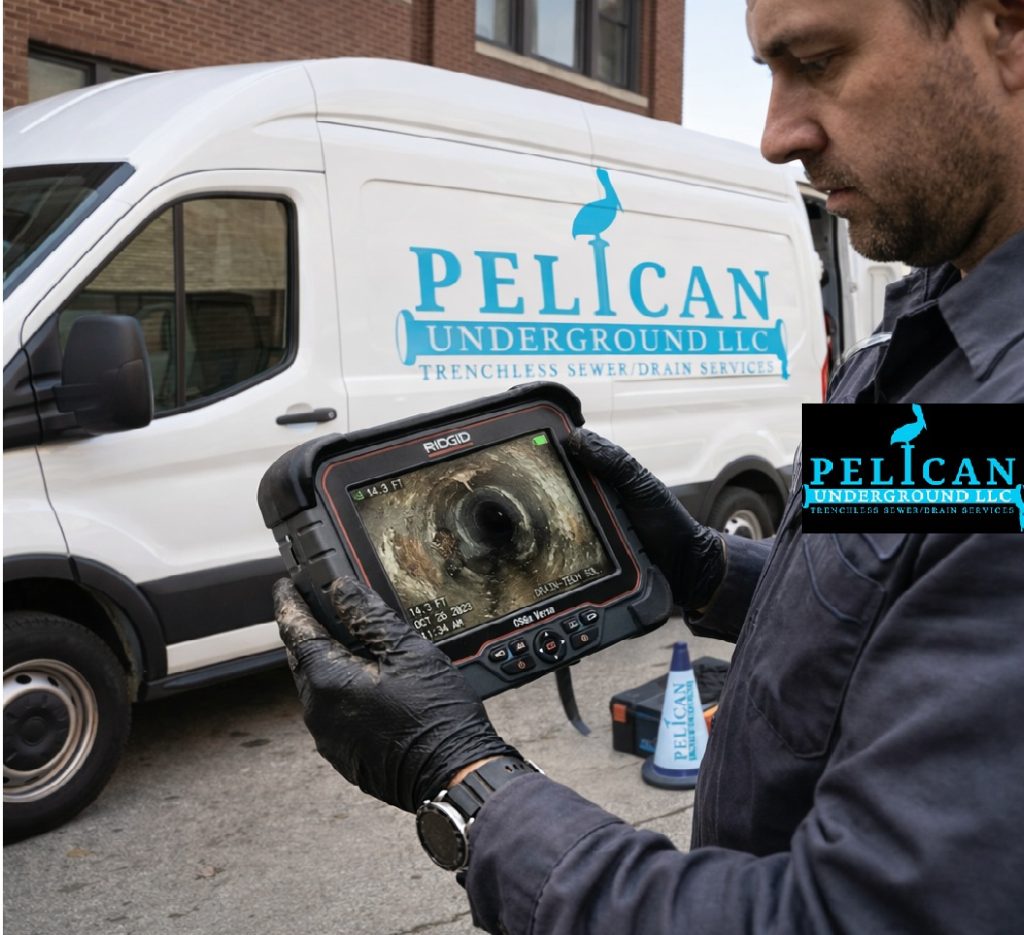
Warranties and credentials influence the service quality you can expect. Reputable contractors provide warranties on materials and workmanship, which back their work and give homeowners peace of mind.
Certifications from industry organisations—such as those offered by the National Association of Sewer Service Companies (NASSCO)—demonstrate formal training and adherence to best practices. Experienced, credentialed contractors are likelier to choose the right materials and techniques. Use warranties and credentials when judging reliability and quality.
How Does Pipe Lining Technology Work and What Are the Available Methods?
Pipe lining rehabilitates existing pipes without major excavation—useful in urban areas like New Orleans where digging is disruptive and costly. Common methods include cured-in-place pipe (CIPP) lining and trenchless pipe repair.
CIPP inserts a resin-saturated liner into the damaged pipe, then cures it to form a new, durable pipe inside the old one. It is efficient and minimizes disruption. Trenchless repair uses advanced techniques to fix pipes without digging. Knowing these methods helps homeowners pick the right solution.
What is cured-in-place pipe lining and why is it preferred?
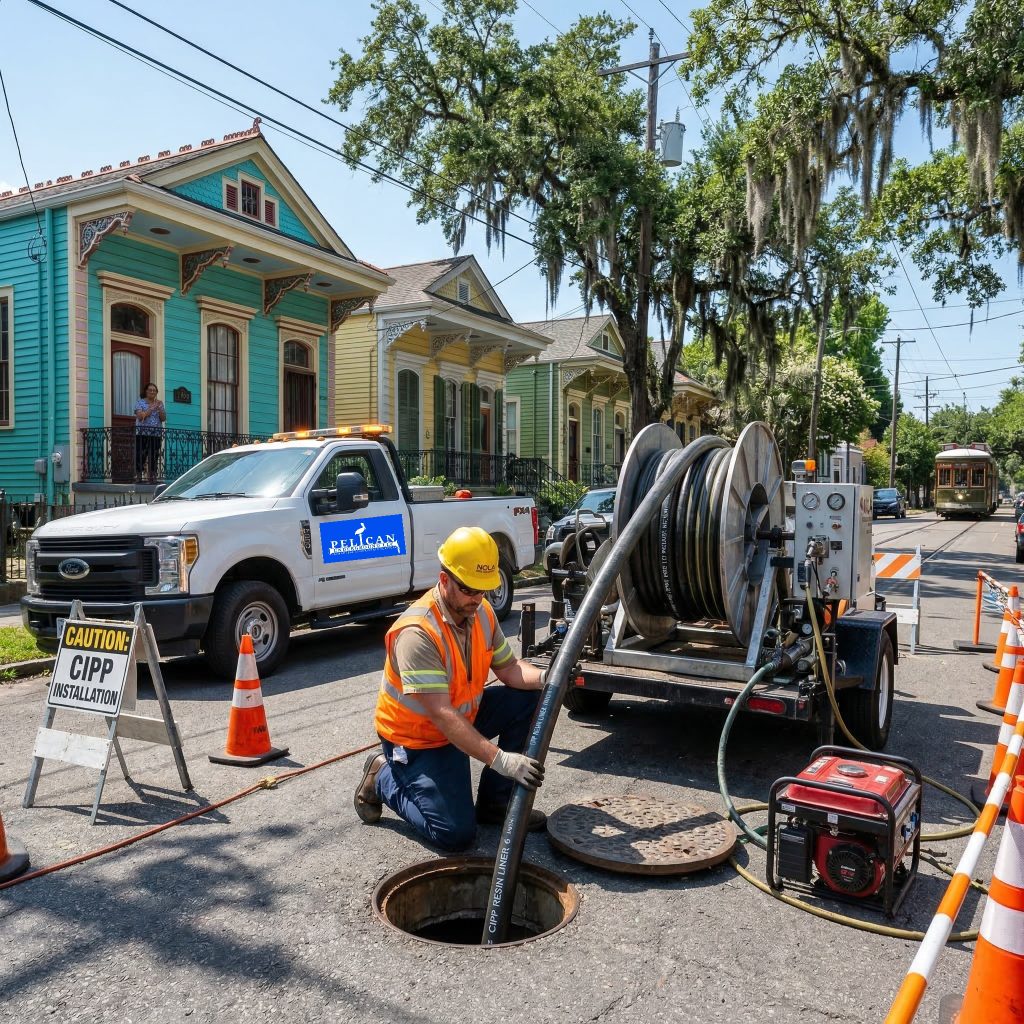
Cured-in-place pipe lining (CIPP) uses a flexible, resin-coated liner inserted into the existing pipe. Once inflated and cured, it becomes a new pipe inside the old one. Homeowners prefer CIPP for several reasons:
- Minimal Disruption : CIPP lining requires little to no excavation, reducing the impact on landscaping and existing structures.
- Cost-Effectiveness : By avoiding extensive digging, CIPP can save homeowners money on labor and restoration costs. Learn more about pipe lining project pricing and key cost factors.
- Durability : The cured liner is resistant to corrosion and can extend the life of the existing pipe by several decades.
These benefits make CIPP a common choice for homeowners seeking efficient, reliable pipe rehabilitation.
Research supports CIPP’s efficacy and benefits as a modern pipe rehabilitation method.
CIPP: Safe, Cost-Effective Pipe Rehabilitation
Among trenchless rehabilitation techniques, CIPP is viewed as a safe, cost-effective, and efficient alternative. See “Evaluation of cured-in-place pipe lining installations,” 2016.
How do trenchless pipe repair methods compare to traditional pipe replacement?
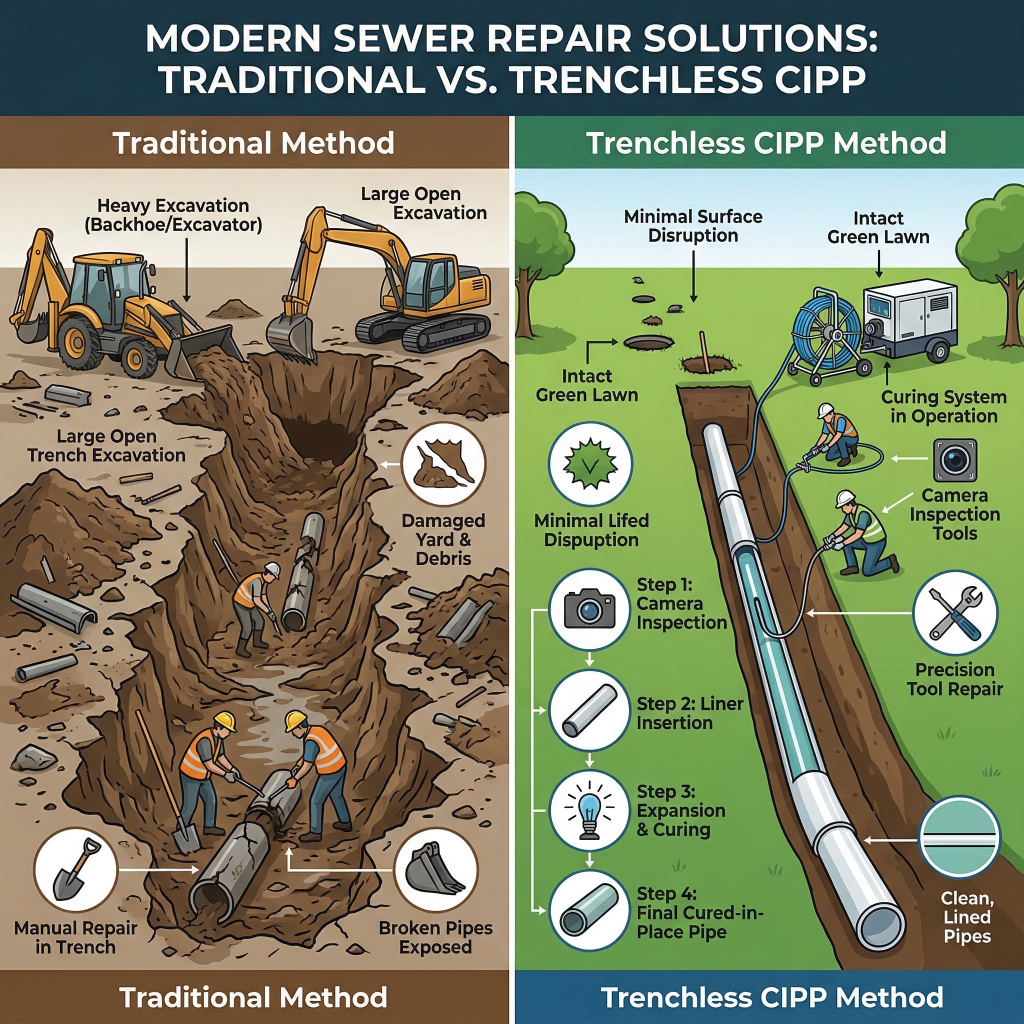
Trenchless methods offer key advantages over traditional replacement. Traditional work often requires extensive excavation, causing disruption and higher costs. Trenchless options like CIPP reduce digging, making the process faster and less invasive.
Some key comparisons include:
- Cost : Trenchless methods are generally more cost-effective due to reduced labor and restoration expenses.
- Time : Trenchless repairs can often be completed in a fraction of the time required for traditional replacements.
- Environmental Impact : By minimizing excavation, trenchless methods reduce the environmental footprint of plumbing repairs.
Overall, trenchless repairs address many drawbacks of traditional replacement and offer a modern alternative.
What Are the Typical Costs and Pricing Models for Pipe Lining Services in New Orleans?
Know the costs before you start. Prices vary with pipe size, extent of damage, and chosen method. On average, expect $80 to $250 per linear foot for pipe lining services. For a detailed breakdown, see our guide on pipe lining costs in New Orleans.
Consider the financial implications and long-term value of CIPP when deciding.
CIPP Trenchless Pipe Rehabilitation: Cost-Benefit Analysis
The benefits and prices of trenchless methods—especially CIPP—are important for cost–benefit and life-cycle assessments. See “Evaluation of life cycle cost of excavation and trenchless cured-in-place pipeline technologies for sustainable wastewater applications,” G Thakre, 2025.
Which factors influence pipe lining cost estimates in New Orleans?
Several factors affect pipe lining cost estimates in New Orleans:
- Pipe Size : Larger pipes require more materials and labor, increasing overall costs.
- Extent of Damage : More extensive damage may necessitate additional repairs or preparation work, impacting the final price. A sewer camera inspection can help determine the full scope of damage before work begins.
- Access and Location : Difficult-to-access areas may require specialized equipment or additional labor, raising costs.
Knowing these factors helps homeowners budget for a pipe lining project.
How to evaluate pricing transparency and value among contractors?
Assess pricing transparency and overall value. Look for detailed estimates that break down materials, labor, and fees so there are no hidden costs.
Also weigh value over price. A low quote can mean less experience or lower-quality materials. Balance cost with proven quality when choosing a contractor.
What Local Regulations and Environmental Factors Affect Pipe Lining in New Orleans?
Local rules and environmental factors affect pipe lining in New Orleans. Contractors must follow city codes to ensure repairs meet safety and quality standards. The city’s aging infrastructure makes this especially critical—our New Orleans sewer infrastructure crisis study provides important context.
Which New Orleans compliance standards must contractors meet?
Contractors in New Orleans must adhere to specific compliance standards, including:
- Building Codes : Compliance with local building codes ensures that all plumbing work is safe and up to standard.
- Environmental Regulations : Contractors must follow regulations that protect the environment, particularly when working in sensitive areas.
- Permitting Requirements : Obtaining the necessary permits is essential for legal compliance and to avoid fines.
Verify your contractor knows these regulations to keep the project smooth and compliant.
How do local environmental conditions impact pipe lining choices?
Local environmental conditions—soil type, moisture, and climate—can affect which pipe lining methods suit your site. High moisture may require corrosion-resistant materials, and tree roots can dictate methods that handle intrusion.
Understanding site conditions helps contractors and homeowners choose the most effective solution.
What Questions Should Homeowners and Businesses Ask When Choosing a Pipe Lining Contractor?
Homeowners and businesses should ask key questions to judge a contractor’s qualifications, experience, and approach.
- What qualifications and certifications do you hold?
- Can you provide references or testimonials from previous clients?
- What warranties do you offer on your work?
- How do you handle unexpected issues during the project?
These questions reveal a contractor’s reliability and likely service quality. You can also check reviews and testimonials to compare contractors.
How to assess contractor experience and technology used?
Ask about years of experience and familiarity with current pipe lining technologies.
Ask which methods and materials they will use—contractors who track industry advances usually deliver longer-lasting results. For example, ask whether they offer CIPP lining, pipe bursting, or other pipe lining options suited to your situation.
What customer testimonials and case studies reveal about contractor reliability?
Testimonials and case studies show a contractor’s reliability and project quality. Positive reviews suggest good results and communication.
Look for testimonials that mention timeliness, professionalism, and final product quality. Detailed case studies give clearer evidence of past outcomes.
Frequently Asked Questions
What are the signs that I need pipe lining services?
Homeowners should look for several signs indicating the need for pipe lining services. Common indicators include frequent clogs, slow drainage, unusual odors, or visible leaks. Additionally, if you notice a sudden increase in your water bill, it may suggest hidden leaks in your plumbing system. If your pipes are older or made from materials prone to corrosion, such as cast iron or clay, it’s wise to consider pipe lining as a preventive measure to avoid more extensive damage from deteriorating pipes and costly repairs in the future.
How long does the pipe lining process typically take?
The duration of the pipe lining process can vary based on several factors, including the size of the pipes, the extent of damage, and the specific method used. Generally, trenchless pipe lining methods like CIPP can be completed within a day or two for most residential projects. However, larger or more complex jobs may take longer. Homeowners should consult with their chosen contractor for a more accurate timeline based on their specific situation and project requirements.
Are there any maintenance requirements after pipe lining?
After pipe lining, maintenance is minimal but essential for ensuring the longevity of the new lining. Homeowners should schedule regular sewer camera inspections to monitor the condition of the pipes and address any potential issues early. Additionally, it’s advisable to avoid flushing non-biodegradable items or harsh chemicals down the drains, as these can damage the lining. Following the contractor’s recommendations for care and maintenance will help maximize the lifespan of the newly lined pipes.
Can I perform any plumbing work myself after pipe lining?
While minor plumbing tasks may be manageable for homeowners, it’s crucial to avoid any significant work that could compromise the integrity of the newly lined pipes. DIY repairs or modifications can inadvertently damage the lining or lead to leaks. It’s best to consult with your pipe lining contractor before undertaking any plumbing projects to ensure that you do not void warranties or cause further issues. Professional assistance is recommended for any plumbing work following pipe lining.
What should I do if I experience issues after pipe lining?
If you encounter problems after pipe lining, such as leaks or drainage issues, it’s important to contact your contractor immediately. Most reputable contractors offer warranties on their work, which should cover any defects or issues arising from the installation. Document any problems and communicate clearly with your contractor about your concerns. They can assess the situation and determine the best course of action to resolve any issues effectively.
How can I find reputable pipe lining contractors in New Orleans?
To find reputable pipe lining contractors in New Orleans, start by seeking recommendations from friends, family, or local plumbing supply stores. Online reviews and ratings on platforms like Google or Yelp can also provide insights into contractors’ reputations. Ensure that any contractor you consider has the necessary licenses, insurance, and certifications. Additionally, ask for references and review their past work to gauge their experience and reliability before making a decision.
Conclusion
Choosing the right pipe lining contractor in New Orleans preserves your plumbing, saves time, and can reduce long-term costs. By checking qualifications, technology, and local rules, you can make a confident choice that fits your needs. Contact experienced contractors for tailored solutions and compare options to secure a reliable pipe rehabilitation outcome.