
Quick answer: Regular CCTV stormwater pipe inspection saves Louisiana municipalities money by catching small defects — cracks, joint separation, root intrusion, sediment buildup — while they’re still cheap to fix, long before they become emergency failures, sinkholes, or flooding that cost many times more. A camera survey gives public works teams a documented, foot-by-foot picture of the network, so they can prioritize repairs, extend the life of existing pipes, and build capital budgets from data instead of reacting to crises. In a flood-prone, high-rainfall state, proactive inspection isn’t an expense — it’s one of the highest-return investments a stormwater program can make.
For the public works directors and engineers who manage Louisiana’s stormwater systems, the hardest problems are the ones you can’t see. Stormwater pipes and culverts are buried, out of sight, and easy to ignore — right up until a line fails, a road collapses, or a neighborhood floods. By then, the cheap fix is long gone and you’re managing an expensive emergency. Regular CCTV inspection is how municipalities get ahead of that curve.
This guide explains what stormwater CCTV surveys are, what they detect, and — most importantly — why a routine inspection program is one of the smartest financial decisions a Louisiana municipality can make for its storm water management infrastructure.
Key Takeaways
- CCTV surveys reveal the hidden condition of buried stormwater pipes — without excavation.
- Catching defects early costs a fraction of repairing emergency failures and flooding.
- Surveys let municipalities prioritize spending on the pipes that actually need it.
- Standardized condition coding supports defensible, data-driven asset management.
- Trenchless CIPP repair fixes damaged pipes found in a survey with minimal disruption.
What Is a Stormwater CCTV Survey?
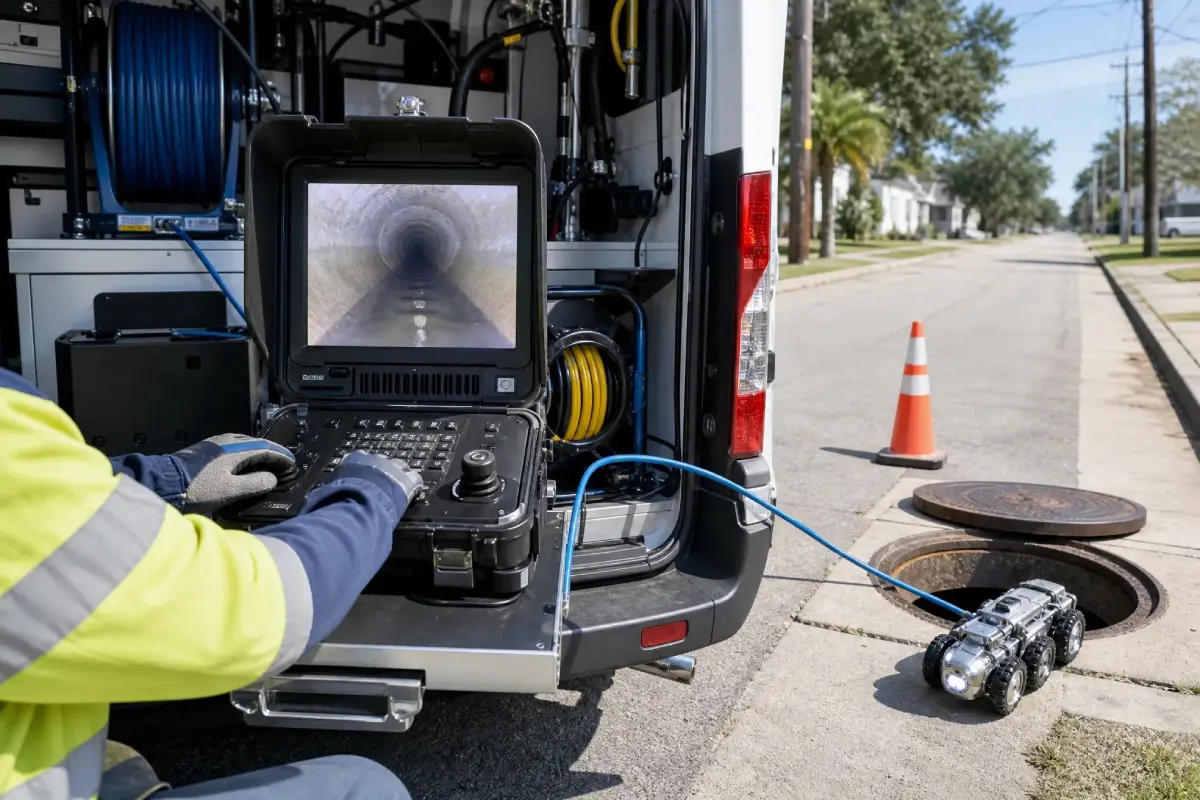
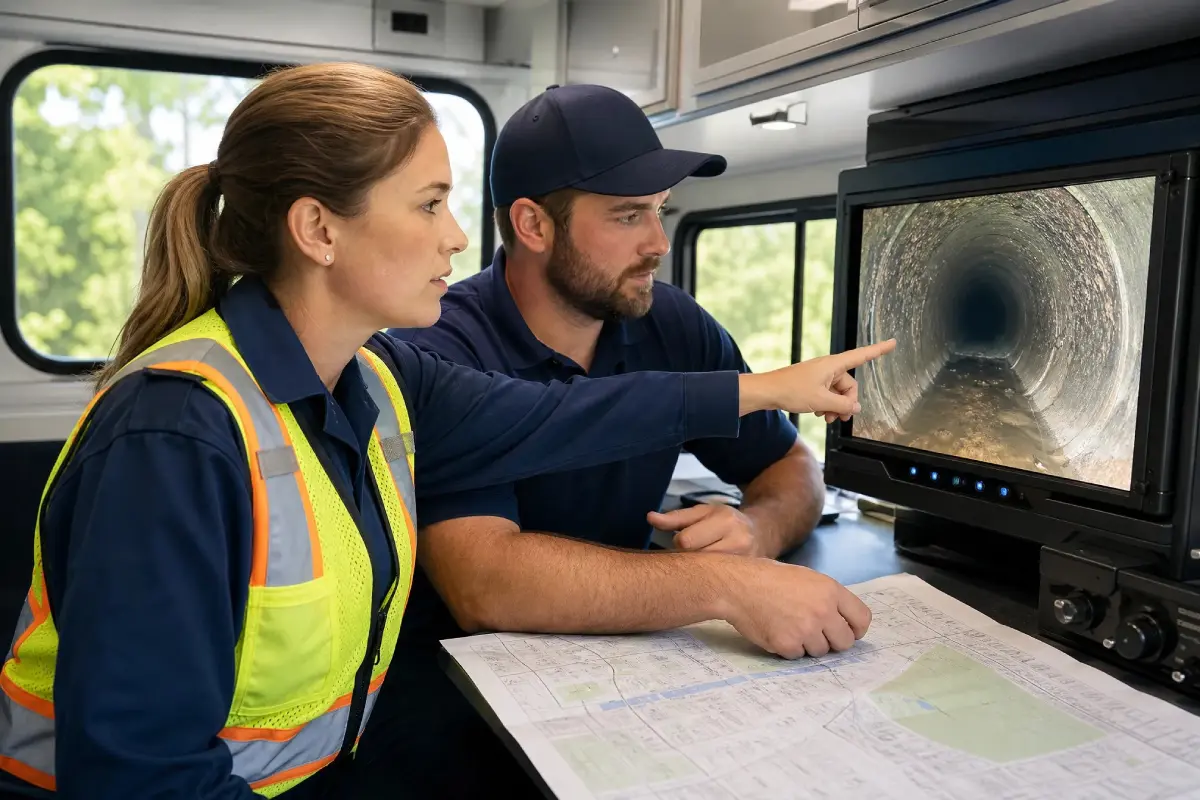
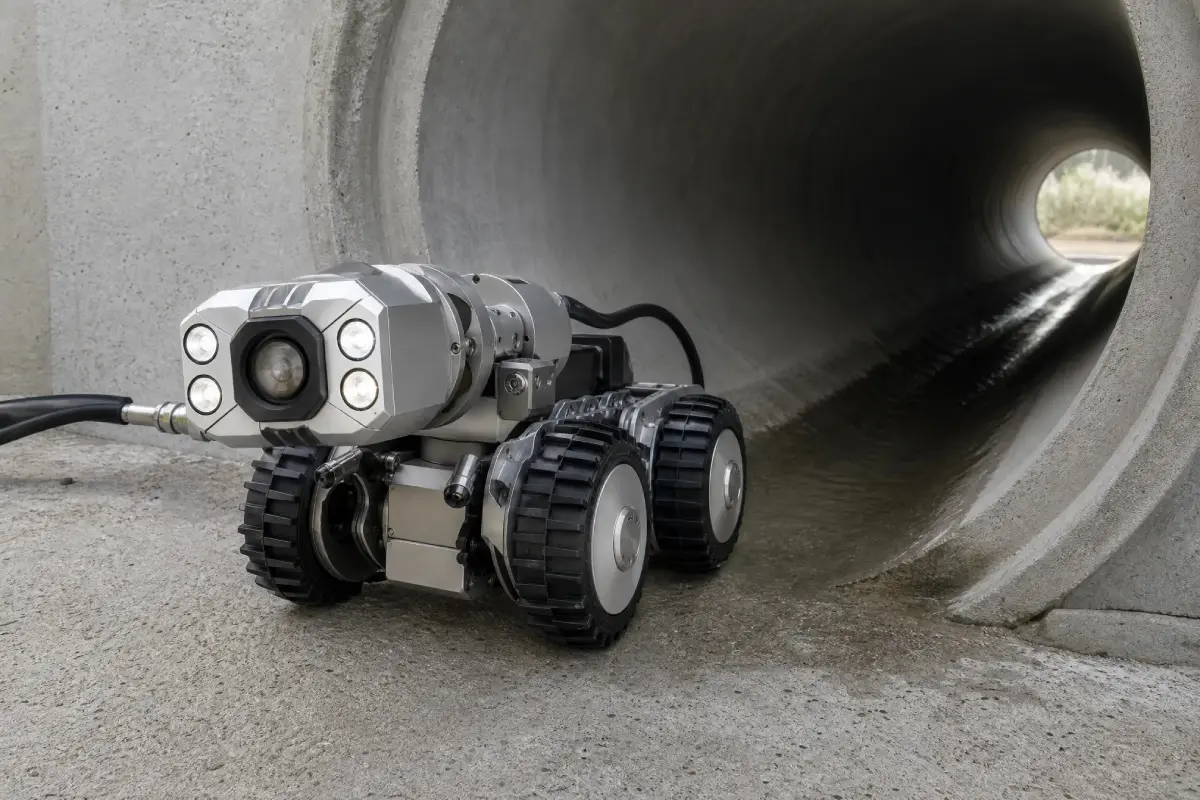
A CCTV (closed-circuit television) stormwater survey sends a high-resolution camera — often a self-propelled crawler for larger lines — through stormwater pipes and culverts to record their interior condition. A trained operator reviews the footage in real time and documents every defect, location, and measurement. The result is a complete, foot-by-foot record of the line’s condition, captured without digging a single trench. It’s the same proven sewer and drain camera technology applied at the scale of municipal stormwater infrastructure.
Crucially, professional surveys code defects to a recognized condition-assessment standard. As the trenchless industry authority NASSCO emphasizes, a documented, standardized condition assessment is the foundation for choosing the right rehabilitation method and managing a pipe network over time — turning raw footage into ranked, trackable, decision-ready data.
What a CCTV Survey Detects
A stormwater survey surfaces the full range of problems that quietly degrade a pipe network — every one of them impossible to assess from the surface:
| Defect found | Why it matters to a municipality |
| Cracks & fractures | Early structural failure; worsen rapidly under load and flow |
| Joint separation & offsets | Let in soil and groundwater; a leading cause of sinkholes |
| Root intrusion | Blocks flow and pries joints apart over time |
| Sediment & debris buildup | Reduces capacity and raises flood risk in storms |
| Corrosion & deterioration | Signals aging pipe nearing end of service life |
| Infiltration / exfiltration | Wastes capacity and undermines surrounding soil |
| Partial collapse | Imminent failure risk requiring priority action |
Each defect is logged with its location and severity, so a survey doesn’t just say “there’s a problem” — it says exactly where, how bad, and how urgent, across the entire surveyed length.
Why Regular Surveys Save Municipalities Money
The financial case for regular inspection comes down to a simple principle every public works budget lives by: it is far cheaper to fix a small problem than a failed one. CCTV surveys deliver that savings in several concrete ways:
- Catch defects while they’re cheap: a hairline crack or minor root intrusion caught early is a routine repair. Left undiscovered, the same defect can grow into a collapse, sinkhole, or washout costing many times more.
- Prevent emergency failures: emergency repairs mean premium costs, road closures, traffic detours, and public-safety risk. Planned repairs scheduled from survey data avoid all of it.
- Prioritize spending where it counts: surveys reveal which pipes are sound and which are failing, so limited budgets go to the assets that actually need attention instead of guesswork or blanket replacement.
- Extend asset life: timely, targeted maintenance keeps existing pipes in service longer, deferring the enormous capital cost of full replacement.
- Support data-driven budgeting: a documented condition inventory lets municipalities forecast capital needs years out and justify funding requests with hard evidence.
The US EPA makes the same point about stormwater systems broadly: proper operation and maintenance protects public safety, meets legal standards, and protects a community’s financial investment. A CCTV program is how that maintenance gets aimed where it will do the most good.
Proactive Inspection vs. Reactive Repair
The contrast between a planned inspection program and a wait-for-failure approach is stark across every metric a municipality tracks:
| Factor | Reactive (wait for failure) | Proactive (regular CCTV) |
|---|---|---|
| Repair cost | Highest — emergency premium | Lowest — planned, routine |
| Public disruption | Road closures, flooding | Scheduled, minimal |
| Budgeting | Unpredictable crises | Forecastable, data-driven |
| Asset life | Shortened by neglect | Extended by maintenance |
| Safety & liability | Higher risk | Managed and documented |
Reactive repair feels cheaper because it defers spending — but it simply trades a small known cost today for a large unknown one later, usually at the worst possible time. Proactive inspection converts that gamble into a managed, predictable program.
Why This Matters Especially in Louisiana
Few states put more stress on stormwater infrastructure than Louisiana. Heavy rainfall, hurricane season, a high water table, and low-lying terrain mean our stormwater systems work harder and fail more consequentially than in drier, higher-elevation regions. A blocked or collapsed stormwater line here doesn’t just inconvenience — it floods.
The high water table also makes joint separation and infiltration more damaging: groundwater enters failing joints, washes away supporting soil, and creates voids that lead to road collapses and sinkholes. Catching those defects early with a camera, before the soil migration starts, is dramatically cheaper than repairing the cave-in later. For Louisiana municipalities, regular stormwater inspection is less a best practice than a necessity.
Building a Stormwater Inspection Program
An effective municipal inspection program doesn’t try to survey everything at once. The practical approach is a rotating, risk-based cycle:
- Inventory and prioritize: identify the network’s assets and rank them by age, material, and consequence of failure.
- Survey on a rotating cycle: inspect a portion of the system each year so the whole network is assessed on a regular schedule, with high-risk lines inspected more often.
- Code and track findings: log defects to a standard condition scale so they can be ranked and trended over time.
- Act on the data: schedule cleaning, repair, or rehabilitation based on severity — and re-inspect after major storms.
Done consistently, this turns a reactive, complaint-driven operation into a planned asset-management program — the same shift that’s saved utilities and municipalities across the country real money.
From Inspection to Repair: The Trenchless Advantage
When a survey identifies a damaged line, the repair doesn’t have to mean tearing up a road. Trenchless CIPP pipe lining rehabilitates a stormwater pipe from the inside, and trenchless pipe repair restores the line with minimal surface disruption — a major advantage for municipalities weighing the cost of traffic control, road restoration, and public inconvenience that come with open excavation.
That inspect-then-rehabilitate workflow is exactly the kind of work Pelican Underground performs for municipalities and public agencies across Louisiana — from the survey that finds the problem to the trenchless repair that solves it, all with minimal disruption to the community.
Stormwater Pipe Inspection in Louisiana, at a Glance
- CCTV surveys reveal hidden pipe condition without excavation, coded to a standard scale.
- Catching defects early costs a fraction of emergency failures, sinkholes, and flooding.
- Surveys let municipalities prioritize budgets and extend the life of existing assets.
- Louisiana’s rainfall, hurricanes, and high water table make proactive inspection essential.
- Managing stormwater infrastructure in Louisiana? Call Pelican Underground at (504) 400-8817 to set up a CCTV inspection program.
Frequently Asked Questions
What is a CCTV stormwater pipe inspection?
It sends a high-resolution camera through stormwater pipes and culverts to record their interior condition — identifying cracks, joint separation, roots, sediment, and structural defects without excavation. The result is a documented, foot-by-foot picture of the network to guide maintenance and budgeting.
Why do regular CCTV surveys save municipalities money?
They catch small defects while they’re still cheap to fix, before they become emergency failures, sinkholes, or flooding that cost far more. They also let teams prioritize spending on the pipes that need it, extend asset life, and plan capital budgets with data instead of reacting to crises.
How often should municipalities inspect stormwater pipes?
Many systems use a rotating program that surveys part of the network each year so the whole system is assessed on a cycle. High-priority, older, and flood-prone lines are inspected more often, and targeted inspections follow major storms.
What does a CCTV survey detect in stormwater pipes?
Cracks and fractures, joint separation, root intrusion, sediment buildup, corrosion, infiltration, and partial collapses. Findings are coded to a recognized condition standard so defects can be ranked by severity and tracked over time for consistent asset-management decisions.
Is trenchless repair available after an inspection finds damage?
Yes. CIPP lining can rehabilitate a damaged stormwater pipe from the inside without excavation — restoring it with minimal disruption to roads and traffic, at a lower total cost than dig-and-replace.
Related Guides
- Storm Water Management in Louisiana
- Storm Sewer Lining in Louisiana
- Stormwater Drain Repair in New Orleans
- Sewer Line Repair for Municipalities
- Sewer Camera Inspection Services
The Bottom Line for Louisiana Municipalities
Stormwater pipes don’t announce their problems — they hide them until the moment of failure, when the cost is highest and the options are worst. Regular CCTV inspection flips that dynamic: it makes the invisible visible, turns guesswork into data, and lets a municipality spend its stormwater budget on prevention instead of crisis. In a state as flood-exposed as Louisiana, that’s not just good engineering — it’s responsible stewardship of public money.
Pelican Underground provides CCTV stormwater inspection, condition assessment, and trenchless rehabilitation for municipalities across Louisiana. Contact us to discuss a routine inspection program built around your system — and start spending ahead of failures instead of chasing them.
About Pelican Underground: Pelican Underground is a family-owned, licensed, insured, and bonded trenchless sewer, drain, and stormwater specialist serving municipalities, businesses, and homeowners across Louisiana, Mississippi, and Alabama. With 15+ years of experience and NASSCO-certified technicians, Pelican provides CCTV inspection, condition assessment, hydro jetting, and trenchless CIPP rehabilitation — helping Louisiana communities manage and protect their stormwater infrastructure. Call (504) 400-8817 to discuss an inspection program.