
Quick Answer: Louisiana’s stormwater infrastructure — much of it installed 40 to 70 years ago in corrugated metal and reinforced concrete — is deteriorating faster than parishes and municipalities can fund open-cut replacement. Trenchless rehabilitation methods, including CIPP lining, sliplining, and spray-applied structural coatings, repair aging culverts and drainage pipes from the inside without road closure or excavation, at 30 to 50% less cost than full replacement. Pelican Underground performs CIPP lining and trenchless stormwater rehabilitation for Louisiana parishes, municipalities, and public works agencies throughout the Gulf Coast.
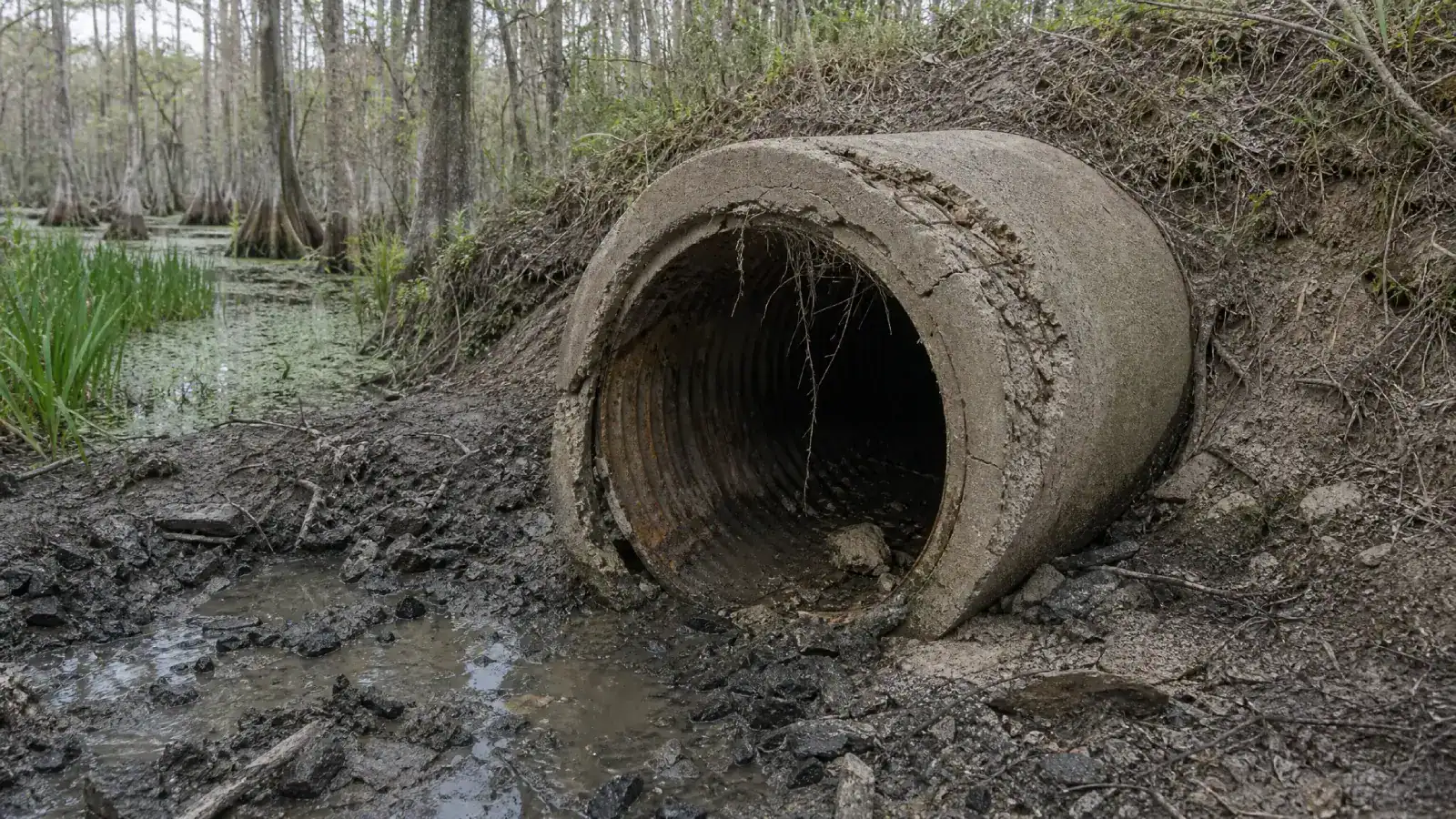
Louisiana’s stormwater drainage systems carry an outsized burden. The state averages some of the highest annual rainfall totals in the contiguous United States, its low-lying topography and expansive clay soils create extreme conditions for buried infrastructure, and the Gulf Coast’s pattern of major storm events regularly sends volumes of water through drainage systems that were designed for smaller peak flows than what the region now regularly experiences.
The American Society of Civil Engineers gave stormwater infrastructure a “D” grade in its 2025 Infrastructure Report Card — the lowest rating of any evaluated sector. The EPA’s 2024 wastewater infrastructure needs assessment estimated $630 billion in required national investment over 20 years, a 45% increase from the prior estimate. Louisiana’s parishes and municipalities sit within that national picture, with the added pressure of a climate that accelerates the deterioration that deferred maintenance allows to progress.
Open-cut replacement is the traditional answer to failing stormwater infrastructure. It is also expensive, disruptive, and in many Louisiana parish road contexts — where drainage culverts run under active state routes, parish roads, and wetland crossings — logistically difficult. Trenchless rehabilitation has become the preferred approach for most Louisiana stormwater repair projects where the host pipe retains sufficient structural integrity to serve as a form for the rehabilitation liner or coating.
This guide covers how trenchless stormwater infrastructure repair works in Louisiana, which methods are appropriate for different failure modes, what the repair process looks like, and how to compare trenchless rehabilitation against open-cut replacement for parish and municipal projects.
Why Is Louisiana’s Stormwater Infrastructure Failing?
Three conditions drive stormwater infrastructure failure in Louisiana more aggressively than in most other states:
Aging corrugated metal pipe at or past design life
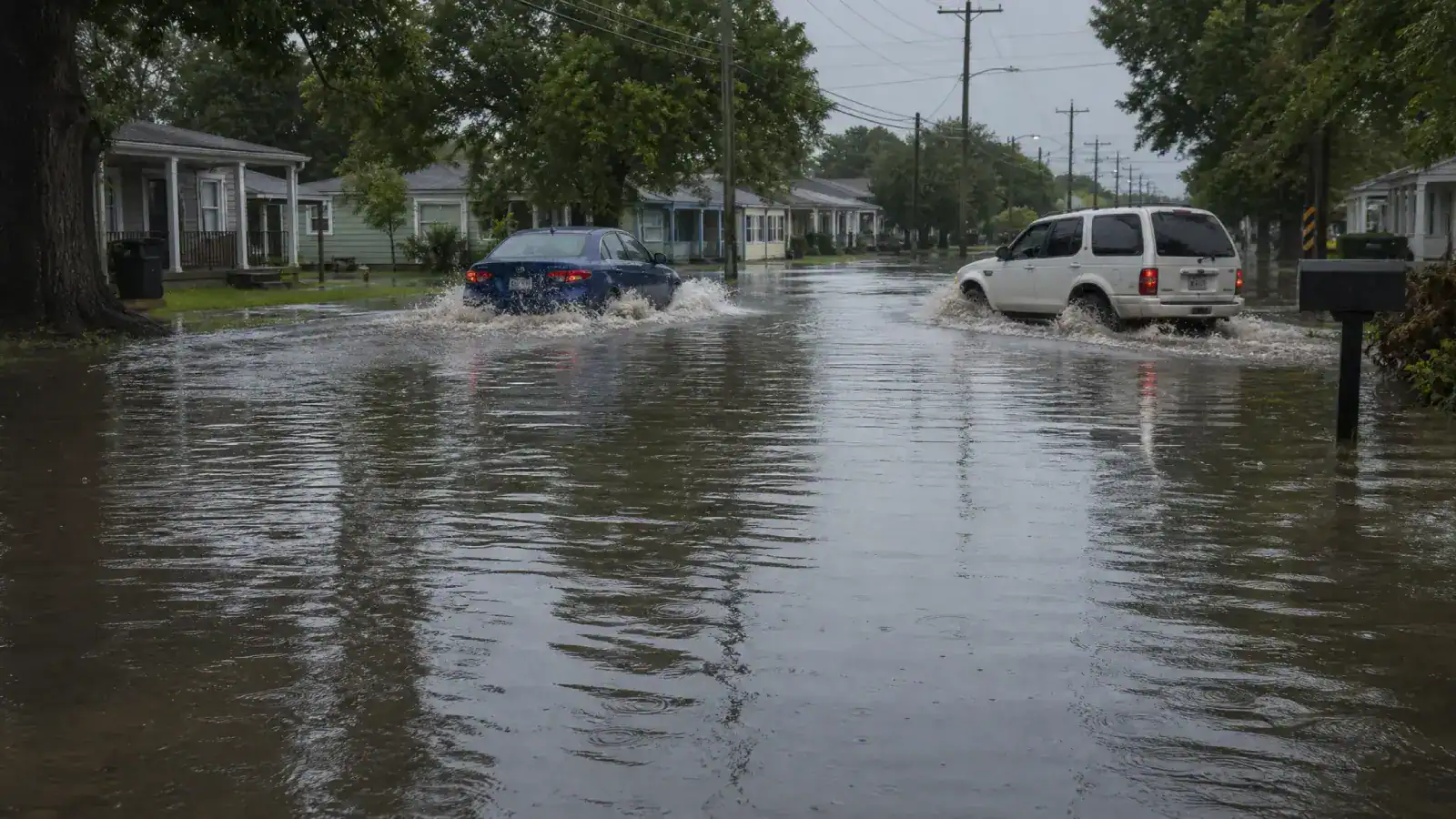
Corrugated metal pipe (CMP) culverts installed across Louisiana parishes from the 1950s through the 1980s have a design life of 25 to 75 years depending on gauge, coating, and environmental conditions. Much of this inventory is at or past design life. Louisiana’s acidic soils, high moisture levels, and frequent inundation accelerate CMP corrosion — particularly at the invert (the bottom of the pipe where stormwater flow is continuous), which corrodes through first, allowing soil to erode into the pipe and creating voids in the road embankment above.
Reinforced concrete pipe joint failure under Louisiana soil conditions
Louisiana’s expansive clay soils move with the season — swelling when wet, contracting when dry. This soil movement generates lateral forces on buried pipe joints that concrete pipe was not designed to accommodate long-term. Joint separation allows stormwater to infiltrate the surrounding soil, washing it into the pipe (reducing road support) and allowing root intrusion that produces progressive blockage. Concrete pipe that has been in service for 40+ years in Louisiana conditions is frequently found to have multiple joint separations along its run.
Storm event loading exceeding original design capacity
Louisiana’s stormwater drainage systems were designed to manage rainfall volumes calibrated to historical precipitation data. Updated NOAA Atlas 14 rainfall projections show that the Gulf Coast region is now experiencing storm events of higher intensity than what older systems were designed for. A culvert or drainage pipe at the edge of its hydraulic capacity when new becomes a chokepoint during heavy rainfall events — contributing to roadway flooding, erosion, and accelerated structural deterioration from repeated high-velocity flow.
What Trenchless Methods Are Used for Stormwater Infrastructure Repair in Louisiana?
The method selected for a specific stormwater repair depends on the host pipe material, diameter, failure mode, degree of deterioration, and hydraulic capacity requirements. The four primary trenchless methods for Louisiana stormwater work:
CIPP Lining — Cured-In-Place Pipe
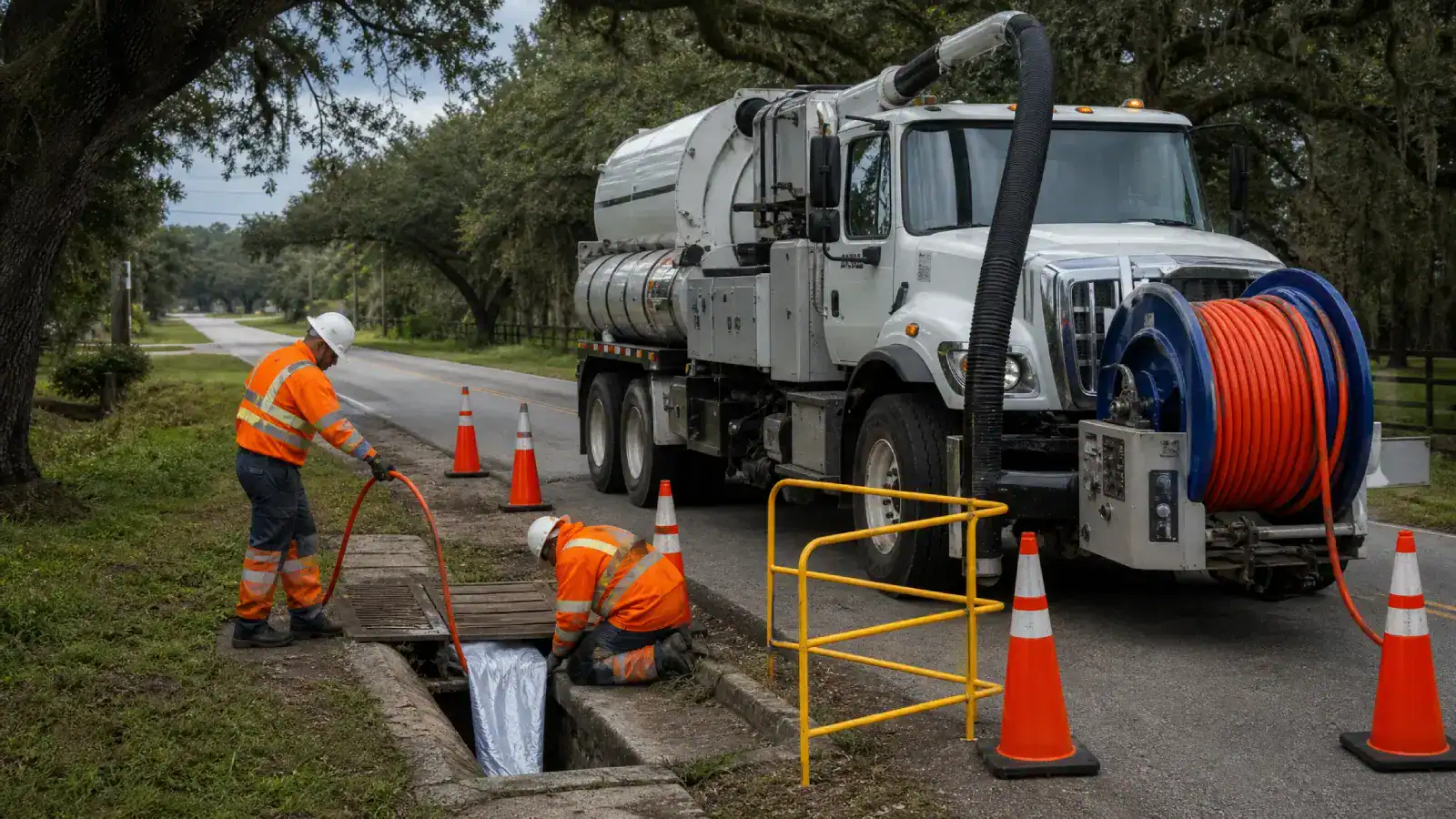
CIPP is the most widely specified trenchless rehabilitation method for stormwater culverts and drainage pipes in the 6-inch to 60-inch diameter range, with UV-cured systems available for larger diameters up to 80 inches or more. The process involves cleaning the host pipe, performing a CCTV condition assessment, impregnating a flexible liner tube with thermosetting resin, inverting or pulling the liner into the pipe, then curing the resin using hot water, steam, or UV light.
The cured liner forms a structurally independent pipe within the host pipe — it does not rely on the original pipe for structural support. Under ASTM F1216, CIPP liners are specified for a 50-year design life. The smooth interior wall (Manning’s n ≈ 0.010) often improves hydraulic efficiency compared to the corrugated host pipe it replaces, even accounting for the slight diameter reduction.
CIPP is appropriate for Louisiana stormwater work when the host pipe has not collapsed and retains enough remaining structure to act as a form for the liner. It is not appropriate for pipes that have collapsed or lost significant sections of the pipe wall.
Sliplining — HDPE Pipe Within Host Pipe
Sliplining inserts a new, smaller-diameter pipe (typically HDPE or FRP) into the existing host pipe and grouting the annular space between the two pipes. HDPE is the most common slipliner material for Louisiana stormwater work due to its corrosion resistance, flexibility, and smooth interior surface.
Sliplining is appropriate for larger-diameter culverts and drainage pipes (18 inches and above) where the diameter reduction from inserting a new pipe inside the existing one is acceptable from a hydraulic capacity perspective. It is particularly well-suited for severely deteriorated host pipes where CIPP’s requirement for a relatively intact host pipe form cannot be met.
Spray-Applied Structural Lining
Spray-applied polymer or cementitious coatings are applied to the interior of the pipe by a specialized robotic or manual application system. These coatings provide both corrosion protection and structural reinforcement, and are particularly effective for large-diameter or non-circular cross-section culverts where inversion-based CIPP is not practical.
Spray-applied systems are commonly used for catch basin and manhole rehabilitation in Louisiana, where hydrogen sulfide-related corrosion requires a highly chemical-resistant lining material that can conform to the irregular geometry of precast or cast-in-place structures.
Joint Sealing and Invert Paving
For host pipes where deterioration is limited to specific defects — open joints, localized invert corrosion, point cracks — targeted trenchless repairs can address the specific failure without a full-length rehabilitation. Joint banding seals open joints to prevent infiltration and soil migration. Invert paving applies concrete over corroded invert sections to restore structural capacity and extend service life while leaving the upper pipe structure intact.
How Does Trenchless Stormwater Repair Compare to Open-Cut Replacement in Louisiana?
| Factor | Trenchless Rehabilitation | Open-Cut Replacement |
|---|---|---|
| Cost | 30–50% less than open-cut in most applications | Full cost including excavation, embedment, backfill, and road restoration |
| Road closure | Minimal to none — access from pipe ends or manholes | Full lane or road closure for duration of work |
| Environmental impact | Minimal — no excavation in wetlands or sensitive areas | Excavation required; wetland or NRCS permits may apply |
| Timeline | Days to weeks depending on scope | Weeks to months including road restoration |
| Service life | 50-year design life (CIPP per ASTM F1216) | 50–100 years depending on material and conditions |
| Appropriate when | Host pipe is deteriorated but structurally present; significant replacement cost; road or utility conflicts | Pipe has collapsed or is absent; significant capacity increase required; pipe alignment change needed |
What Does the Trenchless Stormwater Repair Process Look Like in Louisiana?
Pelican Underground’s trenchless stormwater rehabilitation process follows a structured sequence designed to document the pipe condition, select the appropriate method, and produce a verified, grant-documentable result:
- CCTV condition assessment: A waterproof camera is deployed through the pipe to document the interior condition at every point along the run. The assessment is coded using NASSCO PACP standards for sewer pipe, or equivalent condition grading for stormwater applications, and produces a documented condition report that supports grant applications, project scoping, and pre- vs. post-rehabilitation comparison.
- Cleaning: The pipe is cleaned by hydrojetting or mechanical means to remove sediment, debris, and root intrusion before rehabilitation. The condition of the pipe wall cannot be accurately assessed or properly relined without thorough cleaning.
- Method selection: Based on the condition assessment, Pelican Underground recommends the appropriate rehabilitation method — CIPP, sliplining, spray lining, or targeted repair — for the specific failure mode, diameter, and project requirements.
- Rehabilitation installation: The selected lining system is installed by trained, certified crews. CIPP installations are performed by NASSCO ITCP-CIPP certified installers using materials that meet ASTM F1216 or equivalent standards. Post-installation inspection verifies liner installation quality before the pipe is returned to service.
- Post-rehabilitation CCTV and documentation: A final camera pass documents the completed rehabilitation, confirms the liner is properly installed, and produces the post-rehabilitation condition record needed for grant closeout documentation.
How Does Stormwater Infrastructure Repair Qualify for Louisiana Grant Funding?
Trenchless stormwater infrastructure rehabilitation qualifies for funding under several programs available to Louisiana parishes and municipalities — including FEMA BRIC, the EPA’s Sewer Overflow and Stormwater Reuse Municipal Grant (OSG) program, the LCDBG Public Facilities program via OCD-LGA, and CDBG-DR for disaster-related infrastructure damage.
The documentation that makes a stormwater rehabilitation project grant-competitive is the same documentation that makes it a well-scoped project: a NASSCO PACP or equivalent condition assessment report documenting the pipe’s current condition and justifying the rehabilitation scope, a FEMA-approved benefit-cost analysis for BRIC applications, and technical specifications referencing applicable ASTM standards for the specified rehabilitation method.
Related resource: See Pelican Underground’s companion guide, “How Louisiana Municipalities Fund Trenchless Sewer & Stormwater Rehabilitation: A 2026 Grant Guide,” for a complete breakdown of FEMA BRIC (July 23, 2026 deadline), EPA OSG, LCDBG, and CDBG-DR funding sources, eligibility requirements, and how condition data strengthens each application.
TL;DR — Stormwater Infrastructure Repair Louisiana
- Louisiana’s stormwater infrastructure — aging CMP culverts, deteriorated concrete pipe, failing catch basins — is failing faster than open-cut budgets can address.
- CIPP lining, sliplining, and spray-applied structural coatings rehabilitate deteriorated pipe from the inside without road closure or excavation at 30–50% less cost than open-cut replacement.
- CIPP liners are specified for a 50-year design life and typically improve hydraulic efficiency over deteriorated corrugated host pipe despite slight diameter reduction.
- Trenchless rehabilitation qualifies for FEMA BRIC, EPA OSG, LCDBG, and CDBG-DR funding — the CCTV condition assessment and post-rehabilitation documentation support both project scoping and grant applications.
- Contact Pelican Underground for a free camera inspection of your stormwater infrastructure and a trenchless rehabilitation assessment.
Frequently Asked Questions
What are the main causes of stormwater infrastructure failure in Louisiana?
Louisiana stormwater infrastructure fails from aging corrugated metal pipe corroding past design life (25 to 75 years, with much of Louisiana’s CMP stock now beyond that range), reinforced concrete pipe joints separating under expansive clay soil movement, and storm event volumes that exceed the hydraulic capacity of systems designed for smaller historical rainfall totals. The Gulf Coast’s aggressive soil chemistry, high moisture levels, and frequent severe storm events accelerate deterioration in ways that moderate-climate infrastructure does not experience.
Can CIPP lining be used to repair stormwater culverts and drainage pipes in Louisiana?
Yes. CIPP is one of the most widely used and cost-effective trenchless methods for rehabilitating stormwater culverts and drainage pipes in diameters from 6 inches up to 80 inches. A resin-impregnated liner is installed inside the host pipe and cured to form a structurally independent pipe with a 50-year design life per ASTM F1216. CIPP eliminates the road closure and excavation costs of open-cut replacement and is appropriate for corrugated metal, concrete, clay, and PVC host pipes that retain enough remaining structure to serve as a liner form.
How does trenchless stormwater repair compare to open-cut excavation in Louisiana?
Trenchless rehabilitation typically costs 30 to 50% less than open-cut replacement when all costs are accounted for — including excavation, traffic control, embedment, backfill, and road restoration. For Louisiana parish culverts under active roadways, trenchless methods eliminate lane closure and road reconstruction. For drainage pipe in wetlands or sensitive areas, trenchless methods also reduce environmental permit requirements and risk of damage to adjacent infrastructure.
What is the expected service life of a CIPP-lined stormwater pipe in Louisiana?
CIPP liners are specified for a 50-year design life under ASTM F1216, with industry projections suggesting actual lifespan may extend to 100 years or more in appropriate conditions. The liner is inherently corrosion-resistant, eliminating the primary failure mechanism of the original corrugated metal or concrete host pipe. For Louisiana stormwater applications, CIPP lining not only restores structural integrity but eliminates the corrosion pathway that caused the original failure.
Does a trenchless culvert rehabilitation reduce stormwater flow capacity?
Not meaningfully in most applications. While CIPP lining reduces pipe diameter slightly, the smooth CIPP interior wall (Manning’s n ≈ 0.010) dramatically reduces hydraulic friction compared to corrugated metal (Manning’s n 0.024 or higher). The smaller, smoother-walled lined pipe often carries as much or more flow than the original corrugated pipe did at installation — and significantly more than the deteriorated, partially blocked pipe does at end of service life.
Related Guides
- Municipal CIPP Lining in Louisiana — Pelican Underground
- Municipal Trenchless Sewer Repair Services
- Stormwater Management Compliance in Louisiana
- Grant Funding for Municipal Sewer Rehabilitation in Louisiana
Ready to Assess Your Stormwater Infrastructure? Schedule a Free Camera Inspection
Pelican Underground provides trenchless stormwater infrastructure rehabilitation for Louisiana parishes, municipalities, and public works agencies. Services include CCTV condition assessment, NASSCO PACP reporting, CIPP lining, sliplining, spray-applied structural lining, and catch basin rehabilitation — with grant-ready documentation at every stage.
Contact Pelican Underground to schedule a free camera inspection of your stormwater infrastructure and a trenchless rehabilitation assessment.
About Pelican Underground LLC | Pelican Underground LLC is a Louisiana-based trenchless sewer and stormwater rehabilitation contractor serving municipal and parish clients throughout the Gulf Coast. Services include CCTV condition assessment, NASSCO PACP reporting, CIPP lining, pipe bursting, sliplining, and municipal stormwater infrastructure repair. Pelican works directly with public works departments and engineering firms to deliver grant-ready documentation and code-compliant trenchless rehabilitation.
