
Quick answer: Storm drain cleaning removes the leaves, sediment, and debris that build up in catch basins and underground lines so stormwater can flow freely and your property stays protected from flooding. In Baton Rouge — a low-lying, high-rainfall area in the heart of hurricane country — it’s essential maintenance, best done at least once a year and especially before and after hurricane season. A professional contractor inspects the system, clears it with vacuum equipment and controlled high-pressure water, and confirms full flow is restored. For property owners, it’s far cheaper than the flooding a clogged system invites.
In Baton Rouge, stormwater isn’t an occasional nuisance — it’s a year-round reality, and never more so than during hurricane season. Our flat terrain, heavy rainfall, and dense tree cover put enormous demand on storm drainage systems, and when those systems clog, the water has nowhere to go but up: into parking lots, onto streets, and toward buildings. Keeping storm drains clear is one of the most important and most overlooked ways to protect a property here.
This guide explains why storm drain cleaning matters so much in Baton Rouge, what professional storm water management actually involves, the warning signs your system needs attention, and how to keep your stormwater infrastructure ready for whatever the season brings.
Key Takeaways
- Clogged storm drains are a direct flooding risk in low-lying, high-rainfall Baton Rouge.
- Clean storm drains at least annually — ideally before and after hurricane season.
- Pros use camera inspection, vacuum equipment, and controlled hydro jetting to restore full flow.
- Private storm drainage is usually the property owner’s responsibility, often a compliance matter too.
- Routine cleaning is far cheaper than the flooding and damage a blocked system causes.
Why Storm Drain Cleaning Is Critical in Baton Rouge
Storm drains exist to do one job: move rainwater away from streets, lots, and buildings fast enough to prevent flooding. As the US EPA notes, stormwater systems only deliver that protection if they’re properly maintained — debris and sediment removal and inlet cleaning are core to keeping them working. When a drain clogs, that protection disappears exactly when it’s needed most.
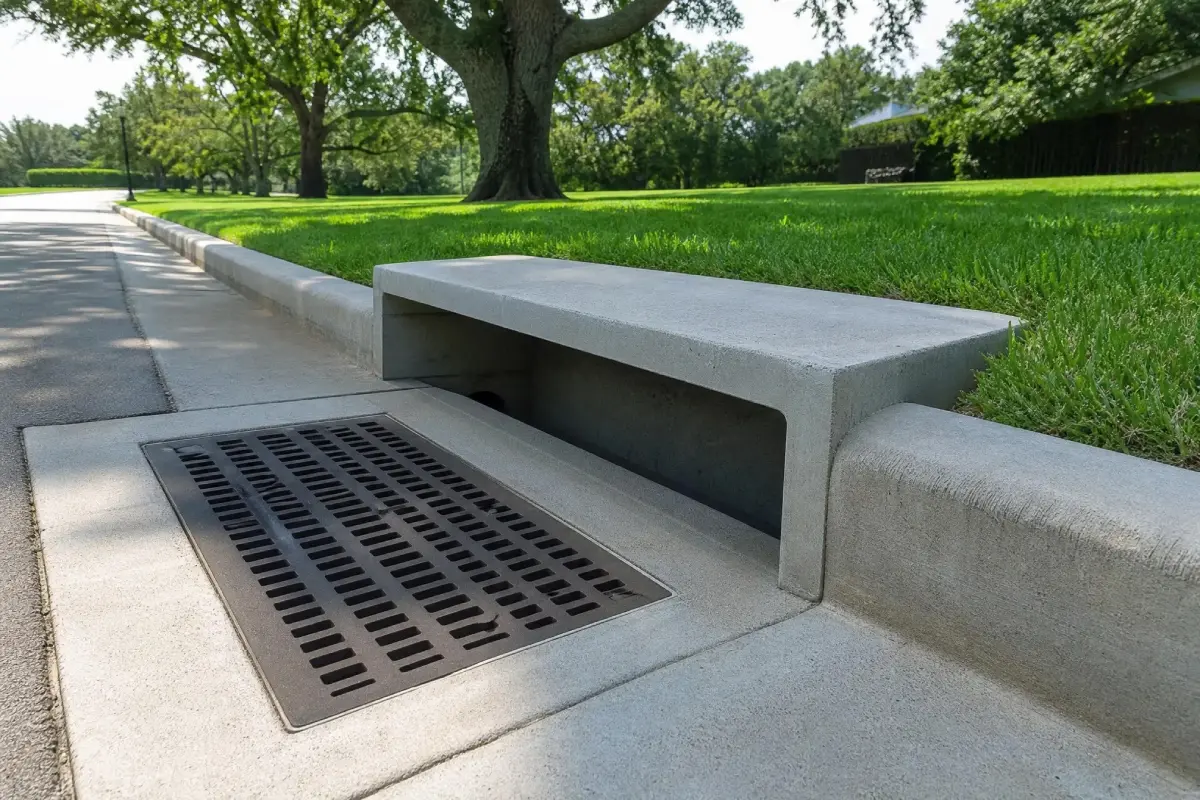
Baton Rouge stacks the deck against its storm drains. The terrain is flat and low-lying, so water doesn’t drain away naturally — it relies on the system. Rainfall is heavy and frequent, and hurricane season can dump months of rain in days. And the region’s beautiful mature trees shed enormous amounts of leaves and debris that wash straight into catch basins. Put those together and you have storm drains that fill up faster, and matter more, than in almost any other part of the country.
What Builds Up in Baton Rouge Storm Drains
Over a season, a surprising amount of material collects in a storm drainage system and chokes its capacity:
- Leaves and organic debris: the region’s heavy tree canopy sheds constantly, and it all washes toward the inlets.
- Sediment and silt: soil, sand, and grit settle in catch basins and underground lines, narrowing them over time.
- Trash and litter: bottles, bags, and debris get carried in by runoff and lodge at inlets and bends.
- Storm-washed material: a single major storm can flush a season’s worth of branches, mulch, and debris into the system at once.
- Sediment buildup in pipes: in older systems, accumulated material and even root intrusion can steadily reduce flow capacity.
None of this is visible from the street until the system fails — which is usually mid-storm, at the worst possible moment. That’s why proactive cleaning, rather than waiting for a backup, is the smart approach.
Why Timing Around Hurricane Season Matters
In Louisiana, storm drain maintenance has a calendar, and hurricane season — June through November — is the pivot point. Smart property owners think about cleaning at two moments:
- Before the season: clearing the system in late spring or early summer makes sure it’s at full capacity when the heaviest rains arrive. Going into hurricane season with a half-clogged drain is asking for a flood.
- After the season: storms push huge volumes of leaves, branches, and sediment into the system. Clearing that buildup afterward restores capacity and resets the system for the year ahead.
Between those bookends, an annual cleaning is the baseline for most properties — with more frequent service for sites that have heavy tree cover, large paved areas, or a history of drainage trouble.
What Professional Storm Drain Cleaning Involves
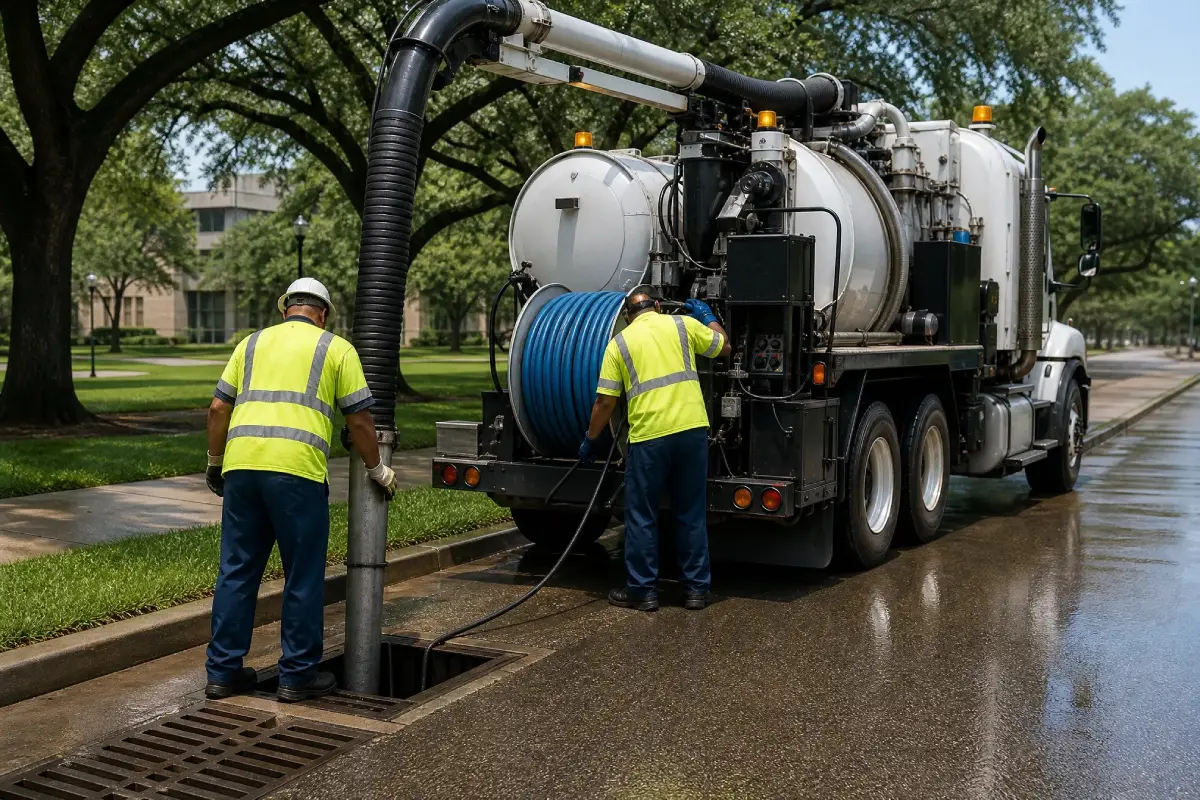
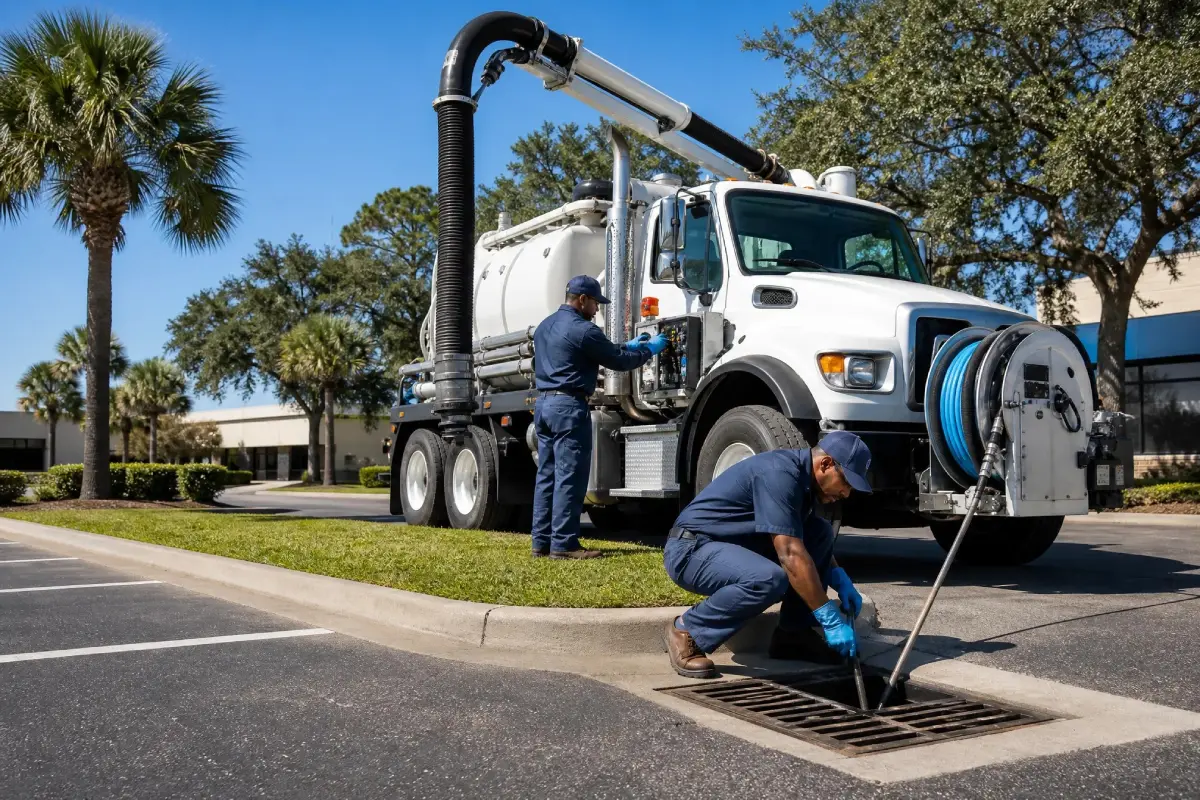
Professional storm drain cleaning is a methodical, equipment-driven process — not just clearing the grate you can see:
- Inspection: the contractor assesses the system, often using a sewer and drain camera, to find where buildup or damage is restricting flow.
- Catch basin and inlet clearing: vacuum equipment removes accumulated leaves, sediment, and debris from the basins and inlets.
- Hydro jetting the lines: controlled high-pressure water scours the underground pipes clean and flushes out settled material, restoring full flow.
- Verification: a final inspection confirms the system is clear end to end and documents its condition for your records.
Done right, the process is clean and contained — professional crews capture and remove what they clear — and most jobs are completed in a matter of hours, depending on the size of the system.
Signs Your Storm Drains Need Cleaning
Your drainage system gives warning signs before it fails. Watch for these — and act before the next big rain, not during it:
| Warning sign | What it usually means |
| Water drains slowly after rain | Partial blockage reducing flow capacity |
| Pooling in lots or low spots | The system can’t keep up; inlets may be clogged |
| Overflowing catch basins | Basins are full of debris and need clearing |
| Gurgling or slow inlets | Air and water struggling past a restriction |
| Debris visible around inlets | Buildup at the surface (and likely below) |
| Recurring flooding in the same spot | A chronic blockage or capacity problem in that line |
If you’re seeing any of these, especially the recurring ones, the system is telling you it’s overdue. A quick inspection pinpoints the cause and whether a cleaning — or a repair — is needed.
Who’s Responsible — and Why It’s Not Just the City’s Job
Here’s a point that catches many property owners off guard: while the city or parish maintains public storm drains in the streets, the storm drainage on your property is your responsibility. For commercial lots, HOAs, apartment complexes, and many residential properties, that means the catch basins, inlets, and lines on the site are the owner’s to maintain.
Many municipalities also require businesses to keep their stormwater systems clear, both to prevent flooding and to protect local waterways from the pollutants runoff carries. So for commercial property owners and managers, regular storm drain cleaning isn’t just flood insurance — it can be a compliance obligation. Either way, the cost of routine maintenance is a fraction of the cost of a flood, a damaged parking lot, or a violation.
When Cleaning Isn’t Enough: Repairing Storm Drains
Sometimes an inspection reveals more than buildup — an aging storm drain may be cracked, corroded, or collapsing, and no amount of cleaning fixes a structural problem. The good news is that repair no longer means digging up your parking lot. Trenchless CIPP pipe lining rehabilitates a damaged storm drain from the inside following established trenchless rehabilitation standards, and trenchless pipe repair restores the line with minimal disruption to the surface — a major advantage for commercial sites that can’t afford to lose their lot to an excavation.
Storm Drain Cleaning in Baton Rouge, at a Glance
- Clogged storm drains are a direct flooding risk in flat, rain-heavy Baton Rouge.
- Clean at least annually — ideally before and after hurricane season.
- Pros inspect, vacuum the basins, and hydro jet the lines to restore full flow.
- Private storm drainage is the owner’s responsibility — and often a compliance matter.
- Need your storm drains cleared in Baton Rouge? Call Pelican Underground at (504) 400-8817 or request service.
Frequently Asked Questions
How often should storm drains be cleaned in Baton Rouge?
At least once a year, ideally before and after hurricane season. Properties with heavy tree cover, large paved areas, or past drainage problems may need more frequent service. Cleaning ahead of peak storm months ensures the system can handle heavy rainfall when it matters.
Why is storm drain cleaning important after hurricane season?
Hurricane season pushes large volumes of leaves, sediment, and debris into storm drains. Clearing that buildup afterward restores full capacity for the next heavy rain. In low-lying Baton Rouge, a clogged storm drain is a direct flooding risk.
What does professional storm drain cleaning involve?
A contractor inspects the system (often with a camera), then clears catch basins, inlets, and lines using vacuum equipment and controlled high-pressure water. It removes leaves, sediment, and debris, and a final inspection confirms full flow is restored.
Who is responsible for storm drain maintenance?
The city or parish maintains public street drains, but storm drainage on private property — commercial lots, HOAs, many homes — is the owner’s responsibility. Many municipalities also require businesses to keep stormwater systems maintained.
What are the signs my storm drains need cleaning?
Watch for slow drainage, pooling water, overflowing catch basins, gurgling inlets, or visible debris. Any of these suggests a partial blockage — cleaning before the next major storm prevents flooding and property damage.
Related Guides
- Storm Water Management in Louisiana
- Stormwater Drain Repair in New Orleans
- Storm Sewer Lining in Louisiana
- Storm Drain Services
- Hydro Jetting Services
The Bottom Line for Baton Rouge Property Owners
In a place like Baton Rouge — flat, rain-soaked, and squarely in hurricane country — clear storm drains are not optional maintenance; they’re flood protection. The leaves, sediment, and debris that quietly fill a drainage system all year don’t announce themselves until the water has nowhere to go. Cleaning on a schedule, especially around hurricane season, keeps your system ready and turns a potential disaster into a non-event.
Pelican Underground provides professional storm drain cleaning, inspection, and trenchless repair across Baton Rouge and Louisiana. Whether you’re prepping for the season or dealing with a system that’s already struggling, contact us to get your stormwater infrastructure clear and ready — before the next big rain.
About Pelican Underground: Pelican Underground is a family-owned, licensed, insured, and bonded trenchless sewer, drain, and stormwater specialist serving New Orleans, Baton Rouge, and communities across Louisiana, Mississippi, and Alabama. With 15+ years of experience and NASSCO-certified technicians, Pelican provides storm drain cleaning, camera inspection, hydro jetting, and trenchless CIPP repair — keeping Louisiana’s stormwater infrastructure clear and flood-ready. Call (504) 400-8817 for a consultation.