
New Orleans sits atop Holocene Mississippi River deltaic deposits characterized by soft silts, clays, and organic soils—locally known as “gumbo clay.” These soils, combined with groundwater typically found within 3 to 5 feet of the surface across much of the metropolitan area, represent some of the most challenging soft-ground conditions encountered anywhere in North America. This geotechnical context demands specialized expertise and tailored tunneling approaches that account for the unique behavior of these saturated, low-permeability soils and the persistent high water table.
This guide discusses Louisiana’s geotechnical realities, providing engineers and public works directors with a comprehensive technical framework for managing the complexities of soft-ground tunneling in New Orleans. It details critical soil and groundwater characteristics, explains advanced tunneling technologies, and outlines proven strategies for controlling settlement and groundwater risks.
Rising demand for urban infrastructure is pushing more services below grade, making soft-ground tunneling an increasingly important solution.
Geotechnical Context: Louisiana’s Unique Soil and Groundwater Conditions
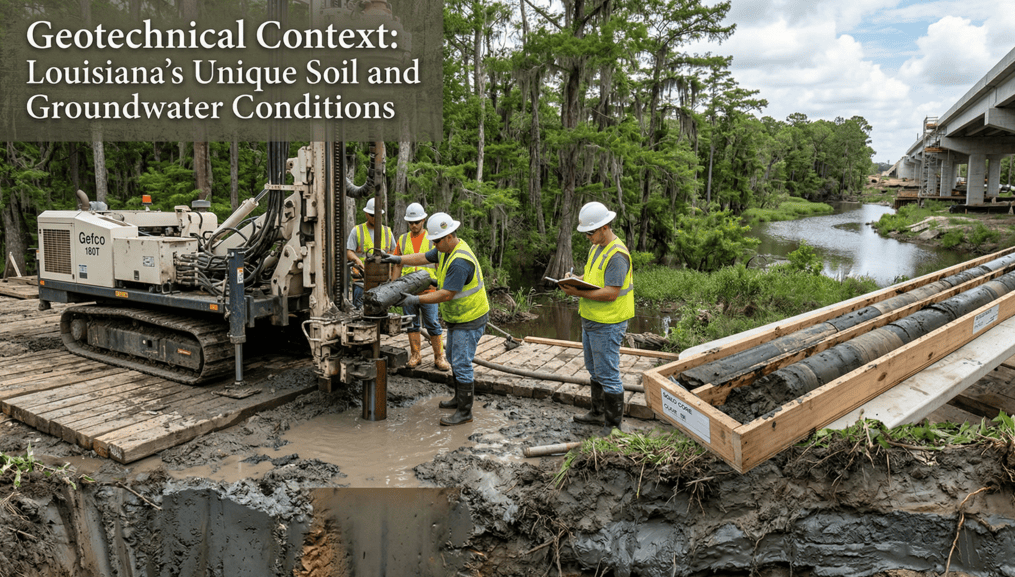
The soils underlying New Orleans are predominantly Holocene deltaic deposits composed of soft silts, clays, and organic-rich layers, often referred to as “gumbo clay.” These soils exhibit very low permeability and high compressibility, with a shallow groundwater table that typically lies within 3 to 5 feet of the surface. This combination results in extremely limited stand-up time for tunnel faces—meaning the duration a tunnel face can remain unsupported before collapsing is measured in seconds or less, especially in running sands below the water table. In contrast, hard rock tunneling allows stand-up times of days or weeks.
This geotechnical reality directly impacts tunneling methods and equipment selection. For example, conventional pipe jacking methods that rely on a dry bore face are often physically impossible in New Orleans soils because the face collapses as fast as it is excavated. Instead, pressurized-face microtunnel boring machines (MTBMs) are essential. These machines maintain a sealed, pressurized face that continuously balances groundwater and earth pressures, preventing collapse. The slurry system transports cuttings back to the surface in a closed loop, eliminating the open-face and running sand problems that plague traditional methods.
How Does New Orleans’ Soft Soil Affect Underground Construction?
The prevalence of soft, compressible clays and silts creates significant constraints for excavation, support design, and tunnel-boring operations. Low-strength soils complicate face stability and increase the likelihood of ground loss if not properly managed; meanwhile, the high water table raises hydrostatic pressure and flood risk. Successful projects combine detailed geotechnical assessment with tailored machine selection, earth-retention measures, and robust water-control systems to maintain schedule and protect adjacent structures.
Stand-Up Time and Pressurized Face MTBM Technology
Stand-up time is a critical parameter in soft-ground tunneling, especially in New Orleans. The extremely short stand-up time in saturated running sands means that unsupported tunnel faces collapse almost immediately upon excavation. This necessitates the use of pressurized-face MTBMs, which maintain a controlled pressure at the tunnel face to counterbalance groundwater and soil pressures. This pressurization prevents face collapse and allows continuous excavation in conditions that would otherwise be impossible.
The MTBM’s slurry system transports excavated material back to the surface in a closed circuit, ensuring no open face is exposed to running sands or groundwater inflow. This technology is indispensable for tunneling in New Orleans’ challenging soils and is a core component of Pelican’s approach to soft-ground tunneling.
What Are the Current Groundwater Levels and Their Impact on Tunneling?
Groundwater elevations in the region vary with seasonal rainfall, storm events, and local drainage conditions. Elevated water tables increase effective stress changes around excavations and raise the probability of heave or inflow. Because groundwater can fluctuate rapidly, project teams should incorporate continuous monitoring and conservative design margins. Anticipating dynamic groundwater behavior is critical to scheduling, dewatering plans, and contingency measures.
Dewatering for Shaft Excavation: Managing High Water Tables
While trenchless methods like microtunneling minimize surface disruption, launch and reception shafts must still be excavated. In New Orleans’ high-water-table environment, shaft excavation requires comprehensive groundwater control measures such as wellpoint systems, deep wells, or sheet pile cofferdams. These systems lower or stabilize the water table around the excavation to maintain dry, stable conditions for safe shaft construction.
Pelican’s expertise includes designing and implementing these dewatering systems with careful consideration of recharge rates, permitted discharge volumes and quality, and potential impacts on adjacent structures. Redundancy in pumping and power systems, along with preventive maintenance, ensures continuous operation and minimizes risk of flooding or instability during shaft excavation.
What Soil Stabilization and Ground Improvement Methods Are Used to Support Tunneling?
In some cases, the native soils are too soft or unstable even for pressurized-face MTBM operations. Pelican employs ground improvement techniques such as jet grouting and compaction grouting to enhance soil strength and reduce permeability both at launch shafts and along the bore path. These methods create engineered soil columns or improved soil masses that provide sufficient support and reduce water infiltration risks.
Soil stabilization also includes preloading or surcharge to consolidate compressible layers and reduce post-construction settlement potential. Chemical stabilizers like cementitious grouts can block seepage paths and increase soil stiffness where needed. Continuous monitoring of pore pressures and moisture content guides the timing and extent of these treatments.
How Can Settlement Risk Be Mitigated in Soft Soil Excavation Underground?
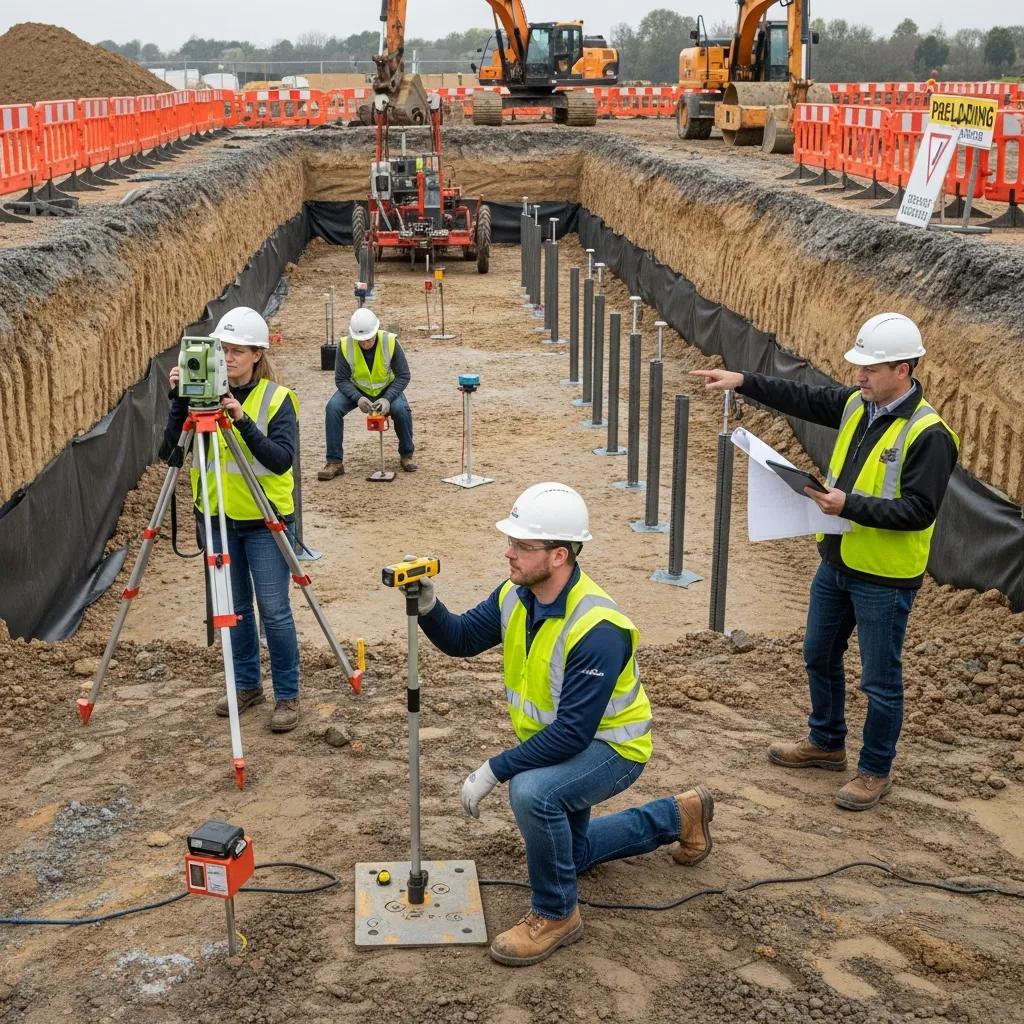
Settlement control is a paramount concern in New Orleans tunneling projects due to the sensitivity of nearby structures—especially historic buildings founded on shallow wood pilings in areas like the French Quarter, Uptown, and Gentilly. Even millimeters of ground movement can cause significant damage.
Pelican manages settlement risk through a combination of precise face pressure calibration during MTBM operation, immediate grouting of the annular space around the pipe as the machine advances, and real-time monitoring of ground and structural movement. This integrated approach minimizes soil deformation and protects adjacent infrastructure.
- Monitoring Techniques : Instrumentation such as inclinometers, settlement plates, extensometers, and automated data collection provides real-time evidence of movement and trend changes.
- Preventive Measures : Ground improvement, staged excavation, compensation grouting, and appropriately designed tunnel support systems reduce the likelihood and magnitude of settlement.
- Case Studies of Successful Mitigation : Reviewing prior projects provides validated strategies and design parameters that can be adapted to local conditions.
A disciplined combination of prediction, monitoring, and responsive mitigation limits structural impacts and supports project delivery in challenging soils.
What Are the Causes and Monitoring Methods of Settlement Risk?
Settlement arises from several interacting factors:
- Soil Compression : Loading from structures or redistributed stresses from excavation compresses compressible layers, producing settlement.
- Groundwater Changes : Drawdown or recharge alters effective stresses and can cause consolidation or heave.
- Construction Activities : Excavation, tunneling, and dewatering can disturb stratigraphy and accelerate movement if not managed.
Pelican employs advanced monitoring tools—including inclinometers, settlement plates, and automated pore-pressure sensors—to provide timely data that triggers mitigation actions and verifies performance throughout construction.
Which Mitigation Strategies Are Proven Effective in New Orleans?
Successful projects in New Orleans integrate trenchless installation methods, targeted ground improvement, and coordinated stormwater management. Key strategies include:
- Trenchless Technology Applications : Microtunneling and similar techniques reduce open excavation and limit disturbance to sensitive soils.
- Stormwater Management Solutions : Controlling surface runoff and maintaining coordinated drainage reduces unexpected groundwater rises and limits recharge to construction zones.
- Preventive Maintenance Programs : Ongoing inspection and upkeep of dewatering and monitoring systems preserve functionality throughout the project lifecycle.
Tailoring these strategies to site-specific conditions and regulatory constraints has produced measurable reductions in risk on local projects.
What Are the Regulatory and Safety Considerations for Underground Construction in Louisiana?
Underground work in Louisiana must meet permitting, environmental review, and worker-safety requirements established by local and state authorities. Regulations address discharge permits for dewatering, protection of wetlands and water quality, and construction safety standards. Compliance planning should include environmental impact assessments, stakeholder coordination, and thorough documentation to satisfy regulators and minimize project delays.
Which Local Regulations Govern Soft Ground Tunneling Projects?
Local regulations typically require environmental assessments, construction permits, and adherence to safety and discharge standards. These rules are intended to limit impacts on water resources and public safety. Early engagement with permitting agencies and clear documentation of control measures streamline approvals and reduce legal exposure.
How Do Safety Protocols Address Geotechnical Risks?
Safety protocols address geotechnical hazards through risk assessments, worker training, emergency response planning, and operational controls around excavations and dewatering equipment. Protocols should define monitoring thresholds, stop-work criteria, and responsibilities so teams can respond quickly to unexpected ground behavior.
Frequently Asked Questions
What are the main challenges of soft-ground tunneling in urban areas like New Orleans?
Soft-ground tunneling in urban areas like New Orleans presents several challenges, including managing high groundwater levels, dealing with low-strength soils, and minimizing disruption to existing infrastructure. The unique geotechnical conditions, such as the presence of “gumbo clay,” require specialized tunneling techniques and equipment. Additionally, the proximity of historic buildings necessitates careful monitoring and mitigation strategies to prevent settlement and structural damage during excavation.
How does groundwater fluctuation affect tunneling projects?
Groundwater fluctuation can significantly impact tunneling projects by altering effective stress around excavations, increasing the risk of heave or inflow. Seasonal rainfall and storm events can cause rapid changes in groundwater levels, necessitating continuous monitoring and adaptive design strategies. Project teams must account for these fluctuations in their dewatering plans and excavation schedules to ensure safety and project integrity.
What role does technology play in soft-ground tunneling?
Technology plays a crucial role in soft-ground tunneling by enhancing safety, efficiency, and precision. Advanced tools such as pressurized-face microtunnel boring machines (MTBMs) allow for continuous excavation in challenging conditions, while real-time monitoring systems provide data on ground movement and pore pressure. These technologies help mitigate risks associated with groundwater and soil instability, ensuring successful project outcomes in complex geotechnical environments.
What are the environmental considerations for tunneling in Louisiana?
Environmental considerations for tunneling in Louisiana include compliance with regulations regarding water quality, wetland protection, and discharge permits for dewatering activities. Projects must undergo environmental impact assessments to evaluate potential effects on local ecosystems. Additionally, effective stormwater management strategies are essential to control surface runoff and minimize groundwater recharge during construction, thereby protecting the surrounding environment.
How can project teams ensure compliance with local regulations?
To ensure compliance with local regulations, project teams should engage with permitting agencies early in the planning process. This includes obtaining necessary construction permits, conducting environmental assessments, and documenting control measures. Clear communication with stakeholders and adherence to safety and discharge standards are vital for streamlining approvals and minimizing delays. Regular audits and updates to compliance plans can also help maintain regulatory alignment throughout the project lifecycle.
What are the best practices for monitoring soil and structural movement during tunneling?
Best practices for monitoring soil and structural movement during tunneling include using advanced instrumentation such as inclinometers, settlement plates, and automated pore-pressure sensors. These tools provide real-time data on ground behavior, allowing project teams to respond quickly to any changes. Implementing a comprehensive monitoring plan that includes regular data analysis and predefined response protocols can help mitigate risks and protect adjacent structures from potential damage.
Conclusion
Managing the complexities of soft-ground tunneling in New Orleans requires rigorous site characterization, engineered groundwater control, and proactive settlement mitigation. Pelican’s deep expertise in the region’s unique geotechnical conditions—combined with advanced pressurized-face MTBM technology, tailored dewatering and ground improvement methods, and real-time monitoring—ensures safe, efficient, and reliable project delivery.
Partner with Pelican Underground for Your Next Tunneling Project
Ready to tackle the challenges of soft-ground tunneling in New Orleans? Pelican Underground offers unparalleled expertise, innovative technology, and comprehensive solutions to ensure your project’s success. Contact us today to learn how we can support your underground construction needs with tailored strategies and proven results.

Owner of Pelican Underground LLC and NASSCO-certified trenchless sewer specialist with expertise in CIPP lining, pipe bursting, and sewer rehabilitation across Louisiana, Mississippi, and Alabama. Licensed contractor by the Louisiana State Licensing Board for Contractors.