
Louisiana’s high water table creates distinct challenges for underground utility installation. New Orleans and the surrounding Gulf Coast region sit atop Holocene Mississippi River deltaic deposits—soft silts, clays, and organic soils—with groundwater often within 3–5 feet of the surface. In these conditions, open-cut excavation isn’t just disruptive; it is genuinely dangerous and economically punishing. Pelican Underground, as the Gulf Coast expert, understands why trenchless technology like microtunneling isn’t just preferable in Louisiana—it is often the only responsible choice.
Local Realities and Technical Challenges: Open-Cut Excavation
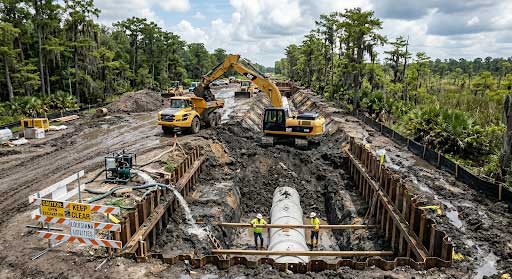
Contractors attempting open-cut excavation in New Orleans-area soils face significant obstacles. Running sands and groundwater intrusion create near-zero “stand-up time” below the water table, dramatically increasing the risk of trench failure. The saturated soils reduce trench wall stability, making shoring and dewatering essential but costly and complex — conditions well documented in OSHA’s excavation safety standards. These conditions elevate safety hazards and project uncertainty.
Open-Cut Excavation Challenges in Gulf South Soils
- Groundwater Intrusion and Running Sands: Saturated soils and loose sands allow water to flow freely into trenches, destabilizing walls.
- Trench Collapse Risk: The combination of soft soils and high groundwater pressure leads to minimal safe excavation time before collapse risk escalates.
- Prohibitive Dewatering Costs: Continuous dewatering is required to maintain a dry work environment, adding significant equipment, labor, and operational expenses.
- Extensive Shoring and Surface Restoration: To protect workers and adjacent structures, costly shoring systems and surface restoration efforts are necessary.
- Settlement Risk to Adjacent Structures: Older New Orleans neighborhoods often have buildings on shallow wood piling foundations, making them vulnerable to settlement caused by excavation-induced soil disturbance.
Microtunneling: Engineered for Below-Water-Table Installations
Microtunneling uses a sealed, pressurized Microtunnel Boring Machine (MTBM) face specifically designed to operate below the water table. This technology continuously balances groundwater and earth pressure, preventing face collapse and minimizing soil disturbance. Unlike open-cut methods, microtunneling eliminates the need for dewatering, shoring, and extensive surface restoration, reducing both risk and environmental impact.
True Cost Comparison
When evaluating costs, it is critical to consider the full scope of expenses associated with each method:
| Method | Cost Components | Key Benefits |
|---|---|---|
| Open-Cut Excavation | Excavation + Dewatering + Shoring + Surface Restoration + Traffic Control | Lower initial excavation cost but high risk of delays, safety issues, and costly remediation |
| Microtunneling | Higher equipment and setup cost; no dewatering, no shoring, minimal surface restoration | Reduced risk, faster schedule, minimal surface disruption, and improved safety |
While microtunneling requires a higher upfront investment, the elimination of dewatering, shoring, and surface restoration costs often results in lower total project expenses and reduced schedule risk.
Settlement Risk and Structural Considerations
Settlement risk is a critical concern in Louisiana’s older neighborhoods, where many buildings rest on shallow wood piling foundations. Open-cut excavation can disturb these soils, causing differential settlement and structural damage. Microtunneling’s trenchless approach minimizes soil displacement and vibration, protecting adjacent structures and infrastructure.
Cost Implications and Project Timelines
Microtunneling’s steady progress and reduced weather-related interruptions improve schedule predictability. Open-cut excavation projects in Louisiana often face repeated delays due to dewatering challenges and trench stabilization, extending timelines and increasing labor costs. Pelican Underground’s expertise ensures efficient project delivery, balancing upfront costs with lifecycle savings.
What is Microtunneling and How Does It Benefit Louisiana’s Underground Utility Projects?
Microtunneling is a remotely controlled, trenchless method that installs pipes and conduits with minimal surface disturbance. A guided tunnel boring machine creates a precise bore while pipe jacking installs the carrier pipe behind it. For Louisiana projects, the technique’s ability to limit dewatering needs and reduce surface impact makes it especially useful in flood-prone and urban settings.
Benefits of Microtunneling for Underground Utility Projects in Louisiana
Microtunneling offers clear advantages in high water table areas:
- Reduced Surface Disruption : Limits road closures, protects landscaping and utilities, and reduces community impact.
- Faster Installation : Once mobilized, the method progresses steadily with fewer weather-related stoppages, shortening overall schedule.
- Enhanced Safety : Eliminates many open-trench hazards, lowering risks for crews and the public.
These benefits make microtunneling a practical choice for many utility installations across Louisiana’s coastal and urban environments.
How Does Microtunneling Work in High Water Table Conditions?
Successful microtunneling in saturated soils depends on targeted controls and pre-construction investigation. Below are the core techniques used to mitigate groundwater risks.
Techniques Used
Typical techniques to manage water during microtunneling include:
- Water Pressure Management : Face and annular pressure control systems balance groundwater forces to preserve face stability and prevent inflow.
- Soil Composition Analysis : Detailed geotechnical sampling and lab testing guide machine selection and support strategies for varied soil layers.
- De-watering Systems : Temporary, targeted de-watering may be used at shafts or launch/reception sites to maintain working conditions without widespread impact.
Applied together, these measures reduce the likelihood of settlement, face instability, and unplanned water ingress — especially important near wetlands and waterways.
Microtunneling for Utility Installation in Wetlands: Dewatering Challenges
Multiple installation technologies were reviewed for the force main; microtunneling was chosen for its lower environmental footprint and reduced disruption to Fort Belvoir operations. Six shafts were constructed to depths between 9.75 m (32 ft.) and 15.85 m (52 ft.). Plaxis flow modeling informed the dewatering requirements for each shaft because of the project’s proximity to wetlands.
Microtunneling Technology Implemented for the Replacement of an Aging 36-inch Force Main while Minimizing Environmental Impacts on a Semi-restricted Site, 2013
These engineering controls and modeling tools are essential when planning microtunneling in sensitive, saturated settings.
Challenges Faced
Microtunneling does present challenges, particularly in high groundwater zones:
- Increased Costs : Specialized equipment, monitoring, and modeling add to upfront budgets.
- Technical Expertise : Skilled operators and engineers are required to manage pressure control, alignment, and unexpected ground conditions.
Addressing these challenges through early geotechnical work and experienced teams reduces technical risk and improves outcomes.
Advantages
Key advantages of microtunneling in high water table conditions include:
- Minimized Environmental Impact : Less excavation protects habitats, roadways, and existing utilities.
- Improved Project Efficiency : Predictable progress and fewer weather stoppages save time and reduce change orders.
Those benefits explain why many Louisiana projects opt for trenchless approaches where groundwater and surface impacts are concerns.
What Are the Key Advantages of Microtunneling Over Traditional Methods?
Compared with open-cut excavation, microtunneling delivers several operational advantages that matter most in wet or congested sites:
- Trenchless Technology : Avoids long trenches, protects streets and landscaping, and reduces restoration costs.
- Faster Project Completion : Steadier progress under adverse weather conditions helps meet tight schedules.
- Enhanced Safety : Fewer open trenches mean reduced fall and cave-in hazards for crews and the public.
For projects near waterways, wetlands, or dense urban infrastructure, these advantages often outweigh the higher initial investment.
What Challenges Does Open-Cut Excavation Face in Louisiana’s High Water Table Areas?
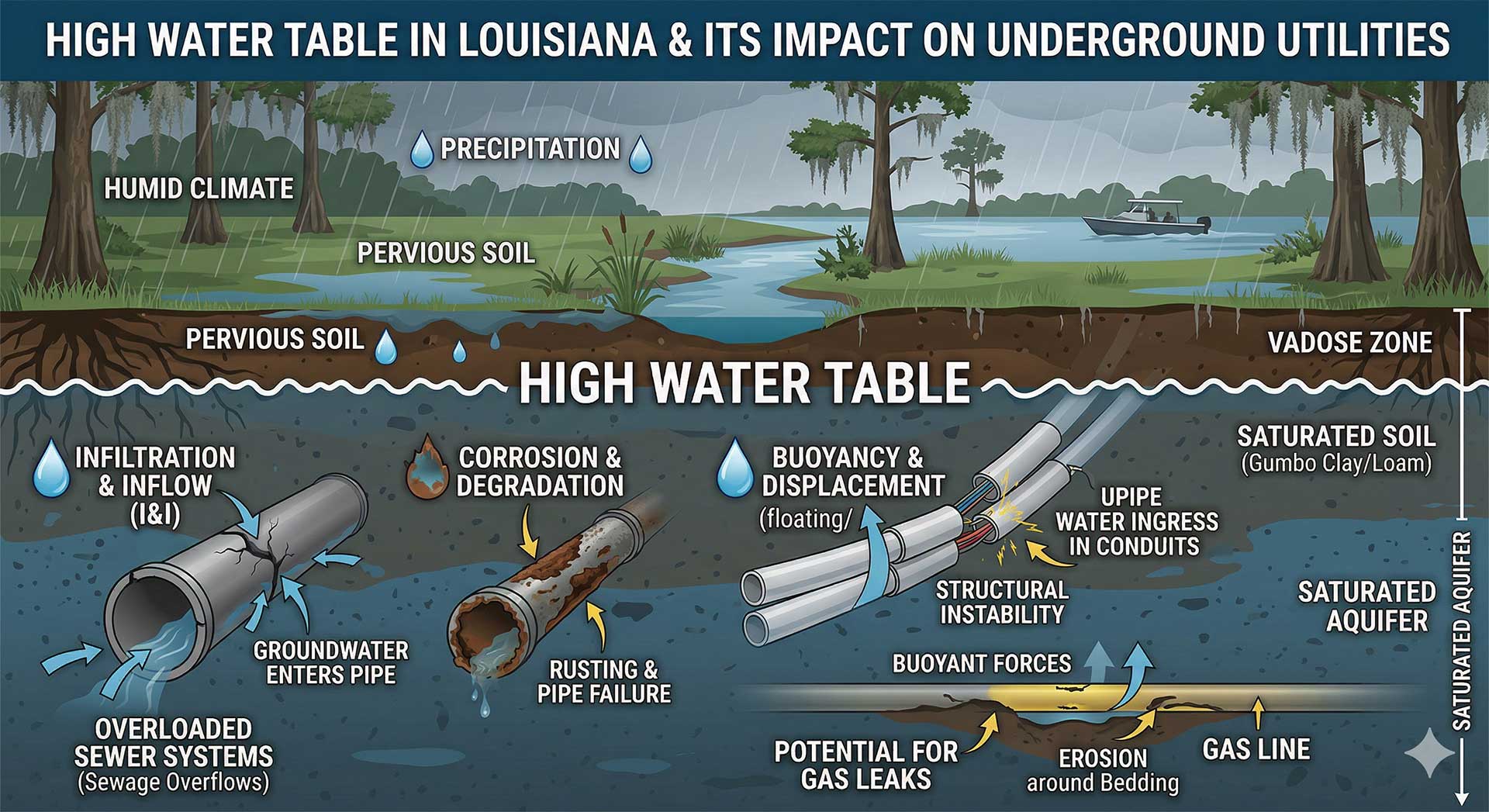
Open-cut excavation in Louisiana must contend with several site-specific risks:
- Soil Stability Issues : Saturated soils increase trench collapse risk and complicate shoring.
- De-watering Requirements : Continuous de-watering raises costs and can affect nearby properties and wetlands.
- Weather-Related Delays : Heavy rain and flooding can halt work and require rework.
These factors make open-cut less predictable and potentially more costly over a project’s life in high groundwater settings.
Why Is Open-Cut Excavation Risky in Flood-Prone and Saturated Soils?
Flood-prone and saturated soils increase the probability of problems that directly affect safety, schedule, and the environment:
- Increased Risk of Collapse : Wet soils reduce shear strength and make trench walls unstable.
- Extended Project Timelines : Dewatering and weather recovery extend schedules and inflate labor costs.
- Environmental Impact : Large-scale excavation can damage habitats and require extensive restoration.
Because of these risks, many projects in Louisiana evaluate trenchless alternatives to limit exposure.
How Do Soil Types and Water Saturation Affect Excavation Stability?
Soil composition and saturation directly influence how stable an excavation will be. In Louisiana, common concerns include:
- Trench Wall Instability : Soils with high moisture content lose cohesion and are more likely to collapse.
- De-watering Needs : Managing groundwater is often the critical path activity for trench safety.
- Soil Composition Variability : Layered soils, organics, and loose sands require tailored support and excavation strategies.
Thorough geotechnical investigation and conservative design assumptions are essential for safe, effective excavation in these conditions.
How Do Microtunneling and Open-Cut Excavation Compare in Cost and Time for Louisiana Projects?
When comparing both methods for cost and schedule, several patterns appear:
- Microtunneling : Higher initial investment but lower risk of weather delays, less surface restoration, and fewer change orders — which can translate to lower total project cost.
- Open-Cut Excavation : Lower start-up cost but greater exposure to de-watering, schedule slippage, and environmental mitigation that increase lifetime project costs.
Project teams should model both direct and indirect costs to determine the most economical approach for site-specific conditions.
What Are the Cost Differences Between Microtunneling and Open-Cut Excavation?
Cost differences hinge on several factors:
- Upfront Costs : Microtunneling generally requires more equipment, planning, and specialized crews.
- Long-Term Savings : Reduced restoration, fewer delays, and lower environmental mitigation can offset initial expense.
Accurate cost comparison requires a complete lifecycle view — including restoration, traffic management, and risk contingencies.
How Does Project Duration Vary Between These Installation Methods?
Duration depends on setup requirements and the likelihood of interruptions:
- Setup Time : Microtunneling often has a concentrated setup window; once the system is operational it maintains steady progress.
- Delays in Open-Cut Excavation : Weather, de-watering and trench stabilization can repeatedly delay open-cut progress.
Selecting the method that best matches site conditions and schedule constraints improves predictability and lowers contingency needs.
What Environmental and Regulatory Considerations Affect Utility Installation in Louisiana?
Environmental and regulatory factors are integral to project planning in Louisiana:
- Environmental Impact Assessments : Projects near wetlands and waterways typically require detailed impact studies and mitigation plans.
- Regulatory Compliance : Local and state permits, stormwater controls, and cultural resource reviews can shape the chosen method and timeline.
Early coordination with regulators and stakeholders reduces surprises and aligns the project with permitting requirements.
How Does Microtunneling Reduce Environmental Impact Compared to Open-Cut?
Microtunneling reduces environmental impact through several mechanisms:
- Minimized Surface Disruption : Smaller launch and reception areas limit disturbance to soils, vegetation, and infrastructure.
- Reduced Waste Generation : Less excavation means lower volumes of spoil and reduced hauling and disposal.
For sites with sensitive habitats or heavy traffic, these reductions can be decisive.
Partner with Pelican Underground for Underground Utility Installations
In Louisiana’s unique geological and hydrological context, microtunneling is not merely a preferable option—it is often the only responsible choice for underground utility installation. Pelican Underground’s deep understanding of Gulf Coast soils, groundwater dynamics, and regulatory environments positions them as the trusted expert for trenchless solutions that enhance safety, reduce environmental impact, and optimize project outcomes. For civil engineers, public works directors, and utility contractors facing the challenges of saturated soils and high water tables, partnering with Pelican Underground ensures informed, risk-aware decisions that protect communities and infrastructure.

Owner of Pelican Underground LLC and NASSCO-certified trenchless sewer specialist with expertise in CIPP lining, pipe bursting, and sewer rehabilitation across Louisiana, Mississippi, and Alabama. Licensed contractor by the Louisiana State Licensing Board for Contractors.