
Quick Answer: Pulp and paper mill drain cleaning in Louisiana uses industrial hydrojetting to scour fiber mats, calcium carbonate scale, liquor carryover deposits, and pitch from process drains, buildup that cabling only punches through. Crews match flow, pressure, and nozzle type to each deposit, recover debris with vacuum equipment, and confirm results with a camera survey. Most mills pair cleaning with a preventive schedule by system, from weekly on broke pit drains to semi-annually on effluent collection drains, planned around lockout/tagout and production windows.
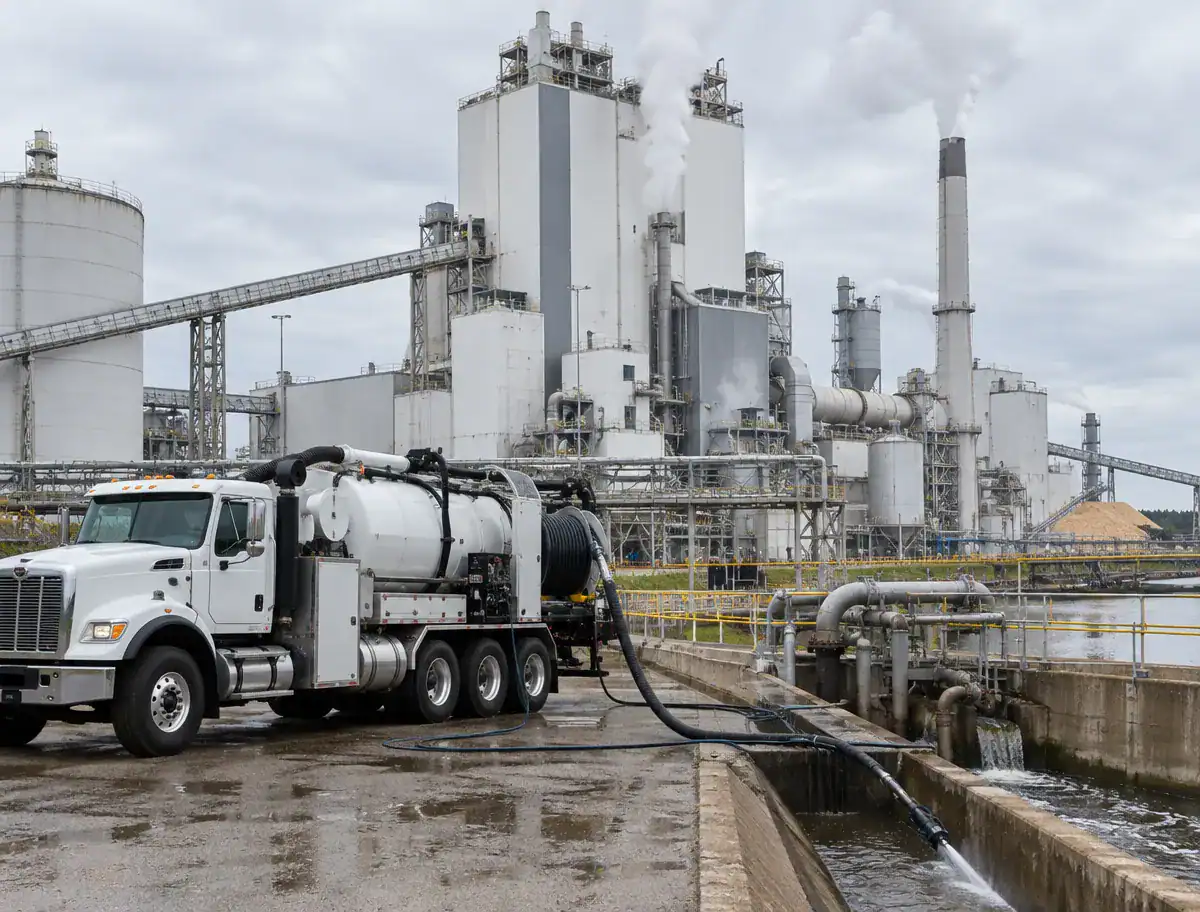
Pulp and paper mill drain systems in Louisiana demand hydro jetting, not cabling, since scouring fully clears the fiber buildup and sludge that mechanical snaking leaves behind. Pelican Underground LLC delivers trenchless, high-pressure industrial drain cleaning backed by trained crews and HD camera inspection, with scheduling built around production so mills can restore drain flow with minimal downtime across Louisiana.
What Are the Key Takeaways for Mill Maintenance Managers?
- Hydro jetting eliminates recurring clogs that return after traditional snaking or chemical treatments.
- High-pressure water jets clean pipe walls completely, removing buildup that mechanical cables leave behind.
- Pelican Undergroundserves New Orleans, LA and mills across Louisiana with professional drain cleaning for industrial facilities.
- Stubborn blockages in pulp and paper mill drains require hydro jetting’s superior cleaning power.
Why Do Pulp and Paper Mill Drains Clog Faster Than Other Industrial Lines?
Pulp and paper operations move enormous volumes of water loaded with fiber, fillers such as calcium carbonate and kaolin clay, and chemical residue. That load reaches floor drains, trenches, and process sewers every shift, so blockages tend to form far more often than in most other industrial facilities. A drain that would run clean for a year in a warehouse or food plant can choke in weeks next to a paper machine.
The deposits also differ from line to line, and each one calls for a different jetting approach:
| Deposit | Where it builds up | Typical jetting approach |
|---|---|---|
| Cellulose fiber mats | Broke pit, save-all, and machine-area drains | High-flow jetting with rotating or penetrating nozzles to break up and flush the mat |
| Calcium carbonate scale | Lines carrying treated process water and filler-laden white water | Higher-pressure passes with rotating scale-cutting nozzles, followed by flushing |
| Caustic / liquor carryover deposits | Drains near recovery, causticizing, and evaporator areas | Pressure and nozzle set after inspection, with the line isolated and locked out |
| Resin acids and pitch | Drains serving wood pulping and washing stages | Repeated full-diameter passes to strip sticky deposits from the pipe wall |
Mills have long relied on high-pressure water to remove hardened deposits; TAPPI has published mill papers on evaporator fouling and hydroblasting in pulp mills and on mill experience with calcium carbonate scale removal. The same principle applies to the drain and sewer network that carries this material away from process equipment.
What Will Industrial Hydrojetting Accomplish at Your Mill?
Industrial hydrojetting restores full flow capacity to pulp and paper mill effluent lines by removing grease, scale, and fiber residue that cabling leaves behind. Louisiana mill drainage systems accumulate dense buildup from continuous processing cycles. Standard augers only punch a narrow channel through that material rather than eliminating it. We treat this distinction as central to every pulp and paper mill drain cleaning engagement in Louisiana we take on.
Our hydro jetting services direct pressurized water against pipe walls to strip away hardened grease, mineral scale, and organic deposits. We scour the full interior surface rather than tunneling through the obstruction. That distinction matters for mills running multi-shift production schedules where a repeat clog means another unplanned stoppage.
Equipment is matched to the deposit rather than run at a single setting. High water volume does most of the work on soft fiber mats, while hardened scale calls for higher pressure and scale-cutting nozzles. Where conditions allow, combination vacuum equipment can recover debris as the line is jetted, which keeps fiber and residue from simply moving farther downstream.
Why Does Hydrojetting Outperform Cabling in a Mill Setting?
Cabling breaks a path through a blockage but leaves residue coating the pipe wall. Within weeks, that residue can rebuild and the line clogs again. Hydrojetting clears the entire diameter, which extends the interval between maintenance calls and protects continuous operations.
Our crews execute the work using trenchless methods designed for minimal disruption to active facilities. For plant engineers managing continuous-flow operations, that approach supports:
- Reduced unplanned downtime during peak production runs
- Lower long-term maintenance costs compared to repeated cabling visits
- Extended pipe service life through full-surface cleaning
- Documented, repeatable results for maintenance and compliance recordkeeping
📞 Ready to Get Started? Don’t wait for a broke pit or save-all drain to back up mid-run. Call Pelican Underground LLC to plan pulp and paper mill drain cleaning around your next production window.
What Tools, Credentials, and Prep Are Required?
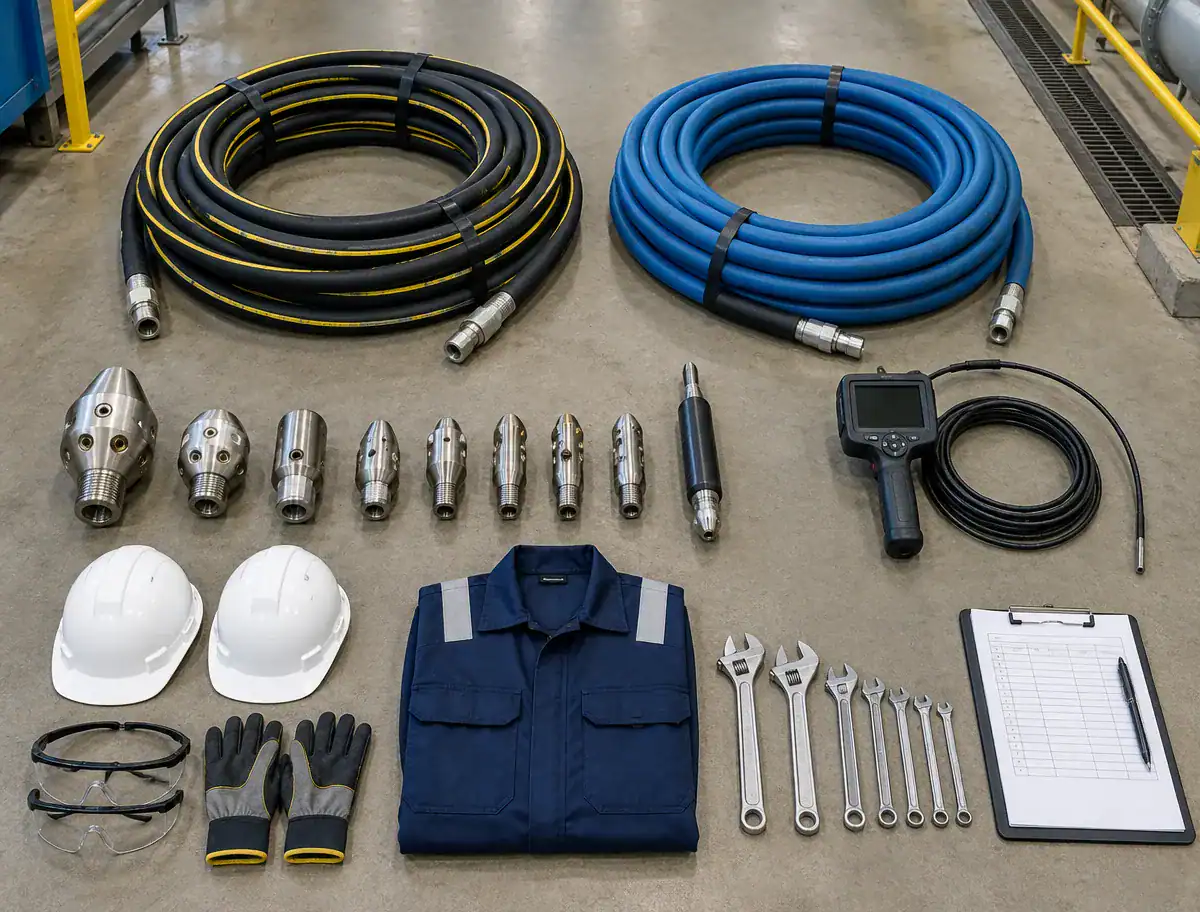
Proper equipment and documented credentials determine whether a mill drain project proceeds without halting production. We deploy high-pressure jetting units, sewer camera systems, and trenchless access tools suited to industrial-grade pipe networks at Louisiana paper and pulp facilities. Hydro jetting works on both commercial and residential pipe systems, and that same effectiveness carries into industrial mill applications where line diameters and debris loads run far heavier than typical drains.
Before deploying crews to a Louisiana mill site, we confirm several prerequisites. Facility access protocols, lockout/tagout coordination, and discharge permit review must all clear before any jetting nozzle enters a line. Mill work is planned around OSHA’s safety standard for pulp, paper, and paperboard mills, its permit-required confined spaces standard, and its control of hazardous energy (lockout/tagout) standard, along with the mill’s own safety programs. Skipping this step risks compliance problems and unplanned downtime, both costly outcomes for continuous-run operations.
High-pressure water jetting carries its own hazards, which OSHA outlines in its technical manual chapter on high-pressure water jetting. Operator training and safe-practice resources from the WaterJet Technology Association are a useful benchmark when reviewing a contractor’s crew qualifications.
Do We Need a Camera Inspection Before Jetting?
Yes, particularly on older infrastructure. Mill systems built with cast iron, clay, or galvanized pipe that have gone years without professional cleaning rank among the strongest candidates for a pre-jetting sewer camera inspection. We record pipe condition first, then match jetting pressure and nozzle type to what the footage reveals.
Our preparation sequence follows a consistent order:
- Review facility shutdown windows and confirm access points.
- Run camera inspection to document pipe material and blockage type.
- Select nozzle configuration based on line diameter and debris density.
- Create small, targeted access points using specialized trenchless equipment, avoiding disruption to ongoing operations.
- Schedule routine inspection and cleaning intervals to prevent recurring failures before they escalate.
What Credentials Should a Mill Drain Contractor Carry?
Industrial clients should require proof of licensing, insurance, safety training, and documented trenchless and water jetting experience. We provide this documentation for Louisiana engagements so plant managers can verify qualifications before granting site access.
How Do You Execute the Jetting Process Step by Step?
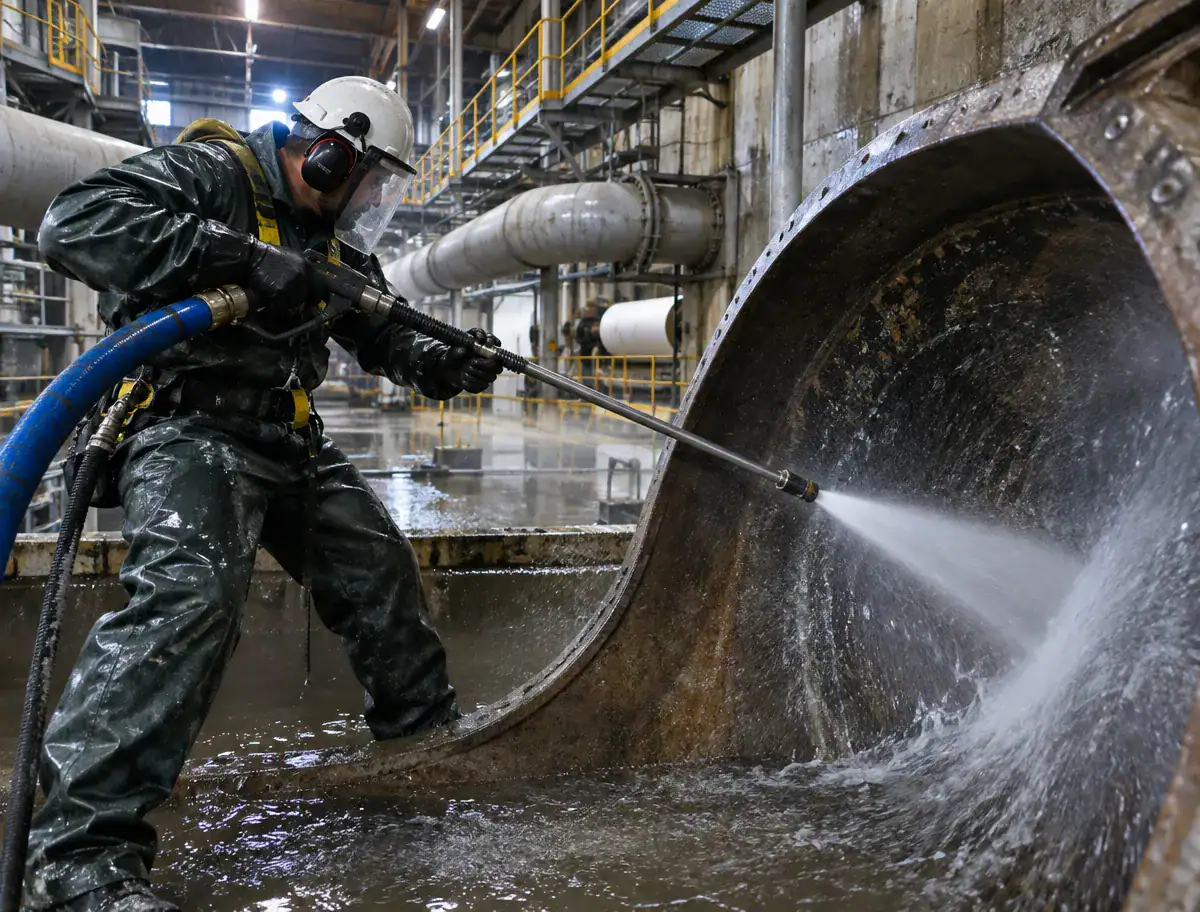
We execute hydro jetting through a defined sequence, moving from diagnosis to final clearance. Repeated clogging after snaking or chemical treatment signals the need for this escalation. We apply that standard before mobilizing equipment to any Louisiana pulp and paper facility, because skipping diagnostic steps risks jetting the wrong line segment and wasting plant downtime.
Before jetting begins, we confirm two prerequisites: fixture-level drainage symptoms across the facility and a mapped point of entry into the line. We follow this sequence on-site:
- Collect symptom reports. We note which fixtures or floor drains show slow drainage simultaneously, since multiple slow fixtures point to a blockage deep in the main line.
- Locate the access point. We identify the correct pipe segment indicated by those symptoms rather than guessing at a location.
- Stage commercial-grade jetting equipment. Our technicians set water pressure and flow for industrial-scale buildup.
- Blast accumulated sludge. We clear years of grease, fiber, and sludge buildup along the pipe wall instead of punching a narrow channel through the obstruction.
- Verify clearance and restore access. We close the access point using trenchless methods that avoid extensive excavation across the facility footprint.
Why Does Jetting Outperform Snaking for Mill Lines?
Snaking only punches a hole through blockages, leaving residue on pipe walls. Pulp and paper mill drains in Louisiana need full-diameter clearance to prevent rapid re-clogging under continuous process loads. Our jetting sequence addresses the entire pipe surface, not a narrow channel.
Does Jetting Require Digging Through Plant Floors?
No. Our trained crews apply trenchless techniques that avoid extensive digging, preserving concrete pads and buried utility corridors common to mill sites across Louisiana.
How Do You Clear Heavy Scale and Chemical Residue?
Full-bore scouring removes hardened grease, mineral scale, and chemical deposits that cabling cannot touch. Pulp and paper process drains across Louisiana accumulate dense residue that narrows pipe diameter over time. A standard auger only punches a path through the center of the blockage rather than restoring the full channel.
We approach pulp and paper mill drain cleaning for Louisiana facilities through a structured process:
- Inspect the line with a camera to confirm scale thickness and residue type before selecting pressure settings.
- Deploy hydro jetting equipment to scour the full interior wall, not just the blockage center.
- Flush accumulated debris to the collection point and verify clear flow with a follow-up pass.
- Document pipe condition for compliance records and maintenance scheduling.
Jetting clears pipes completely, which produces longer-lasting results than mechanical snaking alone. For mills running continuous production, that difference reduces the frequency of emergency callouts.
What Signals Indicate Chemical or Organic Buildup Before Failure?
Odors rising from floor drains or process drains often signal organic buildup or venting problems well before a line fully blocks. We treat these signals as early-warning indicators, not nuisances, and schedule jetting before backups halt production.
We commit to using high-quality equipment and staying current with trenchless advances, supporting industrial-grade results on every line we service. This standard applies consistently, whether the facility runs light residue or years of hardened scale.
How Often Should Each Mill Drain System Be Cleaned?
Preventive cleaning works best when the interval matches the load each system carries. The schedule below is a practical starting point; camera findings, production rates, and furnish changes should tighten or relax it for your mill.
| Drain system | Suggested starting interval | Why |
|---|---|---|
| Broke pit drains | Weekly | Constant fiber and broke load builds mats quickly |
| Paper machine save-all drains | Monthly | Fines and filler settle and harden between cleanings |
| Chip wash and yard drains | Quarterly | Grit, bark, and wood debris accumulate steadily |
| Effluent plant collection drains | Semi-annually | Lower solids, but sludge and scale build over time |
How Is Fiber and Chemical Waste Handled During Cleaning?
Fiber, sludge, and chemical residue recovered from mill drains generally has to be managed as industrial waste rather than flushed downstream. Mills operate under the EPA’s pulp, paper, and paperboard effluent guidelines (40 CFR Part 430) and their own discharge permits, so cleaning water and debris should only go where the mill’s environmental team approves.
On mill projects, Pelican Underground LLC coordinates waste handling with the facility before work starts:
- Agree on how recovered material will be sampled and characterized, following the mill’s waste program.
- Contain debris and jetting water with vacuum recovery and staging so it doesn’t re-enter the process sewer.
- Coordinate transport and disposal through permitted facilities and keep records for the mill’s files.
How Does a Post-Cleaning Camera Survey Start a Pipe Rehabilitation Program?
Once a line is clean, a camera survey shows its true structural condition: cracks, corrosion, offset joints, and wall loss that buildup used to hide. That footage becomes step one of a rehabilitation program. Sound pipe goes back on a preventive cleaning schedule, while damaged runs can be prioritized for trenchless repair such as cured-in-place pipe (CIPP) lining, planned around the mill’s outage calendar instead of an emergency.
What Mistakes Should Mills Avoid After Jetting?
Mills undermine their own jetting results by treating a single service as a permanent fix. Cabling alone leaves pipe walls scoured unevenly, and the same clog can return within a few months instead of staying clear. We treat every job at Louisiana pulp and paper facilities as a full scour, not a quick poke-through.
Ignoring warning signs after service creates the second mistake. Gurgling sounds from drains when water runs elsewhere in the facility signal restricted airflow or a partial blockage forming again. Maintenance supervisors should flag these sounds immediately rather than waiting for a backup.
How Often Should We Schedule Follow-Up Maintenance?
Skipping routine inspections and other preventive strategies lets problems escalate right back to where they started. We recommend scheduled camera inspections and cleaning cycles built into the facility’s maintenance calendar, not left to chance.
Who Should Mills Call for Recurring Drain Failures?
Pulp and paper mill drain cleaning in Louisiana calls for experienced, properly insured support, not guesswork. Pelican Underground LLC, which provides industrial drain cleaning in New Orleans and across Louisiana, helps industrial clients avoid the downtime that recurring failures cause:
- Schedule inspections on a set interval, not reactively
- Document gurgling or slow drains immediately
- Request full camera verification after every jetting visit
Frequently Asked Questions
Why does hydrojetting outperform cabling for pulp and paper mill drains?
Cabling only punches a narrow channel through buildup, leaving residue that can rebuild within weeks. Hydrojetting scours the full pipe diameter, which extends maintenance intervals and helps protect continuous mill operations from repeat clogs.
What equipment does Pelican Underground LLC use for mill drain cleaning?
Pelican Underground LLC deploys high-pressure jetting units with nozzles matched to the deposit type, vacuum equipment for debris recovery, sewer camera systems, and trenchless access tools for industrial-grade pipe networks at Louisiana pulp and paper facilities. Flow and pressure are set for each line after inspection.
What steps happen before jetting crews start work at a mill?
Crews confirm facility access protocols, lockout/tagout coordination, confined space requirements, and discharge permit review with the mill before any jetting nozzle enters a line. Skipping these steps risks compliance problems and unplanned downtime.
Can you jet drains while the mill is running?
Often, yes. Many drain lines can be isolated, locked out, and cleaned while the rest of the mill keeps producing, but lines tied directly to running equipment usually need a planned outage window. The mill’s operations and safety teams make the final call on which lines can be cleaned live.
How is hazardous waste classification handled for paper mill drain waste in Louisiana?
Classification generally depends on what the waste contains, which is usually confirmed through sampling and the mill’s own waste characterization program under federal and Louisiana rules. The mill’s environmental team typically makes the classification decision, and Pelican Underground LLC coordinates containment, handling, and transport to a permitted disposal facility around that decision.
TL;DR — Pulp and Paper Mill Drain Cleaning at a Glance
- Pulp and paper mill drains clog faster than most industrial lines because of fiber, filler, scale, liquor carryover, and pitch.
- Industrial hydrojetting scours the full pipe diameter; cabling only punches a channel that soon closes again.
- Flow, pressure, and nozzle type are matched to each deposit after a camera inspection.
- Preventive schedules range from weekly (broke pit drains) to semi-annually (effluent collection drains).
- Recovered waste is contained and disposed of in coordination with the mill’s environmental team.
- Next step: Contact Pelican Underground LLC to schedule an inspection and cleaning plan for your mill.
Related Resources
- Industrial Drain Cleaning
- Industrial Drain Cleaning in Baton Rouge, LA
- What Is Sewer Cleaning?
- Why You Need a Sewer Camera Inspection
- CIPP Lining Contractor in Baton Rouge
- Epoxy Pipe Lining in Louisiana
Get a Free Industrial Hydrojetting Quote
Pulp and paper mill operations across Louisiana depend on hydro jetting to restore full-diameter pipe clearance and sustain production schedules without recurring emergency shutdowns. A structured process, from camera inspection through complete scouring and documented verification, builds durable results that mechanical snaking cannot match, and a preventive schedule turns drain management from a reactive crisis into a predictable part of facility maintenance.
Contact Pelican Underground LLC today for a free, no-obligation quote.
About Pelican Underground LLC: Pelican Underground LLC is a New Orleans-based underground pipe contractor serving industrial, municipal, commercial, and residential clients across Louisiana, Mississippi, and Alabama. The team specializes in industrial drain cleaning, hydro jetting, sewer camera inspection, and trenchless pipe repair including CIPP lining. Contact Pelican Underground LLC for a free, no-obligation quote.
