
Quick Answer: How often should I hydrojet my drains? For most Louisiana homes, preventive hydrojetting every 18 to 24 months keeps lines clear of grease, sludge, and mineral scale. Properties with mature trees near the sewer line, older clay or cast iron pipes, or a history of recurring backups generally benefit from annual service, and busy commercial kitchens often need it more often. Because the right interval depends on your pipes, a camera inspection is the best way to set a schedule matched to your property’s drainage history and pipe condition.
Pelican Underground LLC assesses pipe condition through a camera inspection first, then recommends a jetting frequency matched to each property’s specific drainage history and infrastructure age. This guide covers typical schedules for Louisiana homeowners and businesses, the factors that shorten or extend them, and the mistakes that lead to emergency calls.
What Are the Key Takeaways on Hydrojetting Frequency?
- Most New Orleans homes benefit from hydrojetting every 18–24 months as preventive maintenance.
- Properties with mature trees near sewer lines generally need hydrojetting annually to help prevent root damage.
- Older clay or cast iron pipes generally call for yearly hydrojetting to maintain good flow.
- Homes experiencing recurring backups should schedule hydrojetting every 12 months for consistent performance.
- Restaurants and other commercial kitchens with heavy grease loads usually need jetting more often than homes.
What Is Hydro Jetting and How Does It Work?
Hydro jetting uses highly pressurized water to eliminate obstructions and debris within plumbing systems and sewer lines. This method relies on specialized equipment that directs concentrated water streams through the pipe interior at force levels sufficient to break apart stubborn buildup.
Unlike traditional snaking, hydro jetting cleans the entire inside of pipes. A drain snake merely punches a hole through a clog, leaving residue on the pipe walls. Hydro jetting scours the full circumference of the line, which improves water flow and helps prevent future clogs. The process is also generally considered environmentally friendly because it uses only water and no harsh chemicals, making it suitable for both residential and commercial plumbing systems.
Pelican Underground LLC offers professional hydro jetting as a core service for residential, commercial, industrial, and municipal clients. Our technicians deploy this method when camera inspection reveals grease accumulation, root intrusion, or mineral scaling that standard tools cannot fully remove.
How Does Hydro Jetting Compare to Drain Snaking?
Drain snaking works well for simple, localized blockages. Hydro jetting addresses the entire pipe condition. The table below outlines the key differences:
| Factor | Drain Snaking | Hydro Jetting |
|---|---|---|
| Cleaning scope | Clears a hole through the clog | Cleans the full pipe interior |
| Residue removal | Partial | Complete |
| Future clog prevention | Limited | Strong |
| Chemical use | None | None |
Is Hydro Jetting Safe for All Pipe Types?
Hydro jetting is generally safe for pipes in sound condition, but older systems may require more frequent inspections. Our team first performs a video inspection to check pipe integrity before applying high-pressure cleaning. This precaution helps protect older systems from unnecessary stress.
How Often Should I Hydrojet My Drains?
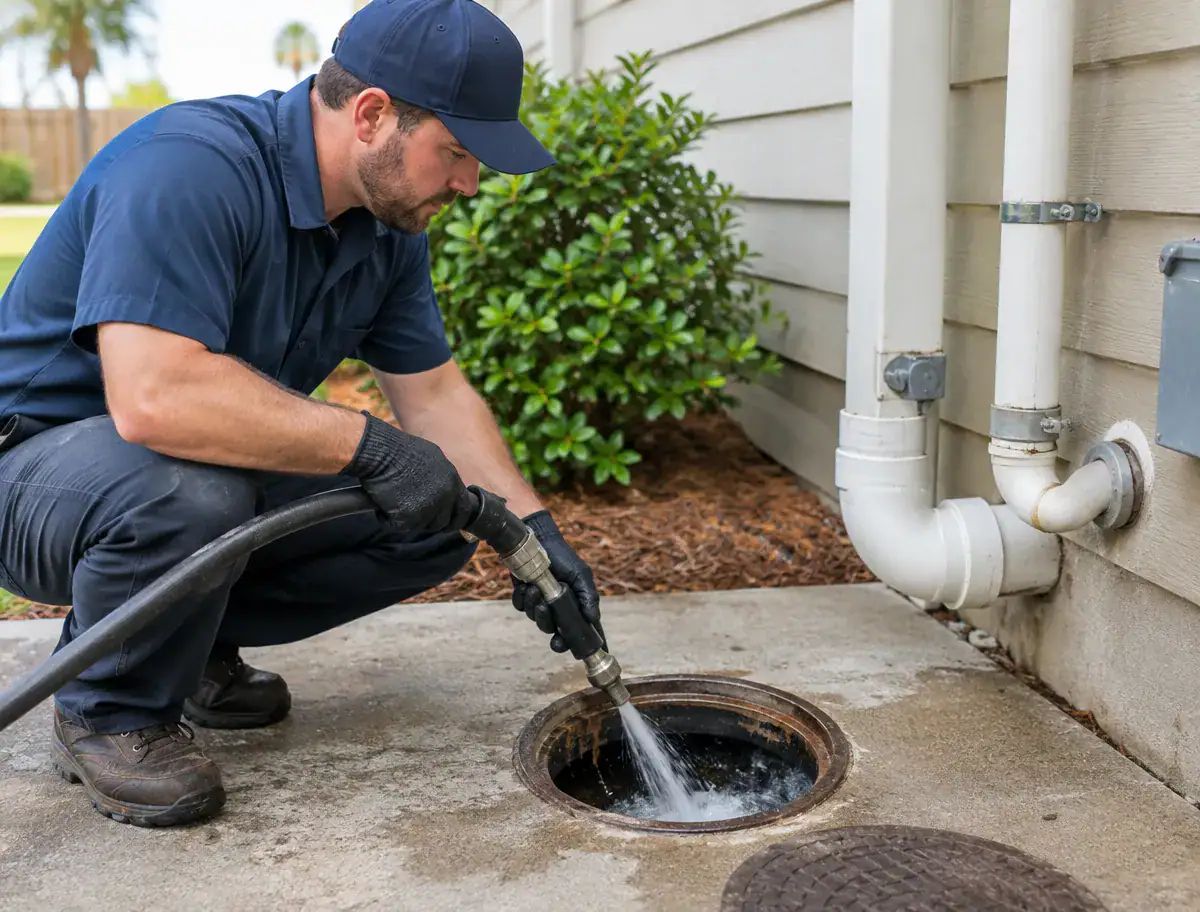
For most residential properties, we recommend hydrojetting every 18 to 24 months as a preventive maintenance measure. This schedule keeps pipes clear of accumulating debris, grease, and mineral scale before blockages form. Properties with specific risk factors generally need more frequent hydrojetting to help prevent emergency repairs.
What Conditions Require Annual Hydrojetting?
Homes with mature trees near the sewer line generally benefit from hydrojetting every 12 months. Root systems actively seek moisture and nutrients from pipe joints, and annual cleaning removes intrusions before they cause complete blockages. Properties with older clay or cast iron pipes also benefit from this accelerated schedule. These materials develop cracks and gaps that trap debris more readily. A history of recurring backups signals that sediment buildup returns faster than the standard interval can manage.
How Does New Orleans Soil Affect Pipe Life?
Many older residential properties in New Orleans, LA were built with cast iron sewer pipe, which is often cited as lasting 50 to 75 years under normal conditions. Local environmental conditions that affect piping longevity — a high water table, salt-laden groundwater, and acidic clay soils — can shorten that functional service life to roughly 40 to 60 years for many systems. This accelerated deterioration means older pipes often need more frequent hydrojetting to maintain flow capacity and delay replacement.
| Property Condition | Recommended Hydrojetting Frequency |
|---|---|
| Standard residential, no risk factors | Every 18–24 months |
| Mature trees near sewer line | Every 12 months |
| Clay or cast iron pipes | Every 12 months |
| History of recurring backups | Every 12 months |
| Commercial kitchen or heavy grease load | Typically more than once a year; set by inspection |
These are typical starting intervals. Your inspection results set the final schedule.
We determine the appropriate schedule through a sewer camera inspection that documents current pipe condition, identifies root intrusion severity, and measures buildup thickness. This data-driven approach helps each property get the frequency its specific conditions call for.
How Often Should Louisiana Businesses Hydrojet Their Drains?
Commercial properties usually need shorter intervals than homes because their drains carry more volume, and kitchens send fats, oils, and grease (FOG) into the line every day. Restaurants and other food service operations often need line jetting more than once a year, while offices, retail spaces, and buildings with lighter loads may follow a schedule closer to the residential one. Pelican Underground’s commercial drain and sewer solutions start with the same camera inspection used for homes.
Grease traps and interceptors are a separate system with their own pumping and maintenance requirements, which can vary by city or parish. In New Orleans, food service businesses should review the city’s grease trap and interceptor discharge permit information and confirm what applies to their location. Jetting the lines downstream of the trap complements that maintenance but does not replace it. Interceptor sizing matters as well — see ASPE’s guidance on selecting a grease interceptor — and for background on how grease is handled before it reaches the sewer, the EPA’s overview of oil and grease removal technologies is a helpful reference.
📞 Not Sure How Often Your Drains Need Jetting? Pelican Underground LLC starts with a camera inspection, so your schedule is based on what is actually inside the pipe. Request a camera inspection and estimate for your home or business today.
What Factors Determine Your Jetting Schedule?
No single schedule applies to every property. Our experience across Louisiana shows that the how often should I hydrojet my drains question has an answer shaped by three variables: pipe material, surrounding environment, and observed drain behavior. Each factor plays a role in determining the appropriate interval.
How Does Pipe Material Affect Jetting Frequency?
Cast iron pipe is common in older New Orleans residential construction, and as noted above, local soil and groundwater conditions can shorten its working life well below what it would see elsewhere. Older cast iron accumulates internal corrosion and scale faster than modern PVC, requiring more frequent jetting to maintain full bore diameter.
What Environmental Signs Indicate a Leaking Line?
Sludge inevitably builds up in drains, composed of soap scum, grease, hair, and other substances that accelerate pipe degradation. Three specific signs of deterioration demand prompt attention:
- Rust-colored water backing up into fixtures
- Slow drains throughout the home
- Patches of unusually green grass in the yard indicating a leaking line
These indicators suggest the pipe wall may be compromised, not merely coated with debris. Pelican Underground performs a sewer camera inspection to determine whether trenchless pipe lining or replacement is needed before recommending any repair. A jetting-only approach on a structurally failing pipe risks further damage.
Your specific frequency depends on your pipes, your yard, and how your drains behave. Properties with mature trees near the sewer line or a history of recurring backups need shorter intervals between jetting sessions. Properties with modern PVC and no root intrusion history can usually extend those intervals safely.
How Do You Schedule a Hydro Jet Service?

Scheduling begins with a free inspection or consultation and a clear estimate. Our team documents the exact condition of the line before any work proceeds. The recommendation rests on evidence rather than guesswork.
What Happens During the Initial Inspection?
We deploy high-definition camera inspections to document pipe conditions. This approach presents options based on what the camera reveals, not assumptions. The footage shows blockages, root intrusions, and buildup that dictate the correct cleaning method. Licensed, bonded crews complete the work after we confirm the scope together.
How Quickly Can We Schedule Service?
Our team operates daily from 7am to 9pm. Responsive scheduling pairs with specialized equipment and proven processes to fit your timeline. We provide free camera-inspection quotes for hydro jetting, so the cost estimate arrives before any commitment.
The scheduling process follows a simple sequence:
- Contact our office to request a free inspection.
- We perform a high-definition camera inspection of the line.
- We present documented findings and a clear estimate.
- Licensed crews complete the hydro jetting at the scheduled time.
Exact cost depends on pipe length, depth, and condition. The free camera-inspection quote removes uncertainty from that calculation. Property managers and commercial operators benefit from the same transparent process, with scheduling that accommodates operational hours.
Pricing note: Any cost information in this article is for general guidance only. Actual costs vary based on pipe length, depth, condition, access, and the amount of buildup, and pricing can change at any time. Contact Pelican Underground LLC for a current, accurate quote.
What Mistakes Should You Avoid With Hydro Jetting?
A standard drain snake cannot clear the kind of buildup that occurs in older sewer lines surrounded by mature trees. Hydro jetting is one of the most thorough cleaning methods available, scouring the full pipe wall so lines often run close to like-new. Our technicians hold NASSCO credentials including PACP/MACP/LACP, reinforcing consistent professional assessment standards. We emphasize upfront, transparent estimates and offer same-day service when scheduling allows.
What Is the Most Common Mistake Homeowners Make?
The most frequent error is relying on a drain snake as a permanent solution. A snake punches a hole through a clog but leaves the pipe walls coated with grease, sludge, and mineral scale. That remaining material reaccumulates quickly, often within weeks. Homeowners then call for another service visit, paying twice for an incomplete result.
How Does Improper Scheduling Affect Pipe Condition?
Scheduling hydro jetting too infrequently allows buildup to harden into a calcified layer that requires higher pressure to remove. That increased pressure can stress older cast iron or clay pipes. Conversely, jetting too frequently on a system with no documented buildup wastes money and provides no additional benefit. A sewer camera inspection before every service greatly reduces both risks.
Which Operational Mistakes Should Property Managers Avoid?
| Mistake | Consequence | Correct Approach |
|---|---|---|
| Skipping pre-jetting camera inspection | Unknown pipe damage gets worsened by high pressure | Always inspect before jetting |
| Using unqualified or uninsured operators | Damage may not be covered, leaving the property owner exposed to repair costs | Hire experienced, properly insured technicians |
| Ignoring recurring slow drains | Minor blockage becomes a full sewer backup | Schedule jetting at first sign of sluggish drainage |
Property managers should also avoid assuming one frequency fits all buildings. A commercial kitchen requires more frequent jetting than a single-family home. We recommend a customized schedule based on pipe material, tree proximity, and usage volume. When vetting any drain contractor, trade organizations such as the Plumbing-Heating-Cooling Contractors Association (PHCC) offer a useful view of industry standards and professional expectations.
What Is the Bottom Line on Hydrojetting Frequency?
Hydro jetting frequency rests on a straightforward principle: match the cleaning schedule to your pipe material, environmental conditions, and drainage behavior. Properties with modern systems and no root intrusion history can usually extend intervals safely. Older cast iron near mature trees generally needs more frequent maintenance. A camera inspection before each service removes guesswork and helps protect your infrastructure from unnecessary stress. Establish a customized schedule based on documented evidence, not assumptions, and your drains are far more likely to stay clear for years to come.
Frequently Asked Questions
How often should most homeowners schedule hydrojetting?
Pelican Underground LLC generally recommends hydrojetting every 18 to 24 months for most residential drain systems. This preventive schedule clears accumulating debris, grease, and mineral scale before blockages form, keeping pipes flowing properly between services.
Which properties need hydrojetting every year instead?
Properties with mature trees near sewer lines, older clay or cast iron pipes, or recurring backups generally benefit from annual hydrojetting. Root intrusion, pipe cracks, and faster sediment buildup in these situations call for a more frequent cleaning schedule.
Does Pelican Underground check pipes before hydrojetting them?
Yes, technicians perform a camera inspection first to check pipe integrity and assess condition. This step confirms hydrojetting suits the pipe type and helps protect older systems from unnecessary stress during cleaning.
How often should restaurants and commercial kitchens hydrojet their drains?
Commercial kitchens usually need drain line jetting more often than homes, often more than once a year, because fats, oils, and grease build up quickly. The right interval depends on volume, menu, and how the grease trap or interceptor is maintained, which may also be subject to local rules. A camera inspection helps set a schedule that fits the operation.
Can hydrojetting damage older pipes?
Hydrojetting is generally safe for pipes in sound condition, but cracked, corroded, or badly deteriorated pipes can be stressed by high-pressure water. That is why a camera inspection comes first: it shows whether the line can be jetted safely or needs repair or lining before cleaning.
TL;DR — Hydrojetting Frequency at a Glance
- Most Louisiana homes: preventive hydrojetting every 18–24 months.
- Mature trees, older clay or cast iron pipes, or recurring backups: generally every 12 months.
- Restaurants and commercial kitchens: usually more often than homes, based on grease load.
- A camera inspection before jetting confirms pipe condition and sets the right interval.
- Hydro jetting cleans the full pipe wall; snaking only punches through the clog.
- Next step: Contact Pelican Underground LLC to schedule a camera inspection and get a clear estimate.
Related Resources
- Hydro Jetting Services
- New Orleans, LA Service Area
- What Is Sewer Cleaning?
- Signs Your Main Sewer Line Is Clogged
- Why Do I Need a Sewer Camera Inspection?
- 10 Warning Signs Your Pipes Need Immediate Repair
- Environmental Conditions in New Orleans and Piping Longevity
Get a Free Hydro Jetting Inspection Quote
Whether you own a home with aging cast iron or manage a busy commercial kitchen, the right hydrojetting schedule starts with knowing what is inside your pipes. Pelican Underground LLC documents pipe condition with a camera inspection, then recommends a frequency built around your property, pipe material, and drain history.
Contact Pelican Underground LLC today for a free, no-obligation quote.
About Pelican Underground LLC: Pelican Underground LLC is a New Orleans-based underground pipe contractor serving residential, commercial, industrial, and municipal clients across Louisiana, Mississippi, and Alabama. The team specializes in hydro jetting, drain cleaning, sewer camera inspection, and trenchless pipe repair including CIPP lining. Contact Pelican Underground LLC for a free, no-obligation quote.
