
Vertical stack lining is a trenchless rehabilitation method for vertical sewer stacks in multi‑storey buildings. A flexible, epoxy‑impregnated liner is inserted and cured to form a new internal pipe, avoiding excavation and reducing disruption and cost.
Key Takeaways
- Trenchless rehabilitation of vertical sewer stacks.
- CIPP liner is cured in place to form a continuous pipe.
- Often 20–50% cheaper than full replacement.
- Minimises tenant disruption and major restoration.
- Liners can exceed 50 years with proper maintenance.
- Steps: inspection, installation, curing and verification.
- Costs vary by length, diameter, access and condition.
- Regular inspections preserve performance and warranties.
- Faster repairs and lower labour compared to excavation.
What is Vertical Stack Lining?
Vertical stack lining uses Cured‑In‑Place Pipe (CIPP) technology: a resin‑saturated carrier is positioned inside the existing stack and cured (commonly with heat or steam) to create a continuous structural liner that extends service life without excavation.
Further technical research examines the end‑to‑end CIPP process for sewer rehabilitation with the objective of optimising procedural steps and addressing known operational concerns.
Importance of Vertical Stack Lining
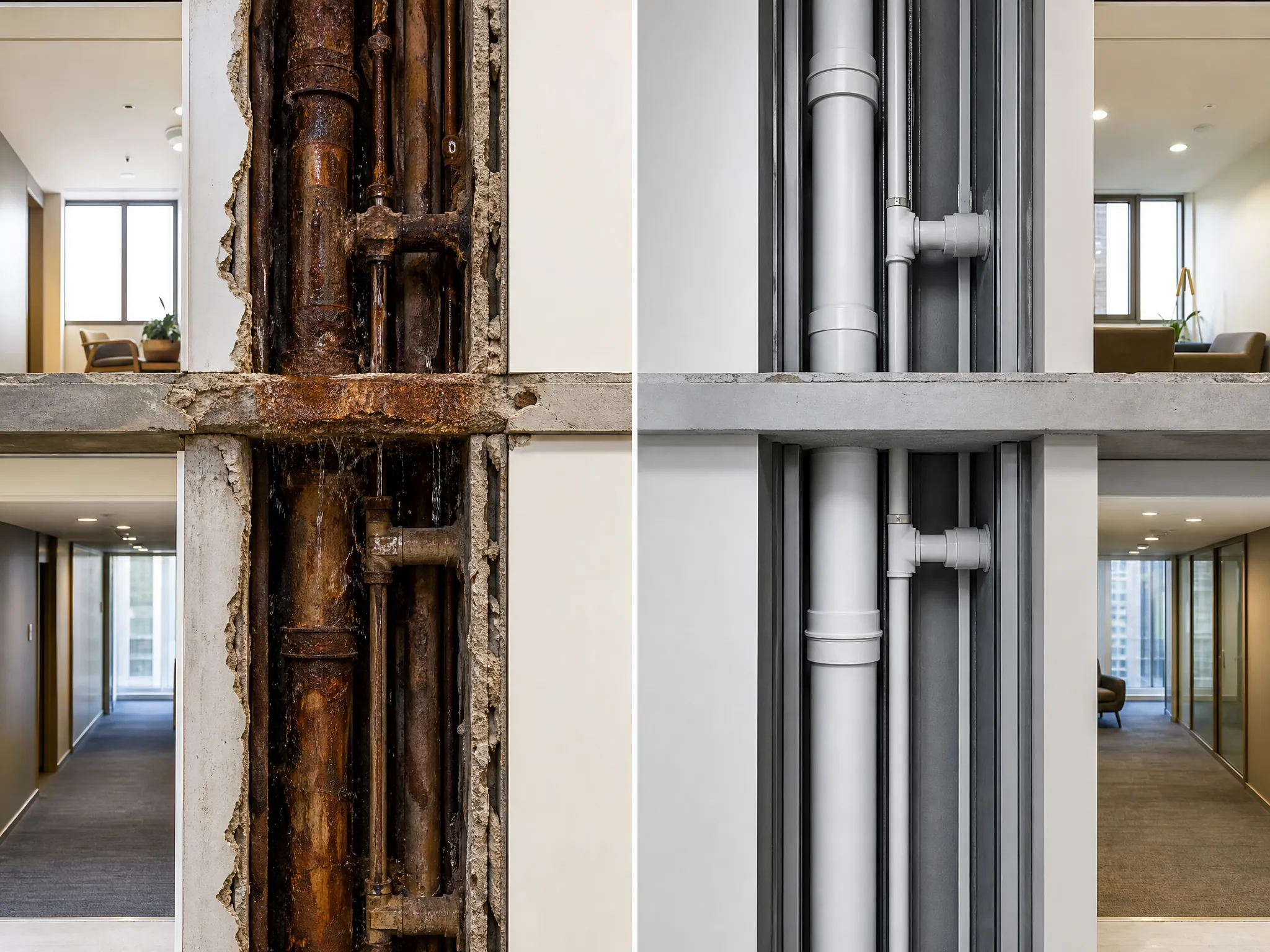
Vertical stack lining helps preserve building operations and addresses ageing sanitary infrastructure with measurable cost and asset‑management benefits.
- Cost-Effectiveness: Often 20–50% less costly than replacement.
- Minimal Disruption: Trenchless installation reduces tenant impact and restoration needs.
- Longevity: Properly installed liners commonly provide service lives of 50+ years.
These features make the method attractive for owners and managers seeking efficient asset preservation.
CIPP applications are particularly pertinent where sewer assets have exceeded their design life and require targeted rehabilitation. Learn more about Pelican Underground’s CIPP lining services.
Key Considerations for Implementation
Successful projects require assessment of condition, correct material/process selection and verification against regulatory and performance criteria.
- Initial Inspection: Confirm suitability via CCTV inspection and cleaning.
- Installation Process: Proper placement and controlled curing ensure adhesion and strength.
- Final Inspection and Compliance: CCTV verification and testing confirm regulatory and performance compliance.
What Is Vertical Stack Lining and How Does It Function?
Typical sequence: mechanical cleaning, liner insertion, expansion and curing (hot water or steam). The cured liner seals defects and restores hydraulic and structural performance with minimal disruption.
Design and execution of CIPP interventions require specification of liner thickness and material properties, particularly for complex projects such as trunk sewer rehabilitation. Research on rehabilitation of fully deteriorated rigid pipes by flexible liners provides additional technical context on liner selection and performance. For related work, see Pelican Underground’s trenchless pipe repair services.
Benefits Compared to Traditional Sewer Repairs
Vertical stack lining reduces capital outlay, shortens programme duration and lowers site restoration requirements compared with full‑depth replacement where conditions permit.
- Cost Comparison: Lower installed cost in many scenarios.
- Time Efficiency: Repairs are typically faster than open‑cut methods.
- Disruption Levels: Reduced tenant disturbance and site impact.
These operational and financial benefits support choosing lining when appropriate.
Why Is Vertical Stack Lining Cost-Effective for Building Owners and Property Managers?
Cost savings come from avoiding excavation, reducing restoration work and extending asset service life, improving predictability of lifecycle budgets. For a detailed breakdown, see our guide to vertical stack lining costs for property managers.
What Are the Cost Factors and Estimates for Vertical Stack Lining Services?

Principal cost determinants are linear footage, pipe diameter, site accessibility and the condition of the existing pipe.
- Cost per Linear Foot: Typical range $100–$300 per linear foot, depending on job complexity.
- Factors Influencing Pricing: Length, diameter, access and remediation needs affect price.
- Typical Service Packages: Inspection, lining and post‑installation verification are commonly bundled.
| Cost Factor | Description | Estimated Value |
|---|---|---|
| Cost per Linear Foot | Average cost for lining services | $100 - $300 |
| Accessibility | Impact of stack location on pricing | Variable |
| Pipe Condition | Influence of existing pipe integrity on costs | Variable |
The table summarises primary cost drivers to assist budgeting and procurement decisions.
Which Variables Influence the Cost of Vertical Stack Lining?
Cost is mainly driven by pipe length and diameter, site access constraints and the degree of remedial preparation required.
- Length and Diameter: Larger or longer stacks increase material and labour needs.
- Accessibility: Difficult access can require extra equipment or labour.
- Condition of Existing Pipes: Severe damage increases preparatory work and cost.
A detailed site assessment provides accurate costing and contingency estimates.
How Does Vertical Stack Lining Compare Cost-Wise to Traditional Excavation Methods?
Trenchless lining typically yields material, labour and restoration savings versus open‑cut replacement, reducing total installed cost where lining is suitable. Read more about the pros and cons of trenchless sewer repair.
How Can Building Owners Maintain Vertical Stack Lining for Longevity and Performance?
Adopt a proactive maintenance plan with scheduled sewer camera inspections, monitoring and prompt remediation of defects to preserve liner performance.
- Regular Inspections: Routine CCTV checks identify issues early.
- Preventative Measures: Monitor for leaks or blockages to extend liner life.
- Address Minor Issues: Quick repairs prevent escalation and protect warranties.
What Are Recommended Maintenance Practices for Vertical Stack Lining?
Recommended actions include annual or risk‑based inspections, timely rectification of leaks/obstructions and using qualified contractors to maintain standards and warranties.
- Inspection Frequency: At least annual, or more often for high‑risk assets.
- Common Issues to Address: Leaks, blockages and localized wear.
- Professional Maintenance: Use certified contractors for repairs and testing.
How Long Does Vertical Stack Lining Typically Last Under Proper Maintenance?
When correctly installed and maintained, liners are designed to deliver service lives in excess of 50 years; longevity depends on installation quality, materials and ongoing management.
In summary, vertical stack lining is an efficient, low‑disruption option for sustaining sewer function in multi‑storey buildings. A clear understanding of benefits, cost drivers and maintenance needs helps stakeholders make informed asset management decisions. Pelican Underground LLC offers trenchless vertical stack lining services, including sewer repair, and can provide assessments and project delivery.
Conclusion
Vertical stack lining delivers a cost‑efficient, low‑disruption solution for sewer rehabilitation in multi‑storey buildings. Employ qualified, experienced contractors to ensure specification compliance, long service life and predictable lifecycle costs.
Ready to Upgrade Your Building’s Sewer System?
Contact Pelican Underground today for a personalized quote and expert consultation on vertical stack lining services. Let us help you save costs and minimize disruption with our proven trenchless solutions.
Frequently Asked Questions
What types of buildings benefit most from vertical stack lining?
Multi‑storey buildings—apartments, offices, hotels and older structures with deteriorated sanitary stacks—benefit most when tenant continuity and limited disruption are priorities.
How does the installation process of vertical stack lining work?
After inspection and cleaning, an epoxy‑saturated flexible liner is positioned, expanded and cured (hot water or steam). The cured liner restores integrity and hydraulics without excavation.
Are there any limitations to vertical stack lining?
Limitations include pipes with catastrophic structural failure that require replacement, poor adhesion surfaces, or access constraints that make lining impractical. A professional assessment determines suitability.
What maintenance is required after vertical stack lining installation?
Post‑installation maintenance should include scheduled CCTV inspections (at least annually), leak/blockage monitoring and certified contractors for corrective work to protect performance and warranties.
How does vertical stack lining impact the environment compared to traditional methods?
Trenchless lining reduces soil disturbance, spoil and restoration activities, typically lowering material use and carbon emissions compared with open‑cut replacement.
Can vertical stack lining be used in conjunction with other plumbing repairs?
Yes. Lining can be integrated into broader repair programmes; coordinating horizontal runs or ancillary plumbing can optimise performance and minimise downtime.