
Quick Answer: Vertical stack lining for New Orleans condos uses trenchless cured-in-place pipe (CIPP) technology to restore failing cast iron stacks as a single common-element contract, typically costing far less than a unit-by-unit replacement assessment. Pelican Underground first runs a video camera inspection, then delivers a written estimate based on stack height, diameter, and access points before any work begins. For a 20-unit building, lining commonly runs a fraction of the cost of full replacement, letting HOA boards avoid the special assessments that strain unit owners.
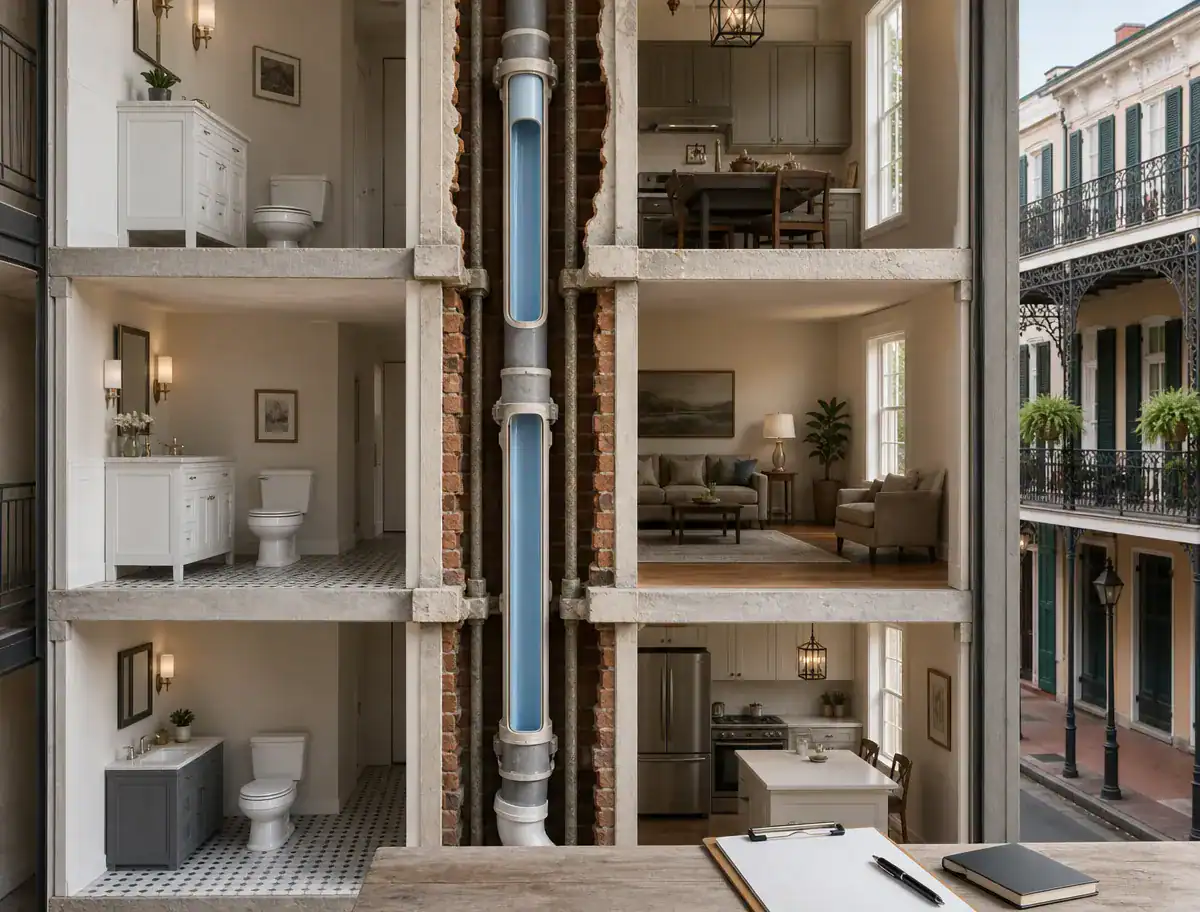
Vertical stack plumbing lining in New Orleans condos is priced through trenchless epoxy pipe restoration, with cost determined by stack-specific conditions. Full stack replacement carries a substantially higher cost by comparison. Pelican Underground LLC, based in New Orleans, LA, provides HOA cost assessments and coordinates trenchless lining projects to minimize per-unit assessments and shared building expenses.
Vertical stack lining costs for New Orleans condo HOAs vary by stack height, diameter, and access points, since curing method selection (hot water, steam, UV) affects labor and equipment requirements. Pelican Underground provides video camera inspection services first, then delivers a written estimate specific to each building’s system before work begins.
Key Takeaways
- Vertical stack lining costs significantly less than traditional pipe repair methods requiring excavation and wall removal.
- Trenchless pipe lining technology uses video camera inspection and industrial-grade cleaning before installing renewal liners.
- HOA boards inherit infrastructure responsibilities and make long-term financial decisions for condominium communities in New Orleans.
- Pelican Underground LLC provides specialized vertical stack lining services to residential properties throughout New Orleans, Louisiana.
Why Do New Orleans Condo Stacks Fail So Fast?
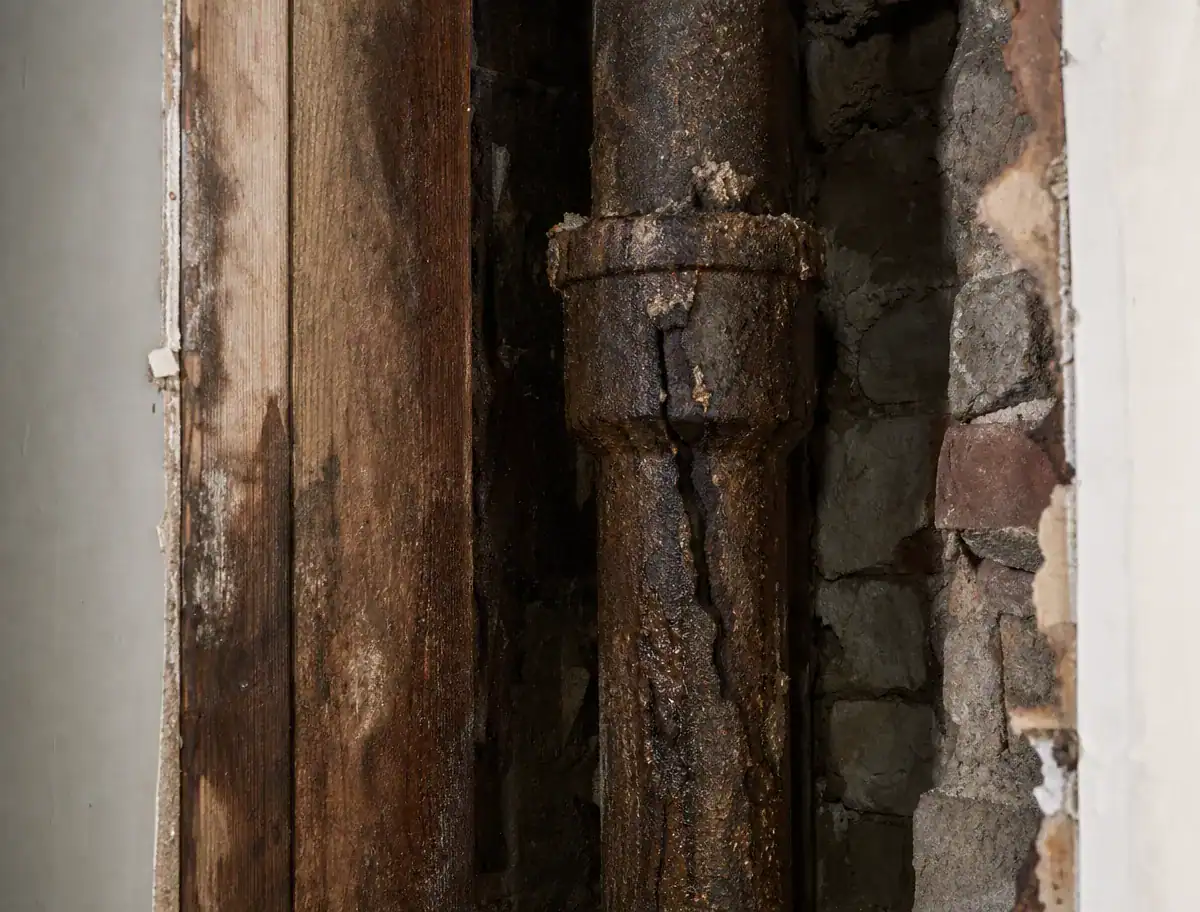
Cast iron stacks in New Orleans condominiums fail decades ahead of schedule because soil chemistry and groundwater attack the pipe from the outside while waste flow corrodes it from within. Most older residential buildings relied on cast iron sewer pipe, rated for a service life of 50 to 75 years under normal conditions. New Orleans conditions are rarely normal. The city’s high water table, salt-laden groundwater, and acidic clay soils compress that lifespan down to 40 to 60 years for a large share of local systems.
We treat this as a building-wide risk, not a unit-by-unit problem. Every stack in a condominium tower shares the same installation date and the same environmental exposure. Once one riser begins to rust and crack, roughly around the 30-year mark, the others usually follow on a similar timeline. Our vertical stack lining New Orleans condos projects account for this pattern by evaluating entire stack systems rather than isolated failures.
How Can a Board Tell a Stack Is Failing Before It Bursts?
Warning signs typically appear well before a catastrophic leak. Rust-colored water backing up into fixtures, drains running slow throughout multiple units, and unusually green patches near ground-level piping all signal active deterioration.
Boards should treat these symptoms as building-wide indicators, not isolated maintenance calls. We perform a sewer camera inspection on the full stack system to confirm whether lining or replacement is the appropriate remedy before recommending any repair, giving boards documented evidence for capital planning rather than guesswork.
What Does Vertical Stack Lining Actually Involve?
Four defined phases carry a New Orleans stack from diagnosis to return-to-service. Each phase produces documentation an HOA board can review. We execute vertical stack lining for New Orleans condos as a sequenced, camera-verified process rather than a single trade operation, following CIPP best practices. Boards overseeing multi-story properties lose leverage in vendor disputes when they cannot point to inspection records. Our process closes that gap.
We begin every project with a video camera inspection to assess the stack’s interior condition. This diagnostic step identifies corrosion, cracks, and blockages before any equipment touches the pipe. No liner installation proceeds without this baseline footage.
Industrial-grade drain cleaning follows the inspection. Contaminated cast iron stacks resist liner adhesion unless scale, grease, and debris get stripped from the interior wall first. Skipping this step risks premature liner failure, an outcome no association wants to fund twice.
How Long Does Curing Take During Installation?
Curing hardens the epoxy liner using hot water, steam, or ultraviolet light, and we select the method based on stack height, diameter, and access points within the building. Taller stacks with limited access often require different curing conditions than shorter, more accessible runs. Our crews match the method to the building’s specific configuration rather than applying a one-size approach.
Once curing completes, technicians trim excess liner at each connection point. A final video inspection then verifies proper installation before the stack returns to active use.
What Is the Typical Project Timeline?
Most vertical stack lining projects finish within one to three days, depending on stack height and complexity. Residents keep using bathrooms and kitchens throughout, since trenchless pipe lining avoids demolition of walls, floors, and finished ceilings entirely.
What Factors Drive Vertical Stack Lining Costs?
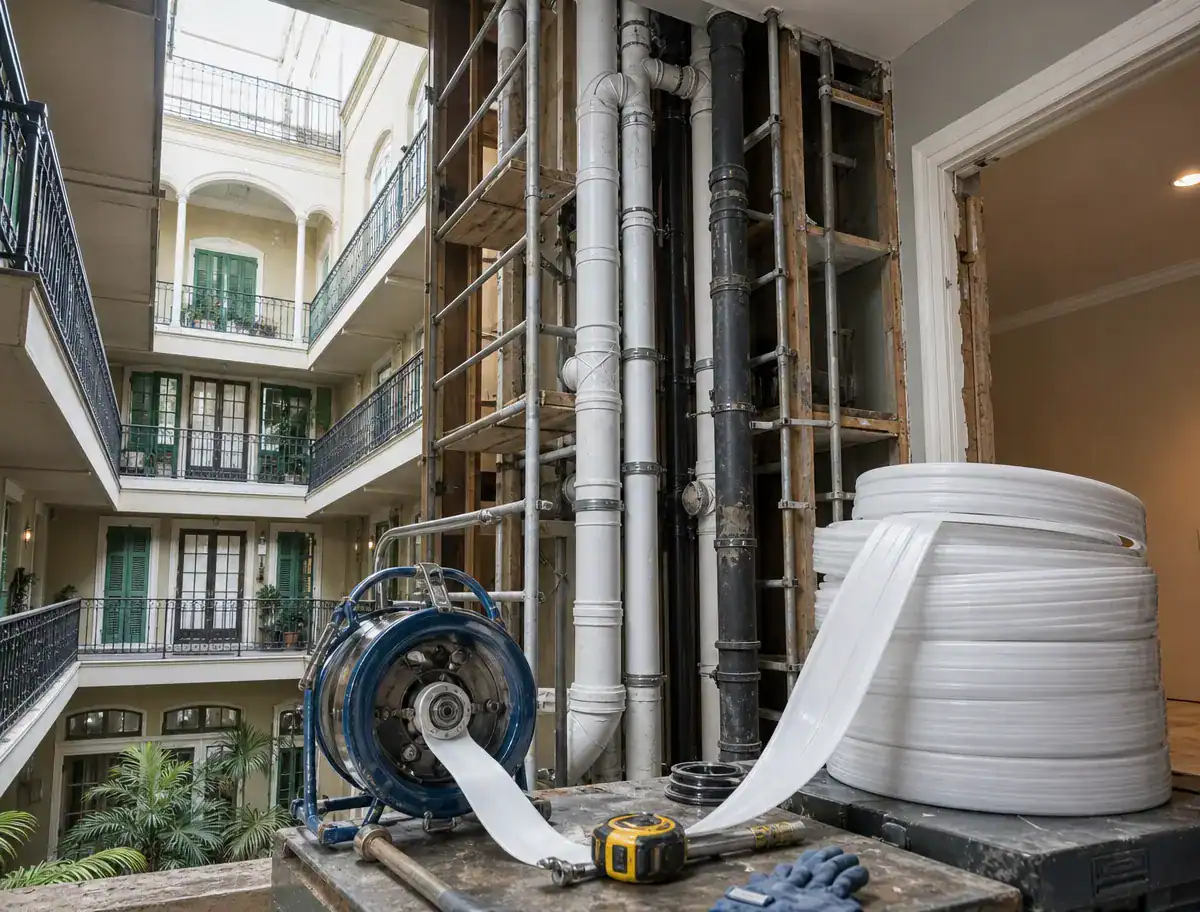
Four variables determine the final price of stack rehabilitation for New Orleans condominium buildings: excavation avoidance, stack dimensions, access conditions, and pre-project evaluation findings. Boards that skip a professional assessment risk approving a budget that misses hidden scope, forcing costly change orders mid-project. We build every estimate around measurable site conditions, not guesswork.
Trenchless technology drives the largest cost advantage. Because our approach avoids excavation entirely, we complete work faster and reduce restoration costs compared to open-trench methods. Condo boards spared from breaking slabs or tearing into common-area walls face no flooring replacement, no drywall repair, and no landscaping restoration. Vertical stack lining for New Orleans condos typically costs less than traditional pipe repair for exactly this reason: residents keep their walls intact, and property managers avoid extended unit closures.
What Makes One Condo Stack More Expensive to Line Than Another?
Stack height, pipe diameter, and access point availability set the scope of every job. These factors dictate which curing method we select, whether hot water, steam, or UV, and each method carries different labor and equipment demands. A twelve-story tower with limited riser access requires more specialized planning than a low-rise building with clear crawlspace entry.
Why Does Pelican Underground Require a Property Evaluation Before Quoting a Price?
Cast iron pipe systems vary too much between buildings for standardized pricing. We conduct an on-site evaluation to establish an accurate timeframe and cost estimate before committing to a scope. This step protects HOA boards from unexpected budget overruns once work begins.
Cost drivers at a glance:
- Excavation avoidance versus traditional dig-and-replace methods
- Stack height and pipe diameter across the building’s risers
- Access point availability for curing equipment
- Findings from the mandatory property evaluation
📞 Ready to Get Started? Don’t let your board face a surprise special assessment. Contact Pelican Underground today for a free stack inspection and written cost estimate for your New Orleans condo building.
How Should HOA Boards Navigate Approval and Budgeting?
Successful approval starts with early planning, not a last-minute vote. New Orleans condo boards frequently inherit deteriorating stack conditions from prior boards or former property managers, and current members carry full responsibility for the fix. Boards can factor these projects into their reserve fund planning well before pipes fail — that gap between origin and obligation is exactly where capital projects stall.
Budgeting delays and homeowner voting requirements can slow down infrastructure work if boards wait until a crisis forces the issue. We recommend building vertical stack lining New Orleans condos projects into reserve planning well before pipes fail. Approval timelines and resident notification periods take time regardless of urgency.
Why Do Capital Infrastructure Votes Take So Long?
Multi-tenant buildings require homeowner buy-in, and votes rarely move quickly. Boards must balance disclosure obligations, resident communication, and financial documentation under the Louisiana Condominium Act before a project reaches a ballot. We work directly with board members to prepare materials that speed this process rather than complicate it.
How Do We Get Homeowners on Board With the Project?
We communicate directly with homeowners and board members, laying out the differences between pipe lining and traditional pipe replacement. This education happens before any vote, so residents understand cost, disruption, and long-term outcomes in advance.
For boards evaluating contractors, credentials matter as much as price. Our technicians carry NASSCO credentials, including PACP, MACP, and LACP certifications, and we maintain active membership in industry associations. That compliance record gives boards documentation they can present to homeowners and, when required, to municipal inspectors.
Boards that treat approval as a communication process, not a formality, close projects faster and face fewer resident objections at the vote.
What Should Your Board Do Next?
Boards move forward by scheduling a formal inspection before authorizing any repair vote. Waiting extends risk: deteriorating stacks in older New Orleans condo buildings do not repair themselves, and delayed action often turns a lining project into an emergency replacement with far less schedule flexibility. We begin every engagement with a free inspection or consultation, followed by a clear estimate the board can review, discuss, and vote on with full information in hand.
How Does the Assessment Process Work for HOA-Managed Buildings?
We document existing pipe conditions using high-definition camera inspections before recommending any course of action. This footage lets us present repair options directly to the board. Members see the actual condition of shared stacks rather than relying on secondhand descriptions. Licensed, bonded crews then execute the approved work, keeping the project accountable at each stage.
When Can Pelican Underground Schedule Work Around Resident Access?
Operating daily from 7am to 9pm, we coordinate scheduling around building access windows, elevator use, and resident notification requirements common to multi-story properties. This flexibility matters for HOA boards balancing contractor access against tenant disruption.
Practical next steps for boards include:
- Request a free inspection to establish baseline pipe conditions.
- Review the written estimate with the full board before scheduling repairs.
- Confirm access logistics with property management ahead of the work date.
Based in New Orleans, LA, we respond directly to local condo and HOA projects without added coordination delays.
Vertical stack lining represents a pragmatic solution for New Orleans condominiums and homeowner associations confronting aging drainage infrastructure. By addressing deterioration through trenchless rehabilitation rather than invasive excavation, property managers and boards preserve structural integrity while minimizing disruption to residents and common areas. The decision to pursue stack lining requires careful evaluation of existing conditions, regulatory compliance, and long-term maintenance strategy — considerations that Pelican Underground’s inspection and assessment process systematically addresses for informed decision-making.
Frequently Asked Questions
What Factors Affect Vertical Stack Lining Costs for New Orleans Condo HOAs?
Costs vary based on stack height, diameter, and access points. The curing method chosen — hot water, steam, or UV — affects labor and equipment requirements for each project.
Why Do Cast Iron Stacks Fail Early in New Orleans Condos?
New Orleans’ high water table, salt-laden groundwater, and acidic clay soils attack cast iron pipes from outside while waste flow corrodes them internally, cutting expected lifespan from 50-75 years down to 40-60 years.
What Does Pelican Underground Do Before Starting a Lining Project?
Pelican Underground performs a video camera inspection of the full stack system to assess interior condition, then delivers a written estimate specific to the building’s system before any work begins.
Will Lining Void Our Building’s Plumbing Warranty?
No. Cured-in-place pipe lining installed to NASSCO and ASTM F1216 standards typically preserves manufacturer and municipal plumbing warranties, since the process rehabilitates the existing pipe rather than replacing it with different materials. Pelican Underground provides documentation boards can share with their insurer or municipal inspector.
How Do We Get Bids?
Request a free video camera inspection first — the footage lets multiple contractors quote against the same documented conditions instead of guesswork. Pelican Underground provides a written estimate boards can present alongside competing bids at the same meeting.
TL;DR — Vertical Stack Lining New Orleans Condos at a Glance
- Vertical stack lining rehabilitates failing cast iron stacks as one shared building contract instead of unit-by-unit assessments.
- New Orleans soil chemistry and groundwater cut cast iron stack lifespan from 50-75 years down to 40-60 years.
- The process runs through video inspection, industrial cleaning, liner installation and curing, and final verification, finishing in 1 to 3 days.
- A property evaluation is required before Pelican Underground provides a written estimate.
- Lining typically costs a fraction of full stack replacement, helping boards avoid large special assessments.
- Next step: Contact Pelican Underground for a free inspection and written estimate for your condo building.
Related Resources
- Vertical Stack Lining Services
- Vertical Stack Lining in New Orleans
- Apartment Building Sewer Pipe Lining
- Vertical Stack Lining Cost Breakdown
- High-Rise Pipe Lining in New Orleans
- Vertical Stack Lining in Louisiana
Get a Free Vertical Stack Lining Quote
Deteriorating cast iron stacks don’t wait for a board’s next budget cycle, and delaying the decision usually turns a planned project into an emergency replacement. Pelican Underground can inspect your building’s stacks and deliver a written estimate your board can review before scheduling any repair vote. Contact Pelican Underground today for a free, no-obligation quote on vertical stack lining for your New Orleans condo.
About Pelican Underground LLC: Pelican Underground LLC is a licensed, NASSCO-certified trenchless pipe rehabilitation contractor based in New Orleans, Louisiana, serving condo associations and HOA boards throughout New Orleans and the greater Gulf South with vertical stack lining, cured-in-place pipe lining, and sewer line repair. Contact us for a free, no-obligation quote.