
Vertical stack lining lets multi-story buildings in Louisiana repair deteriorating drain stacks without major excavation. This trenchless approach reduces occupant disruption and restoration expense while restoring hydraulic and structural performance. This article outlines the method, core benefits, typical steps, and common failure modes. Expert Pelican Underground is noted for trenchless sewer repair and vertical stack lining expertise, particularly suited to Louisiana’s unique climate and building conditions.
No-Dig Sewer Repair Solutions for Multi-Story Building Drain Systems in Louisiana: Vertical Stack Lining
Vertical stack lining is a trenchless repair that inserts, expands and cures a resin-impregnated liner inside an existing vertical drain to create a continuous, durable conduit. It is especially useful in dense urban or historic environments in Louisiana where open excavation would be disruptive or impractical. Given Louisiana’s humid subtropical climate and frequent heavy rainfall, maintaining effective drainage in multi-story buildings is critical to prevent water damage and mold growth, making vertical stack lining an ideal solution.
Overview of Vertical Stack Lining
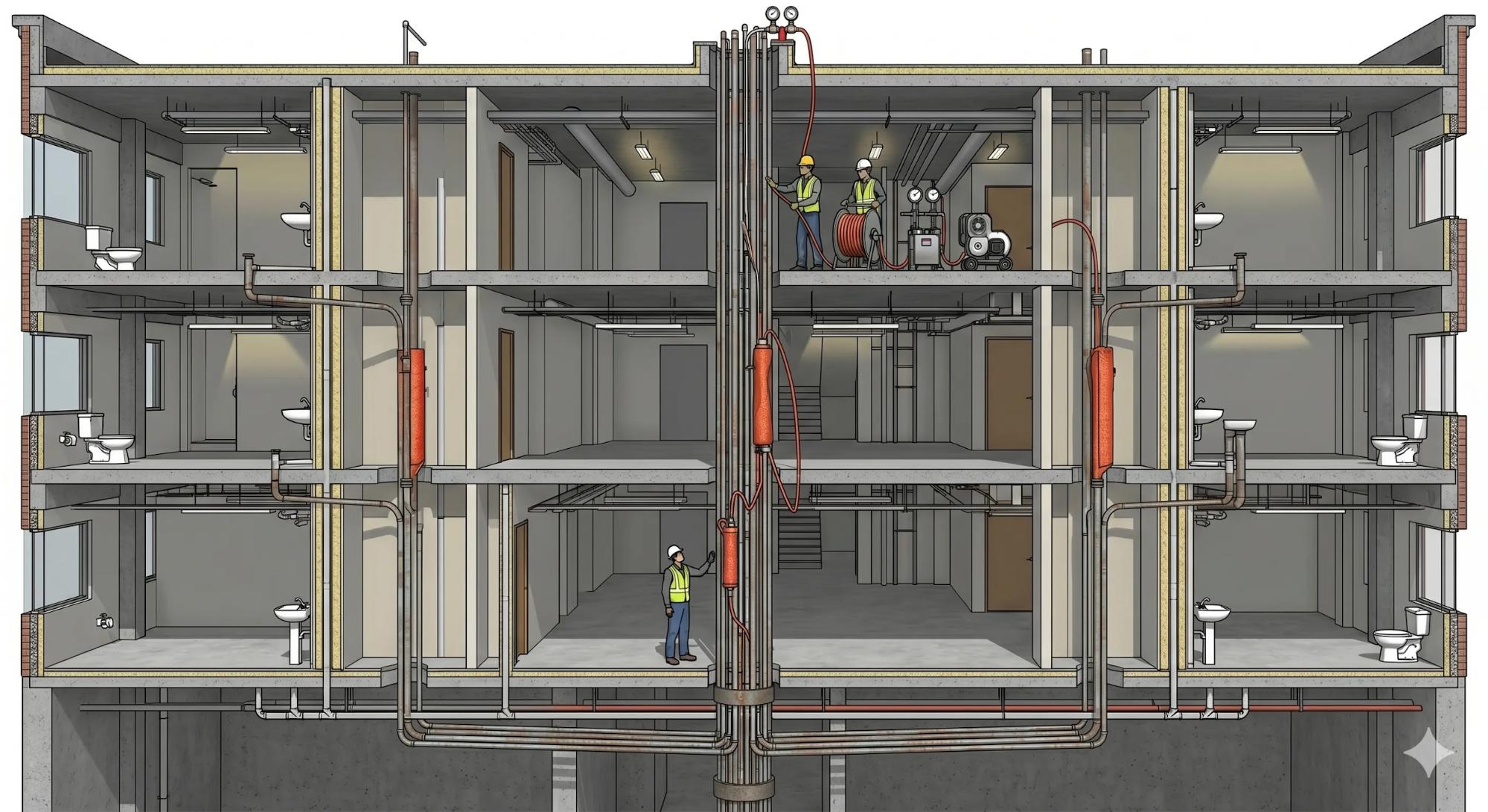
The technique restores structural and hydraulic integrity by bonding a cured-in-place liner to the host pipe. It addresses leaks, cracks and local deformation while improving flow and extending service life compared with unmanaged, aging stacks. In Louisiana’s older urban centers such as New Orleans and Baton Rouge, many multi-story buildings have aging plumbing infrastructure that benefits greatly from this minimally invasive technology.
Benefits of Vertical Stack Lining
Key advantages include lower restoration costs, less operational disruption, and a long-lived repair that preserves building fabric. These benefits are particularly relevant in Louisiana where historic preservation and minimizing tenant displacement are priorities.
- Minimal Disruption : No excavation reduces impact on occupants and adjacent property, crucial in Louisiana’s densely populated urban areas.
- Cost-Effectiveness : Less labour and reinstatement work typically means lower overall project cost, helping property owners manage budgets in a state with diverse economic conditions.
- Durability : Resin-cured liners provide extended service life versus untreated defects, important in Louisiana’s humid environment that accelerates pipe corrosion and deterioration.
Pelican Underground offers trenchless sewer repair and vertical stack lining services tailored to multi-story systems in Louisiana, with expertise in navigating local building codes and environmental factors.
Process of Vertical Stack Lining
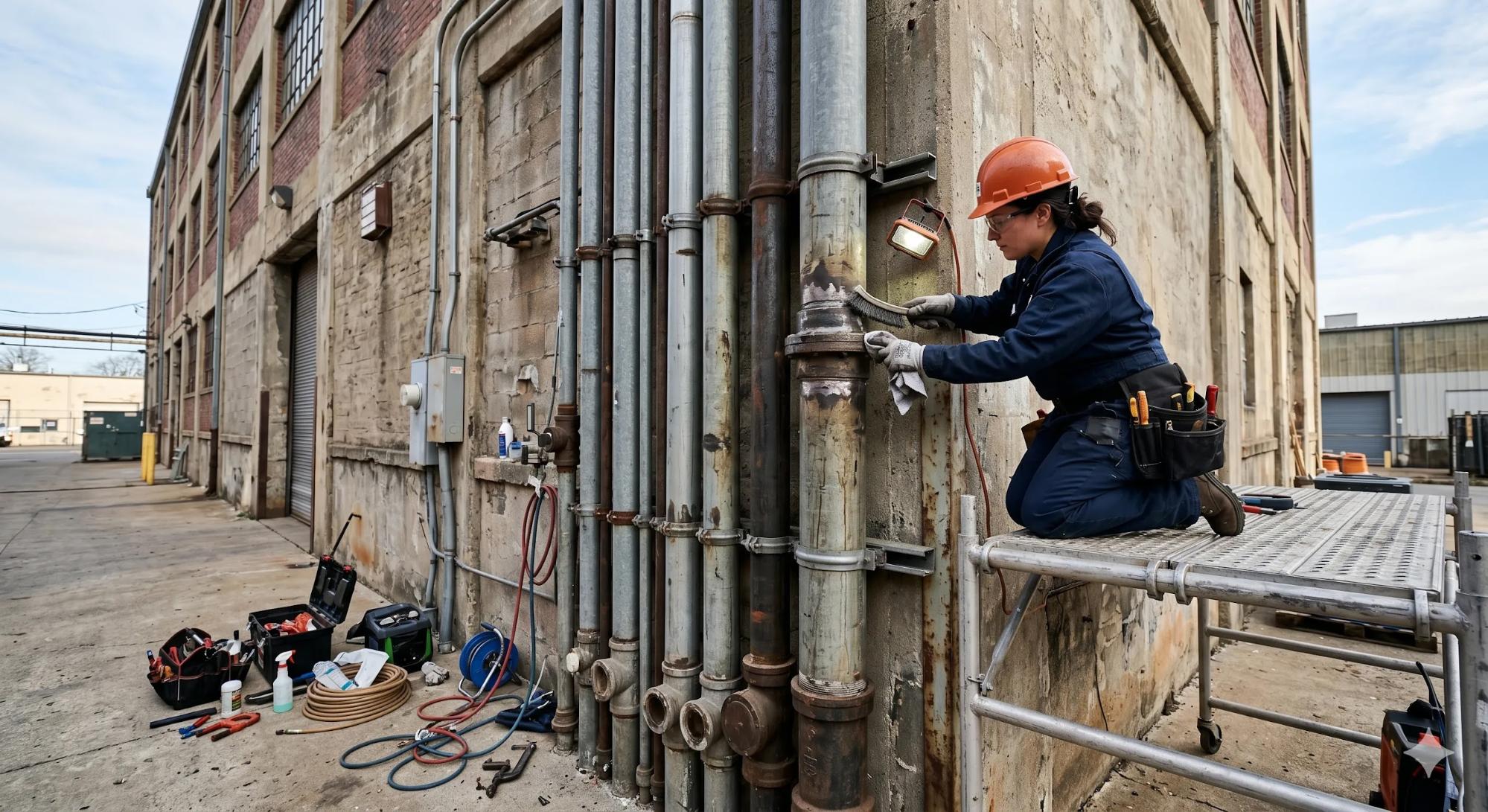
The procedure follows a clear workflow to ensure a reliable rehabilitation.
- Inspection and Preparation : Video inspection and cleaning identify defects and prepare the host pipe, accounting for Louisiana-specific issues such as sediment buildup from frequent storms.
- Liner Installation : A flexible, resin-saturated liner is positioned to span the defect zone.
- Curing Process : Heat or UV curing hardens the resin to form the new, bonded pipe.
The result is a structurally reinforced internal conduit that restores performance with minimal invasive work, reducing the risk of water intrusion and damage common in Louisiana’s climate.
Common Issues Addressed by Vertical Stack Lining
Vertical stack lining targets frequent failure modes found in multi-story plumbing systems:
- Corrosion : The liner creates a corrosion-resistant barrier, essential in Louisiana’s humid and often saline air environments.
- Root Intrusion : A smooth, sealed interior reduces opportunities for root ingress, which can be exacerbated by Louisiana’s lush vegetation.
- Aging Infrastructure : Lining revitalises older drains without full replacement, preserving historic buildings common in Louisiana’s urban landscape.
Case Studies and Applications
Vertical stack lining has been applied successfully across asset classes where non-invasive repairs are preferred.
- Historic Buildings : Protects foundations and finishes by avoiding excavation, a key concern in Louisiana’s preservation districts.
- Multi-Family Residences : Enables swift repairs with minimal tenant disruption, important in Louisiana’s growing urban housing markets.
- Commercial Properties : Reduces downtime and preserves operations during works, supporting Louisiana’s diverse commercial sectors.
What Is Vertical Stack Lining and How Does It Repair Multi-Story Drain Systems?
The method inserts a resin-impregnated liner that is cured in place to form a continuous inner pipe. This restores structural integrity and hydraulic function while avoiding the costs and disruption of open-cut replacement, which can be particularly challenging in Louisiana’s flood-prone areas.
Techniques Used
Delivery relies on condition assessment, precise liner placement and controlled curing to achieve performance and compliance.
- Inspection Techniques : Closed-circuit video cameras map defects and guide repair scope, essential for identifying damage caused by Louisiana’s variable weather conditions.
- Installation Methods : Liner selection and accurate positioning ensure fit and coverage.
- Curing Processes : Heat or UV systems are used depending on material and access.
These techniques sit within the wider trenchless rehabilitation sector, which offers alternate approaches for different conditions. Liner installation follows ASTM F1216 standards for cured-in-place pipe rehabilitation, ensuring consistent quality and compliance across Louisiana projects.
Definition and Scope of Vertical Stack Lining in Sewer Repair
Vertical stack lining is a trenchless rehabilitation technique for vertical drain systems inside buildings. It is applicable to residential, commercial and industrial assets where preserving structure and minimising downtime are priorities. This is especially relevant in Louisiana’s multi-story buildings, where maintaining continuous occupancy and protecting historic architectural elements are critical.
Trenchless technology more broadly offers a suite of options for pipeline rehabilitation across asset types.
Mechanics of Trenchless Technology in Vertical Pipe Lining
The mechanics rely on positioning liners inside the host pipe and curing them to create a new internal pipe without excavation. Specialised equipment and controlled procedures reduce site impact and speed execution, which is advantageous in Louisiana’s urban environments where space and access are limited.
What Are the Key Benefits of Trenchless Sewer Repair for Louisiana Buildings?
Trenchless sewer repair offers cost, operational and environmental advantages that suit Louisiana buildings with limited access or sensitive finishes.
- Cost Savings : Lower labour and reinstatement costs compared with open-cut repairs, helping property owners in Louisiana manage repair budgets effectively.
- Reduced Disruption : Shorter works and less disturbance to occupants and businesses, critical in Louisiana’s multi-family and commercial buildings.
- Environmental Advantages : Less soil displacement and material waste during repair, supporting Louisiana’s environmental regulations and flood mitigation efforts. Research shows trenchless CIPP methods can reduce carbon emissions by up to 100% compared to traditional excavation, making this approach particularly aligned with Louisiana’s sustainability goals.
Cost Efficiency and Minimization of Excavation Disruption
Savings arise from avoiding excavation, reducing labour, and shortening project duration. Open-cut repairs can multiply costs through reinstatement and damage risk; lining offers a lower-impact alternative, especially important in Louisiana’s flood-prone and densely built areas.
Preservation of Building Integrity in Multi-Story Structures
Because no large excavations are required, vertical stack lining reduces the risk of damage to foundations, finishes and adjoining structures—an important consideration for older or historic multi-story buildings common in Louisiana’s cities.
How Does Vertical Stack Lining Compare to Traditional Sewer Stack Repair Methods?
Compared with digging and replacement, lining is typically faster, less invasive and can deliver longer-lasting results for many defect types.
- Effectiveness : Provides a durable, sealed conduit for common defects.
- Cost : Often lower total cost when reinstatement is considered.
- Installation Process : Quicker and less disruptive to occupants and site operations.
Advantages Over Conventional Digging and Replacement Techniques
Vertical stack lining reduces site disturbance, allows continuity of operations and generally shortens completion time compared with conventional excavation and replacement.
- No-Dig Solution: Eliminates extensive excavation, which is particularly beneficial in Louisiana’s urban and flood-sensitive zones.
- Reduced Disruption: Less impact on building use and access.
- Speed of Repair: Often completed in a fraction of the time.
Limitations and Suitability for Various Building Types
Lining is suitable for many situations but has limitations tied to access, host material and specific defect geometry; a site assessment determines viability.
- Initial Cost Considerations: Upfront expense may be higher for some systems, though lifecycle savings can offset this.
- Access Requirements Sufficient entry and egress points are needed for equipment and liners.
- Material Limitations: Some substrates or configurations may require alternative methods.
What Are the Typical Costs and Maintenance Considerations for Vertical Stack Lining in Louisiana?
Costs vary with pipe length, damage extent and access constraints; the table summarises typical factors to consider.
| Cost Factor | Description | Estimated Cost |
|---|---|---|
| Length of Pipe | Longer pipes may incur higher costs due to increased material and labor needs | $100-$300 per linear foot |
| Damage Extent | More extensive damage may require additional preparation and materials | $1,000-$5,000 total |
| Access Issues | Difficult access can increase labor costs | $500-$1,500 additional |
A site-specific assessment clarifies scope, schedule and budget for property owners, taking into account Louisiana’s unique building codes and environmental conditions.
Recommended Maintenance Practices for Long-Term Sewer Stack Performance
To protect lining performance, adopt routine inspection, cleaning and simple monitoring to detect early deterioration or blockages.
- Regular Inspections: Periodic CCTV checks identify emerging issues, especially after Louisiana’s storm seasons.
- Cleaning Recommendations: Scheduled cleaning prevents grease and debris buildup common in multi-family and commercial buildings.
- Monitoring for Blockages: Track drainage performance to catch problems early, reducing flood risk in Louisiana’s humid climate.
Consistent maintenance preserves operational benefits and extends the service life of lined stacks.
Partner with Pelican Underground for Vertical Stack Pipe Lining Repair in Louisiana
Vertical stack lining is a practical no-dig rehabilitation for multi-story buildings in Louisiana, offering reduced disruption, cost advantages and durable restoration of drain performance. Property owners should evaluate lining where access and defect type are suitable; Pelican Underground can provide professional assessment and trenchless implementation tailored to Louisiana’s climate, building types, and regulatory environment. Contact Pelican Underground today.
Frequently Asked Questions
What types of buildings benefit most from vertical stack lining?
Vertical stack lining is particularly beneficial for multi-story residential, commercial, and historic buildings. In densely populated urban areas like New Orleans and Baton Rouge, where excavation can disrupt daily activities, this trenchless method allows for effective repairs without significant disturbance. Additionally, historic buildings, which require preservation of architectural integrity, can greatly benefit from this technique as it avoids the risks associated with traditional excavation methods.
How long does the vertical stack lining process typically take?
The duration of the vertical stack lining process can vary based on the extent of damage and the length of the pipe being repaired. Generally, the entire process can be completed within a few hours to a couple of days. This includes inspection, preparation, liner installation, and curing. The speed of this method is one of its key advantages, allowing for minimal disruption to building occupants and operations, especially in busy urban settings.
Are there any specific maintenance practices recommended after vertical stack lining?
Yes, to ensure the longevity and performance of lined stacks, regular maintenance is essential. Property owners should conduct periodic inspections using CCTV to identify any emerging issues, especially after heavy rainfall. Scheduled cleaning is also recommended to prevent grease and debris buildup, which can lead to blockages. Monitoring drainage performance helps catch potential problems early, reducing the risk of flooding, particularly in Louisiana’s humid climate.
What are the environmental benefits of using vertical stack lining?
Vertical stack lining offers several environmental benefits, primarily by minimizing soil displacement and reducing material waste compared to traditional excavation methods. This trenchless technology supports local environmental regulations and flood mitigation efforts, which are crucial in Louisiana’s flood-prone areas. By preserving existing infrastructure and reducing the need for extensive excavation, vertical stack lining contributes to more sustainable building practices.
Can vertical stack lining be used for all types of pipe materials?
While vertical stack lining is versatile, it may not be suitable for all pipe materials or configurations. The effectiveness of the lining depends on the condition of the existing pipe and its material. Some substrates may require alternative repair methods. A thorough site assessment is necessary to determine the viability of lining for specific situations, ensuring that the chosen method aligns with the building’s plumbing infrastructure.
What factors influence the cost of vertical stack lining in Louisiana?
The cost of vertical stack lining can vary based on several factors, including the length of the pipe, the extent of damage, and any access issues that may complicate the repair. Typically, costs range from $100 to $300 per linear foot, with additional expenses for extensive damage or difficult access. A detailed site assessment can provide property owners with a clearer understanding of the expected costs and help them budget accordingly.
How does vertical stack lining improve the lifespan of plumbing systems?
Vertical stack lining significantly enhances the lifespan of plumbing systems by creating a durable, corrosion-resistant barrier within the existing pipes. This method effectively seals leaks and cracks, preventing further deterioration and extending the service life of the plumbing infrastructure. In Louisiana’s humid environment, where pipes are prone to corrosion, this rehabilitation technique offers a long-lasting solution that reduces the need for frequent repairs or replacements.