
Quick Answer: Storm drain repair in New Orleans relies on trenchless technology — primarily CIPP lining and pipe bursting — to rehabilitate aging below-grade drainage systems with minimal excavation. Because the city sits up to six feet below sea level and operates one of the largest urban pumping networks in the country, traditional open-cut repairs create significant flood risk and surface damage. Trenchless methods restore drainage capacity in days rather than weeks, preserving roads, landscaping, and surrounding utilities while improving long-term flood resilience.
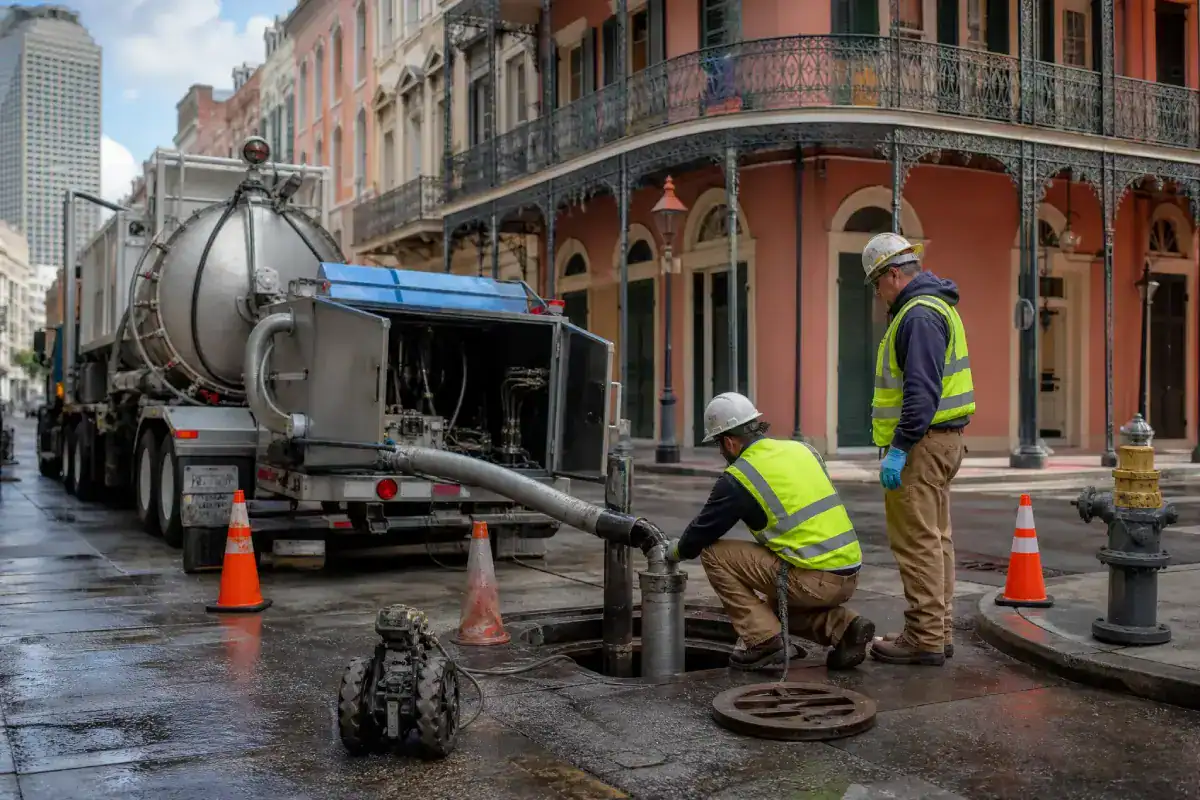
New Orleans faces unique storm drain challenges because of flood exposure and complex below-grade systems. This article explains how trenchless technology restores drainage capacity with minimal excavation, summarizes main methods, and presents municipal and residential examples that illustrate practical outcomes.
Key Takeaways
- Trenchless methods provide minimally invasive storm drain repairs suited to New Orleans’ flood risk.
- CIPP lining creates a seamless internal pipe to restore integrity and reduce leaks.
- Pipe bursting replaces failing pipes without full-depth excavation, preserving surfaces and landscaping.
- Trenchless repairs limit disruption, reduce restoration costs, and lessen environmental impacts.
- Regular inspection and maintenance complement trenchless rehabilitation to sustain performance.
What Trenchless Methods Are Used for Storm Drain Repair?
Trenchless technology allows low-impact rehabilitation of storm drains. The most common techniques are CIPP lining and pipe bursting, each chosen based on pipe condition, diameter, and site constraints.
CIPP Lining
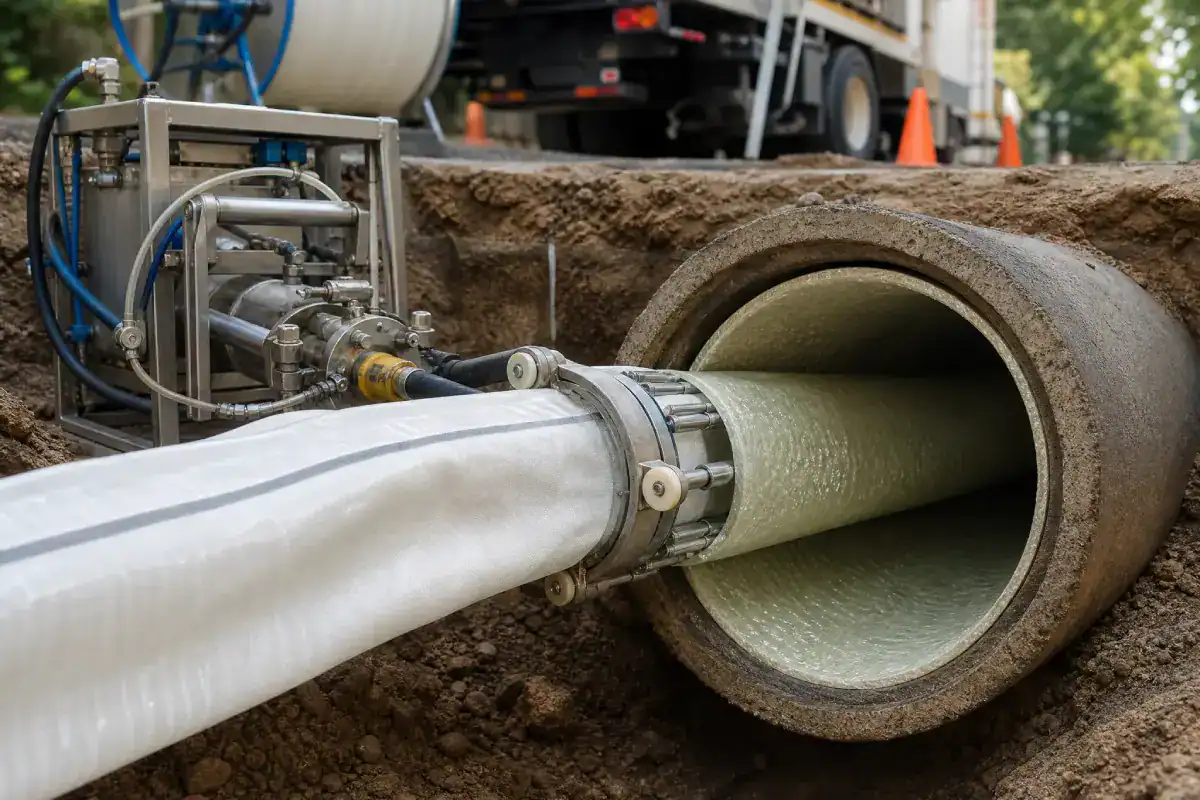
CIPP installs a resin-impregnated liner into the existing conduit, inflates and cures it to form a continuous structural pipe. The approach restores strength, reduces leaks and blockages, and is well suited to aging below-grade assets in New Orleans.
Pipe Bursting
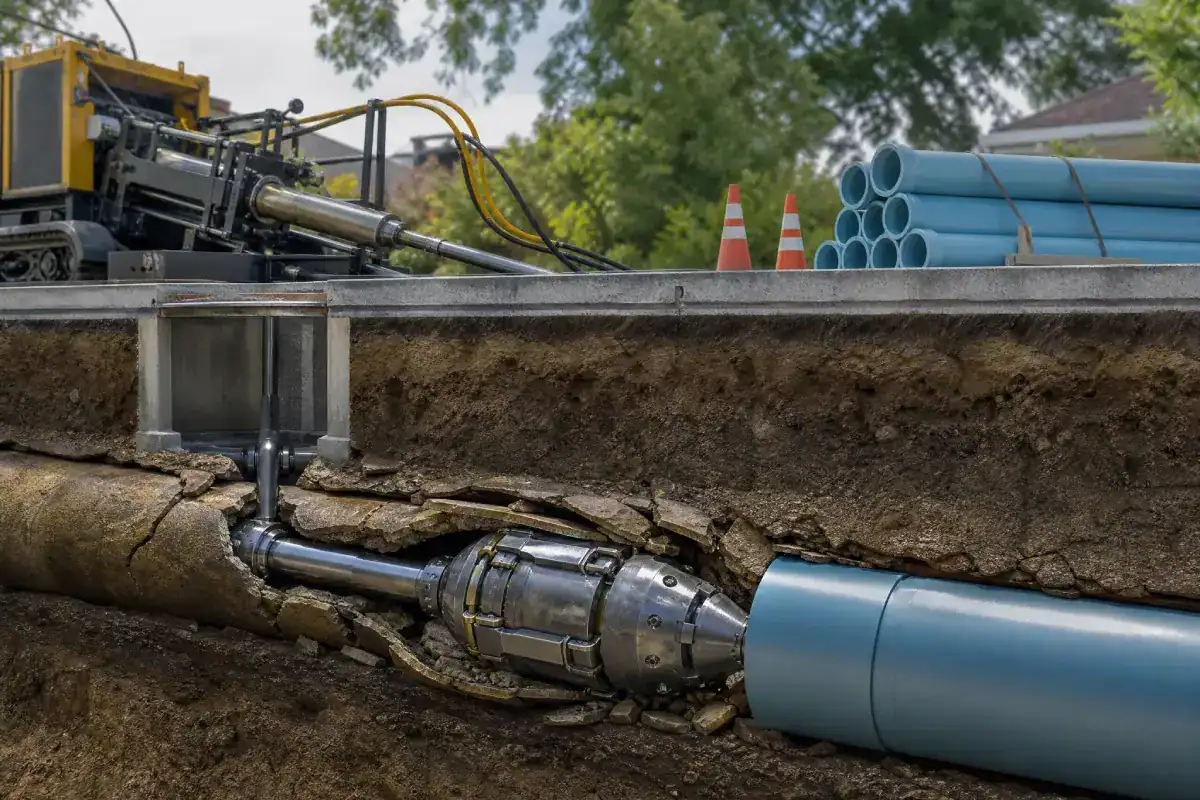
Pipe bursting fractures the host pipe while simultaneously pulling a new replacement into place. Because it avoids large trenches, it preserves landscaping, utilities, and road surfaces—useful in dense urban and residential areas.
What Are the Benefits of Trenchless Storm Drain Repair in New Orleans?
In a flood-prone municipality like New Orleans, trenchless sewer and storm drain repair offers operational and lifecycle advantages that help preserve conveyance and reduce long-term costs.
- Minimal Disruption: Limited surface work preserves landscaping and infrastructure.
- Cost-Effectiveness: Lower overall costs often result from reduced labor and restoration expenses.
- Environmental Protection: Less excavation lowers emissions and site disturbance.
Pelican Underground LLC offers trenchless sewer and storm drain rehabilitation services tailored to New Orleans’ flood exposure and vulnerable below-grade systems.
📞 Ready to Get Started? Don’t wait until a blocked storm drain causes water damage or flooding on your property. Contact Pelican Underground LLC today for a fast, free assessment of your below-grade drainage system in New Orleans.
What Do Real-World Trenchless Repair Projects in New Orleans Look Like?
Practical deployments in New Orleans show trenchless methods applied at municipal and property scales, improving flow capacity and reducing maintenance burdens.
Municipal Collaborations
Municipal programs that incorporated CIPP lining saw improved flow and lower maintenance costs. Citywide sewer upgrades demonstrate institutional commitment to modern rehabilitation techniques that reduce disruption and support resilience.
Residential Solutions
Homeowners have used pipe bursting to replace failing laterals with minimal yard or driveway disruption, saving time and limiting landscape restoration costs.
What Are the Advantages of Trenchless Sewer Repair for Flood-Resistant Storm Drain Solutions?
Trenchless repairs support flood resistance by improving durability and reducing the likelihood of leaks and failures during heavy precipitation.
- Cost-Effectiveness: Lower lifecycle costs through reduced maintenance and reinstatement.
- Reduced Disruption: Minimal excavation keeps neighborhoods functioning during repairs.
- Enhanced Durability: Corrosion-resistant materials and seamless installations extend service life.
How Does Trenchless Technology Minimize Surface Disruption and Repair Time?
By eliminating the need for full trenches, trenchless methods shorten project timelines and cut restoration work. Many interventions complete in days rather than weeks, restoring conveyance quickly with less community impact.
Why Is Pipe Lining Effective for Below-Grade Drainage Protection in New Orleans?
CIPP and similar linings form continuous internal barriers that reduce leakage and soil infiltration. Engineered resins and corrosion-resistant liners support hydraulic performance in a high-precipitation environment.
How Does Sewer Line Rehabilitation Using No-Dig Methods Address New Orleans’ Flood Challenges?
No-dig methods permit efficient repairs and modest capacity upgrades without major surface disruption, reducing community exposure to flood risk associated with failing sewer infrastructure.
What Are the Key Features of Flood-Resistant Below-Grade Drainage Systems?
Flood-resistant systems rely on robust materials, seamless construction, and designs sized to handle increased flows to prevent backups during heavy rain.
- Durable Materials: Corrosion-resistant products improve longevity.
- Seamless Construction: Linings reduce leaks and infiltration.
- Efficient Design: Proper sizing and hydraulics prevent backups.
How Do Trenchless Repairs Enhance Durability and Cost Effectiveness?
Engineered materials and trenchless installation reduce common failure modes and ongoing maintenance needs, while limiting excavation-related labor and reinstatement costs.
What Are the Cost Benefits and Project Durations of Trenchless Drain Repair Methods in New Orleans?
Initial capital may be comparable to traditional methods, but shorter project timelines and lower restoration work typically yield net savings. Projects commonly finish within days to a few weeks depending on scope.
How Can Homeowners and Businesses Maintain Below-Grade Drainage Systems to Prevent Flood Damage?
Routine care preserves system function and reduces failure risk. Property managers should follow a simple preventative program:
- Regular Inspections: Schedule periodic checks to catch issues early.
- Emergency Preparedness: Have a plan for heavy rain events and know how to access drains quickly.
- Routine Cleaning: Keep gutters and drains clear to prevent blockages.
What Are Recommended Maintenance Practices for Flood-Resistant Storm Drains?
Standard maintenance—regular cleaning, scheduled inspections, and emergency procedures—keeps flood-resistant drains operating as intended.
How Does Regular Inspection Complement Trenchless Repair Technologies?
Inspections catch defects early so trenchless interventions can be planned before failures occur, maximizing asset life and performance during heavy precipitation.
TL;DR — Storm Drain Repair in New Orleans at a Glance
- New Orleans’ below-sea-level geography and massive drainage infrastructure make storm drain maintenance a critical, ongoing need for property owners.
- Trenchless methods — CIPP lining and pipe bursting — repair and replace storm drains without full excavation, protecting roads, landscaping, and utilities.
- CIPP lining is ideal for cracked or corroded pipes; pipe bursting suits structurally failed lines requiring full replacement.
- Projects commonly complete in days to a few weeks, with lower overall costs than traditional open-cut repair.
- Regular inspections and routine drain cleaning prevent blockages and extend system life between repairs.
- Next step: Contact Pelican Underground LLC for a free sewer camera inspection and storm drain assessment in New Orleans.
Frequently Asked Questions
What is trenchless technology and how does it work?
Trenchless methods repair or replace subsurface pipes with minimal excavation. CIPP lining installs and cures a resin liner in situ; pipe bursting removes the old pipe while pulling in a replacement. Both reduce surface impact and are suitable for urban settings.
How long does a trenchless repair project usually take?
Typical trenchless projects range from a few days to a few weeks depending on complexity, which reduces disruption and speeds service restoration.
Are trenchless methods suitable for all types of drainage systems?
Suitability depends on pipe diameter, damage severity, and site access. A professional assessment determines the best technique for a specific system.
What maintenance is recommended after a trenchless repair?
Post-repair care includes scheduled inspections, routine cleaning of drains and gutters, and monitoring during rainfall to confirm operability.
Can homeowners benefit from trenchless repair methods?
Homeowners benefit from minimal landscape disruption, shorter project times, and potential cost savings when replacing failing laterals or small-diameter lines.
Related Resources
- Storm Drain Repair Services
- New Orleans, LA Service Area
- Pipe Lining vs. Pipe Bursting: Which Is Right for Your System?
- CIPP Lining in New Orleans
- Stormwater Management Solutions
- Sewer Camera Inspection: What to Expect
Get a Free Storm Drain Repair Assessment in New Orleans
Storm drain repair in New Orleans demands solutions built for a flood-prone environment — and trenchless technology delivers exactly that. Whether you manage a commercial property, a residential lateral, or a municipal system, CIPP lining and pipe bursting provide durable, minimally disruptive rehabilitation that protects your infrastructure season after season. Contact Pelican Underground LLC today for a free, no-obligation quote on storm drain repair in New Orleans.
About Pelican Underground LLC: Pelican Underground LLC provides trenchless sewer and storm drain rehabilitation services across New Orleans and the greater Gulf South region. Specializing in CIPP lining, pipe bursting, hydro-jetting, and sewer camera inspection, their team delivers low-impact solutions tailored to the unique flood exposure and aging infrastructure of below-grade systems throughout Louisiana, Mississippi, and Alabama. Contact Pelican Underground for a free, no-obligation quote.