
Quick Answer: A sewer line repair municipality contractor for Louisiana public works must hold current state licensing, insurance, and bonding, plus NASSCO PACP, MACP, and LACP certifications. Municipalities should require documented experience with expansive clay soil movement, root intrusion, and trenchless methods like CIPP lining before awarding an RFP. Compare at least two licensed providers, request camera inspection documentation, and confirm scalable repair capacity across multiple parish sites.
Pelican Underground LLC in New Orleans, LA, exemplifies the standard: verify state licensing, insurance, and local permitting experience before hiring. Choose contractors with documented municipal project history, trenchless repair capability, and transparent bonding. Confirm compliance with Louisiana Department of Health sewer codes and request references from prior parish or city contracts.
Contractors: verify Louisiana licensing, insurance, and bonding, and confirm experience with expansive clay soil conditions common across southeastern Louisiana. Soil swelling and root intrusion cause most local pipe failures. Pelican Underground LLC, based in New Orleans, LA, exemplifies a regionally established option worth comparing against quotes from at least two other licensed local providers.
Municipal contractors selecting a Louisiana sewer line repair partner should verify NASSCO credentials, including PACP, MACP, and LACP certifications, alongside proof of licensing and insurance. We recommend requiring HD camera inspection documentation, trenchless CIPP capability, and demonstrated experience with expansive clay soil conditions common across parishes like Baton Rouge before awarding any RFP.
What Are the Key Takeaways for Choosing a Contractor?
- Louisiana’s expansive clay soil, heavy rainfall, and aggressive roots cause specific sewer line failure patterns.
- Homeowners bear full responsibility for repairing and maintaining sewer lines on their property in Louisiana.
- Licensed, insured, and bonded contractors in Louisiana provide emergency plumbing repair and sewer line services.
- Pelican Underground LLC operates in New Orleans, LA, serving southeastern Louisiana’s municipal sewer repair needs.
What Will This Selection Guide Help You Achieve?
This guide equips procurement teams and public works directors with criteria for vetting a sewer line repair municipality contractor capable of handling Louisiana’s specific failure conditions. Southeastern Louisiana presents a distinct combination of expansive clay soil, heavy annual rainfall, aggressive root intrusion, and aging pipe materials that together produce failure patterns unlike those seen in drier or more stable regions. A contractor selection process that ignores these regional stressors risks awarding contracts to firms unprepared for the actual field conditions.
Pelican Underground LLC operates from New Orleans, Louisiana, and provides services to municipal clients across the state. Our municipal work differs structurally from residential or commercial service calls. Municipalities require compliant, scalable infrastructure repairs that meet regulatory standards across multiple sites and pipe segments simultaneously.
What Should a Municipal RFP Require From Bidders?
An RFP should require documented experience with clay-soil pipe movement, root-related joint failures, and rainfall-driven infiltration. Bidders should also demonstrate the capacity to scale a single repair approach across multiple municipal assets without re-bidding each segment.
How Do We Evaluate Contractor Readiness for Louisiana Conditions?
Follow these steps before issuing an award:
- Confirm the bidder documents experience with expansive clay soil movement affecting pipe joints.
- Verify root-intrusion remediation methods suited to Louisiana’s live oak and similar root systems.
- Request evidence of scalable repair capacity across multiple municipal sites.
- Confirm licensing and insurance status for statewide Louisiana operations.
- Review the contractor’s approach to compliant, code-driven infrastructure repair for public entities.
Municipalities that skip this evaluation risk contract delays, non-compliant repairs, and repeat failures tied to unaddressed soil and root conditions.
How Do Louisiana Conditions Shape Contractor Requirements?
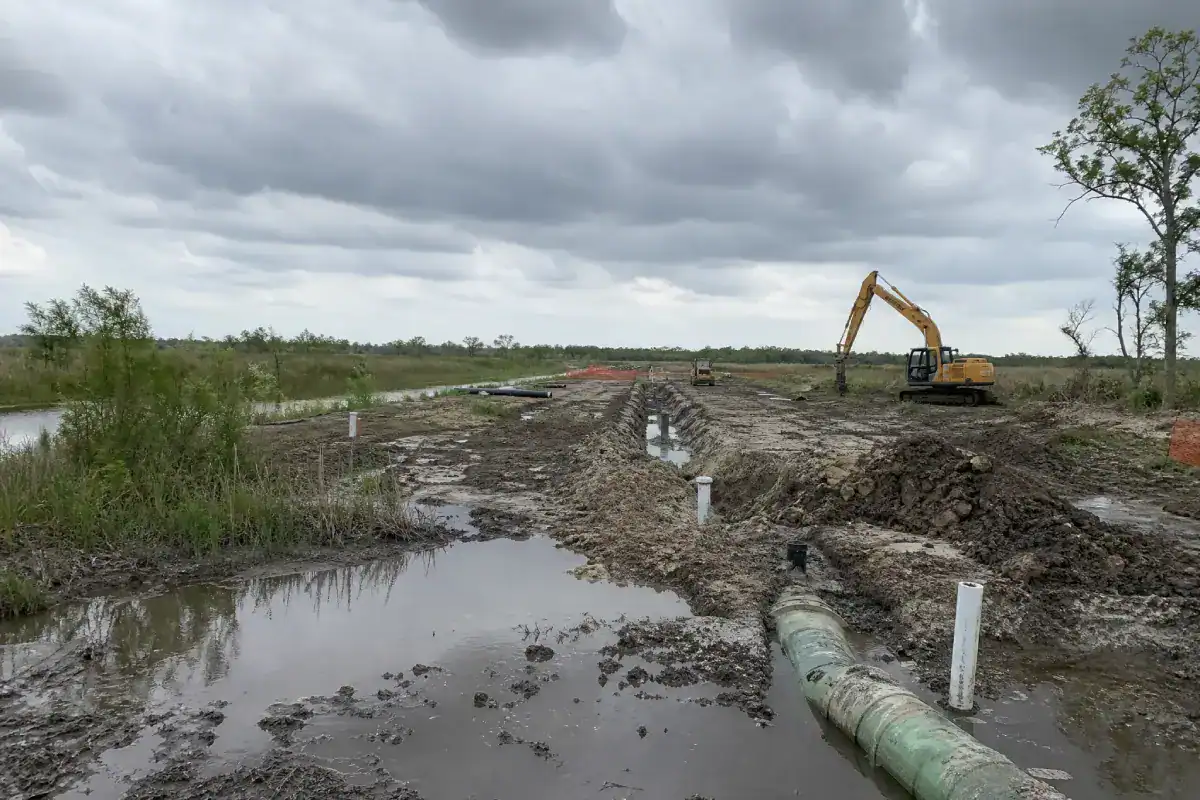
Soil chemistry and root pressure define what a Louisiana pipeline contract must specify. Clay-heavy soil across much of the state swells with moisture and contracts during dry spells. That seasonal cycling shifts pipe sections and separates joints. Any sewer line repair municipality contractor bidding on parish work must demonstrate the diagnostic capacity to identify soil-driven displacement before it becomes a full collapse.
We build our scopes around three environmental stressors that recur across Louisiana public works contracts:
- Soil movement — expansive clay swells and shrinks with rainfall cycles, misaligning joints over time.
- Root intrusion — live oaks, common throughout the state, extend root networks well beyond the visible canopy and force their way into pipe seams.
- Sustained soil weight — high annual rainfall keeps clay soil heavy and expanded for most of the year, placing near-constant load on buried infrastructure.
Why Do Older Parish Neighborhoods See More Sewer Failures?
Established neighborhoods across Louisiana parishes combine three risk factors at once: humid climate, shifting soil, and mature tree canopies. That combination accelerates pipe deterioration far faster than in newer developments with younger landscaping and less soil disturbance. Procurement teams should reference neighborhood age and tree density directly in RFP language.
What Should a Bid Specification Require for Root Intrusion?
A compliant bid specification should require documented experience remediating root intrusion in mortar seals and joint connections, including general pipe replacement. We recommend municipalities request references showing root-specific remediation history before shortlisting a sewer repair specialist.
We structure our municipal proposals to address soil condition, root exposure, and rainfall-driven soil weight as separate line items, giving procurement officers a transparent basis for evaluating technical fit against parish-specific conditions rather than generic pipeline experience.
What Scope of Services Should the RFP Cover?
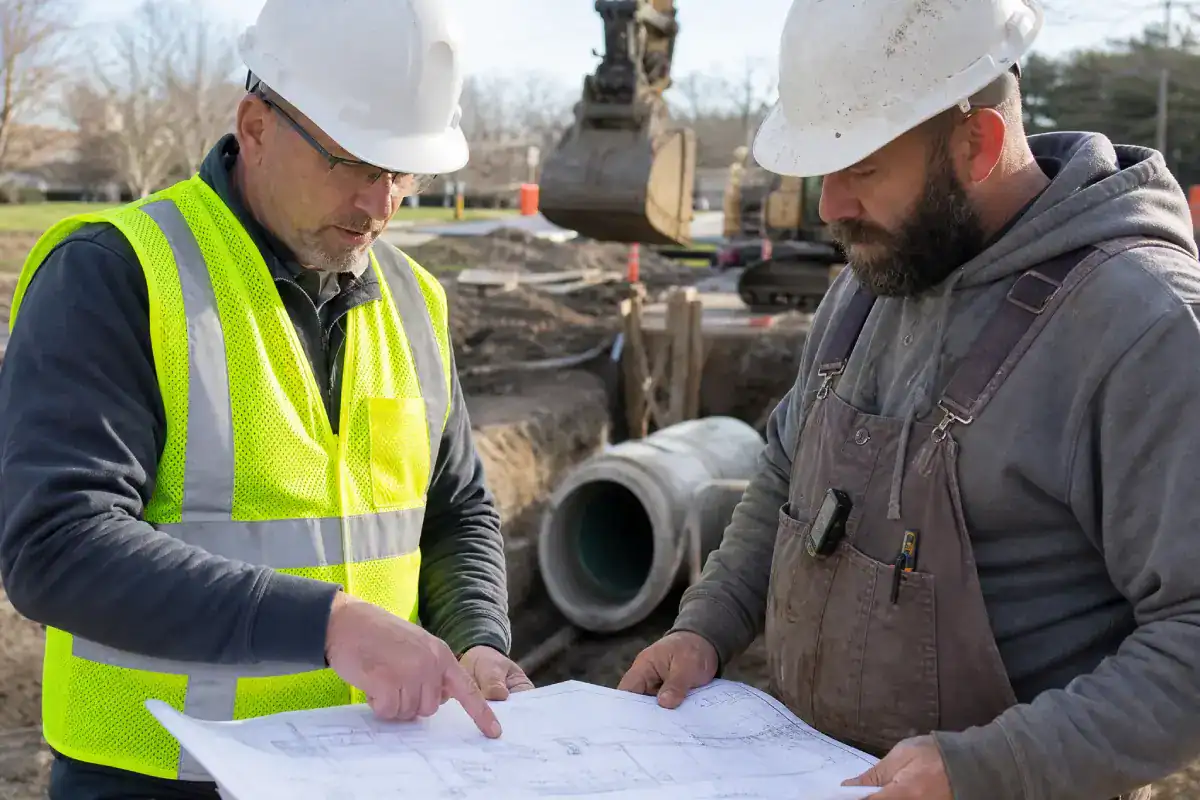
A well-drafted request for proposals defines exactly which repair, replacement, and inspection tasks a sewer line repair municipality contractor must perform before submitting a bid. Parishes that leave scope vague invite mismatched bids, change orders, and budget overruns once crews reach the trench. Louisiana’s aging collection systems fail in disruptive ways: blockages, backups, and full line collapses rank among the most stressful infrastructure problems a public works department manages. A scope built around these failure modes, rather than a single repair method, keeps a contract flexible enough to handle whatever a camera inspection reveals.
We recommend building the scope section around five procurement steps:
- Require diagnostic camera inspection as the first deliverable on every line segment, before any repair method is selected.
- List trenchless methods separately, including cured-in-place pipe (CIPP) lining, pipe bursting, and targeted point repairs.
- Include vertical stack lining as a distinct line item for multi-story municipal buildings and housing complexes.
- Add industrial drain cleaning and hydro jetting as standing services for storm water and elevator station maintenance.
- Set response-time requirements for emergency collapses separately from routine maintenance work.
What Services Should a Municipal Sewer Contract Include?
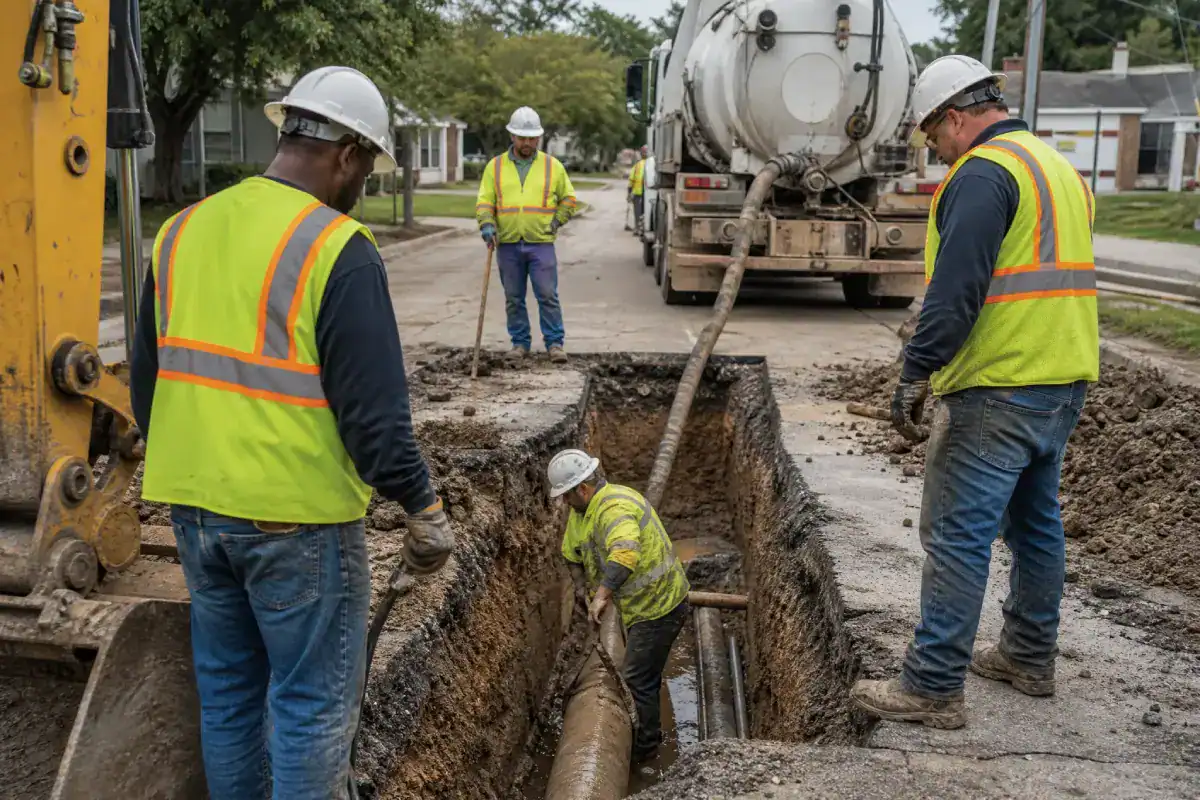
A municipal contract should include comprehensive repair, replacement, and camera inspection services, not just spot fixes. Pelican Underground structures our municipal proposals around this exact range: CIPP lining, vertical stack lining, pipe bursting, point repairs, and industrial drain cleaning. Covering these categories in one contract reduces the need for multiple vendors across a single parish system.
Should the RFP Separate Emergency Work From Routine Maintenance?
Yes. Collapses and backups demand faster mobilization than scheduled cleaning or inspection cycles. Separating these categories in the scope lets evaluators score responsiveness and routine capability independently, producing a more accurate bid comparison.
📞 Ready to Get Started? Don’t let a vague RFP invite change orders and budget overruns. Contact Pelican Underground LLC today for a documented, code-compliant municipal proposal.
How Do You Verify Licensing and Credentials?
Verification starts with a document check, not a handshake. Public works directors across Louisiana parishes lose leverage when contracts omit proof requirements upfront, exposing municipalities to liability if a vendor defaults mid-project. We build our qualification packages around three verifiable layers: state licensure, workforce credentials, and compliance history. Bidders should hold classification under the Louisiana State Licensing Board’s municipal and public works construction category before submitting a proposal.
Follow these steps when screening a sewer line repair municipality contractor for an RFP:
- Require submission of current state licensure documents before evaluating any bid.
- Confirm active insurance coverage and bonding status directly with the carrier or surety, not just the applicant’s paperwork.
- Request proof of NASSCO certifications held by field technicians, including PACP, MACP, and LACP credentials.
- Check whether the firm maintains membership in recognized industry associations tied to inspection and rehabilitation standards.
- Review public ratings and service history across Louisiana communities to gauge consistency and accountability.
We hold current Louisiana licensure, carry insurance and bonding, and require our technicians to maintain PACP, MACP, and LACP certification before they operate a camera or lining crew. Association membership reinforces our adherence to inspection protocols that parishes can cite in compliance audits.
What Should a Bid Document Require From Contractors?
Bid language should state licensure, insurance, and bonding as non-negotiable baseline qualifications, not optional attachments. Contracts lacking these terms leave municipalities without recourse if project defects surface after acceptance.
Why Does a 5-Star Rating Matter for Public Contracts?
A consistently high rating across a wide service area signals lower operational risk for a procurement office. We are recognized as a 5-star rated provider across Louisiana and the broader Gulf Coast — see our reviews and testimonials — a track record that reduces uncertainty for parishes weighing vendor risk against project timelines and public accountability.
What Diagnostic Technology Should Bidders Demonstrate?
Bidders must demonstrate advanced video inspection capability before submitting a proposal for any Louisiana sewer line repair municipality contractor solicitation. Real-time diagnostics locate cracks, offset joints, and root intrusion with precision, giving procurement teams data-driven repair recommendations rather than guesswork. Without this capability, agencies risk awarding contracts based on estimates instead of verified pipe conditions, which invites change orders and disputed invoices later in the project.
We deploy sewer camera inspection technology on every Louisiana engagement to accurately locate and identify problem areas before recommending a repair method. This step matters because Louisiana’s parishes present distinct challenges: shifting clay soil, heavy seasonal rainfall, and mature root systems all affect buried lines, particularly in established neighborhoods across East Baton Rouge Parish and comparable communities statewide. A contractor that skips camera verification exposes the municipality to repeat failures and repeat mobilization costs.
Procurement officers evaluating technical proposals should require the following documentation from each bidder:
- Sample video inspection reports showing pipe condition, defect classification, and footage location.
- A written explanation of how camera findings translate into recommended repair methods.
- Evidence of equipment capable of navigating parish-specific pipe diameters and materials.
Why Does Soil and Climate Condition Affect Diagnostic Requirements in Louisiana?
Humid conditions, shifting soil, and heavy rainfall place ongoing stress on buried sewer infrastructure throughout Louisiana. These forces cause joint separation and pipe misalignment that surface inspection cannot detect. Camera-based diagnostics let contractors pinpoint the affected segment before scoping repair work, which protects municipal budgets from unnecessary excavation.
What Happens if a Bidder Lacks Camera Verification Capability?
A bidder without documented camera inspection experience cannot substantiate its repair recommendations to procurement staff. Municipalities accepting undocumented diagnostics assume greater financial and performance risk across the contract term.
How Should Trenchless Methods and Pricing Be Compared?
Trenchless comparison starts with matching each contractor’s methodology against the actual condition of the pipe network under review. Public works agencies across Louisiana parishes lose weeks and incur added restoration costs when dig-and-replace crews tear up roadways, parking lots, and utility easements. Pelican Underground LLC applies cured-in-place pipe (CIPP) lining, vertical stack lining, and hydro jetting, supported by video diagnostics, to avoid that excavation entirely. See our industrial drain cleaning services for standing municipal maintenance needs.
Procurement teams evaluating a sewer line repair municipality contractor should build pricing comparisons around disclosed rate structures rather than lump estimates. We require every bid response to state pricing upfront and confirm same-day service availability for emergency main line failures. Extensive project history matters too. A firm with documented work across Louisiana parishes carries less schedule risk than one bidding outside its normal service area.
To standardize evaluation, we recommend these steps:
- Request itemized pricing for each trenchless method under consideration, not a single blended figure.
- Confirm whether same-day mobilization is available for emergency sewer failures affecting municipal service areas.
- Review documented project history within Louisiana to verify regional experience.
- Compare projected restoration costs for trenchless repair against traditional excavation on the same pipe segment.
What Benchmark Should Define a Successful Repair?
A successful main line repair minimizes property and roadway damage while restoring normal flow quickly. Contractors who diagnose problems accurately before beginning work generally finish faster, with fewer return visits and fewer disputed change orders.
Does Trenchless Work Cost Less Than Excavation?
Trenchless rehabilitation generally lowers restoration costs because crews avoid removing sidewalk, landscaping, and buried utility infrastructure. Project timelines shrink as well — see our pros and cons of trenchless sewer repair for a full breakdown. Lining and jetting operations replace multi-day excavation schedules that disrupt parish roadways and neighborhood access.
How Do You Structure the RFP and Scoring?
Structure begins with weighting, not paperwork. Public works agencies across Louisiana parishes score bids poorly when they treat trenchless capability as a checkbox rather than a graded criterion. Scoring rubrics should also reference applicable public bid law and contracting requirements so the process withstands audit. We recommend building the scoring matrix around three pillars: technical capability, evaluation transparency, and credentialing. Each pillar carries measurable weight, and each maps to a specific risk the agency is trying to avoid.
What Weight Should Infrastructure Capability Carry in Scoring?
Capability appropriate to municipal-scale work deserves the heaviest weight in any scoring rubric. A sewer line repair municipality contractor handling a residential lateral cannot be scored the same as one rehabilitating trunk lines under active roadways. We structure our own proposals to demonstrate scalable, code-compliant repair methods. Parish engineers need proof of capacity before award, not after mobilization.
Should the RFP Require a Free Inspection Before Bidding?
Yes. Requiring a no-cost inspection or consultation with a written estimate lets evaluators compare methodology apples-to-apples. Contractors who skip this step often submit vague scope language that invites change orders later. We provide camera-based inspection findings alongside every estimate, giving procurement staff a documented basis for comparison rather than a guess.
A workable scoring framework looks like this:
- Technical capability (a notable share) — scalable repair methods matched to project size.
- Inspection and estimate transparency (a notable share) — documented findings preceding a firm estimate.
- Credentialing and compliance (a notable share) — NASSCO certifications, including PACP, MACP, and LACP, plus active industry association membership.
- Cost and schedule (a notable share) — pricing and timeline reasonableness.
Credentialing carries weight because it verifies regulatory compliance without requiring the agency to audit crews directly. Association membership signals ongoing accountability to professional standards, not a one-time credential. Scoring sheets that omit this pillar leave agencies exposed to underqualified bidders slipping through on price alone.
What Mistakes Should Municipalities Avoid During Selection?
Selection errors cost parish budgets far more than the original repair estimate. Awarding a bid to the lowest-cost or unverified vendor risks turning a minor pipeline defect into a full excavation project if the first repair fails. We treat every scoping document as a legal commitment, not a formality. The consequences of a rushed award land on public infrastructure and public funds.
Public works teams evaluating a sewer line repair municipality contractor should follow a structured review before signing any agreement:
- Verify licensing, bonding, and insurance documentation against parish procurement standards.
- Confirm the bid response addresses root intrusion and pipe corrosion, the two most common causes of main line failure across Louisiana.
- Request evidence of camera inspection capability to document existing conditions before work begins.
- Review the contractor’s scheduling availability for emergency mobilization outside standard business hours.
- Compare proposed trenchless methods against traditional excavation costs and restoration timelines.
Why Does Root Intrusion Matter in the Scope of Work?
Root intrusion and corrosion account for a significant share of main line failures in Louisiana’s parishes. Scoping documents that omit these conditions leave contractors unprepared to bid accurately. Unprepared crews often discover the true extent of damage only after work starts, driving change orders and delays.
How Does Contractor Availability Affect Emergency Response Times?
Limited scheduling flexibility slows municipal response when a line fails outside normal hours. Our operation runs daily from 7 a.m. to 9 p.m., which supports faster mobilization for parish emergencies. Procurement managers should weigh scheduling terms as heavily as unit pricing, since delayed response compounds property damage and service disruption for residents connected to the affected line.
TL;DR — Choosing a Municipal Sewer Contractor at a Glance
- Verify Louisiana state licensure, insurance, and bonding before evaluating any bid.
- Require NASSCO PACP, MACP, and LACP certifications for all field technicians.
- Confirm documented experience with expansive clay soil, root intrusion, and rainfall-driven infiltration.
- Require camera inspection documentation and itemized trenchless pricing, not lump estimates.
- Score bids on technical capability, transparency, and credentialing — not price alone.
- Next step: request a free camera-based inspection and itemized proposal before shortlisting any contractor.
Frequently Asked Questions
What Credentials Should a Louisiana Municipal Sewer Contractor Hold?
Contractors should hold NASSCO PACP, MACP, and LACP certifications, plus valid Louisiana licensing, insurance, and bonding for statewide operations.
Why Does Expansive Clay Soil Matter When Selecting a Contractor?
Expansive clay soil causes swelling and pipe joint movement, which combines with root intrusion to cause most local sewer failures across southeastern Louisiana.
What Should a Municipal RFP Require From Bidders?
An RFP should require documented experience with clay-soil pipe movement, root-related joint failures, rainfall-driven infiltration, and scalable repair capacity across multiple sites.
How Much Does Municipal Sewer Line Repair Cost in Louisiana?
Cost depends on pipe diameter, length, and repair method, but trenchless options like CIPP lining typically cost less than dig-and-replace once roadway and landscape restoration are factored in. Itemized bids from at least two licensed contractors give procurement teams an accurate comparison.
How Long Does Trenchless Sewer Repair Take for Municipal Projects?
Most trenchless repairs on a single line segment finish within one to two days once diagnostics are complete, compared to a week or more for excavation-based repair on the same segment.
Related Resources
- Sewer Line Repair for Municipalities
- Baton Rouge, LA Service Area
- Who Is Responsible for Sewer Line Repair?
- Pros and Cons of Trenchless Sewer Repair
- What Is Trenchless Sewer Repair?
- Why Hire a Sewer Repair Specialist
- CIPP Lining Contractor in Baton Rouge
Get a Free Municipal Sewer Repair Quote
Selecting the right sewer line repair municipality contractor protects parish budgets, public infrastructure, and residents from repeat failures tied to Louisiana’s clay soil, root intrusion, and heavy rainfall. Contact Pelican Underground LLC today for a free, no-obligation quote and camera-based inspection on your next municipal project.
About Pelican Underground LLC: Pelican Underground LLC has served New Orleans and municipal clients across southeastern Louisiana, specializing in trenchless sewer line repair, CIPP lining, vertical stack lining, and industrial drain cleaning for public works projects. Contact us today for a free, no-obligation quote.