
When Louisiana property owners face sewer-line failures, choosing the right trenchless repair method is crucial. The two primary options are pipe lining and pipe bursting, each offering unique benefits depending on the condition of the sewer pipe and site-specific factors. Pipe lining involves inserting a resin-saturated liner into the existing pipe, curing it to form a new pipe within the old one, making it ideal for repairing cracks and leaks with minimal disruption. In contrast, pipe bursting replaces the entire pipe by fracturing the old pipe and pulling a new one into place, suitable for severely damaged or collapsed pipes requiring full replacement.
Both methods reduce the need for extensive excavation, preserving landscaping and structures, but they differ in cost, operational impact, and suitability. Pipe lining is generally more cost-effective and less invasive, often completed within a day, while pipe bursting offers a comprehensive solution for pipes beyond repair but may involve higher costs and risks such as damage to lateral connections. Understanding these differences helps property owners balance budget, durability, and environmental impact to select the best solution for their sewer repair needs.
What Are the Core Differences Between Pipe Lining and Pipe Bursting in Trenchless Sewer Repair?
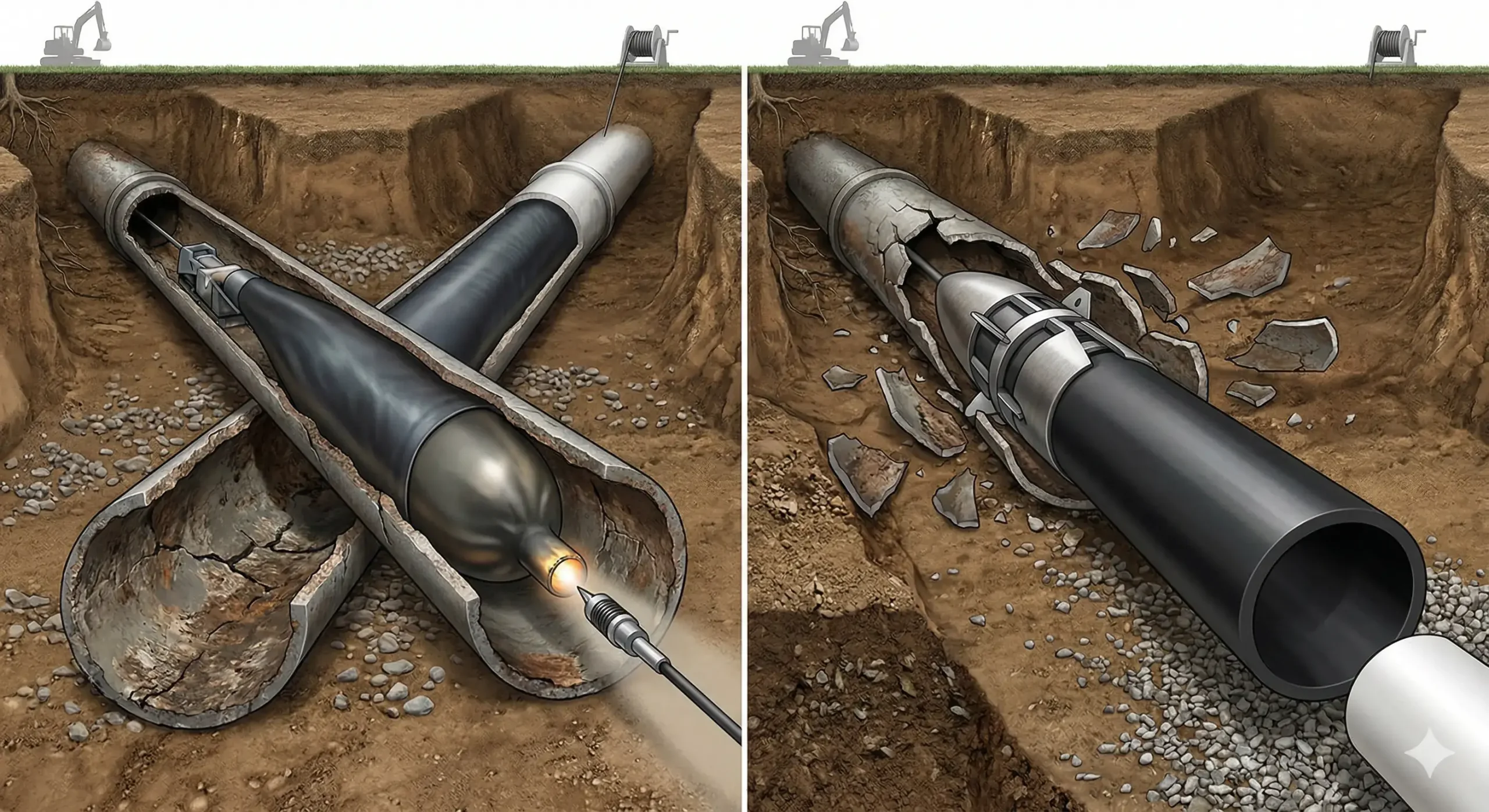
Pipe lining and pipe bursting are distinct trenchless rehabilitation methods. Pipe lining inserts a resin-saturated liner into the existing conduit, inflates it to conform to the host pipe, and cures the resin to form a new pipe inside the original. It is effective for addressing cracks and leaks without extensive excavation. By contrast, pipe bursting breaks the existing pipe while simultaneously installing a replacement pipe in the same alignment; it is appropriate when the pipe requires full replacement because of severe deterioration.
How Does the Pipe Lining Process Work for Sewer Rehabilitation?
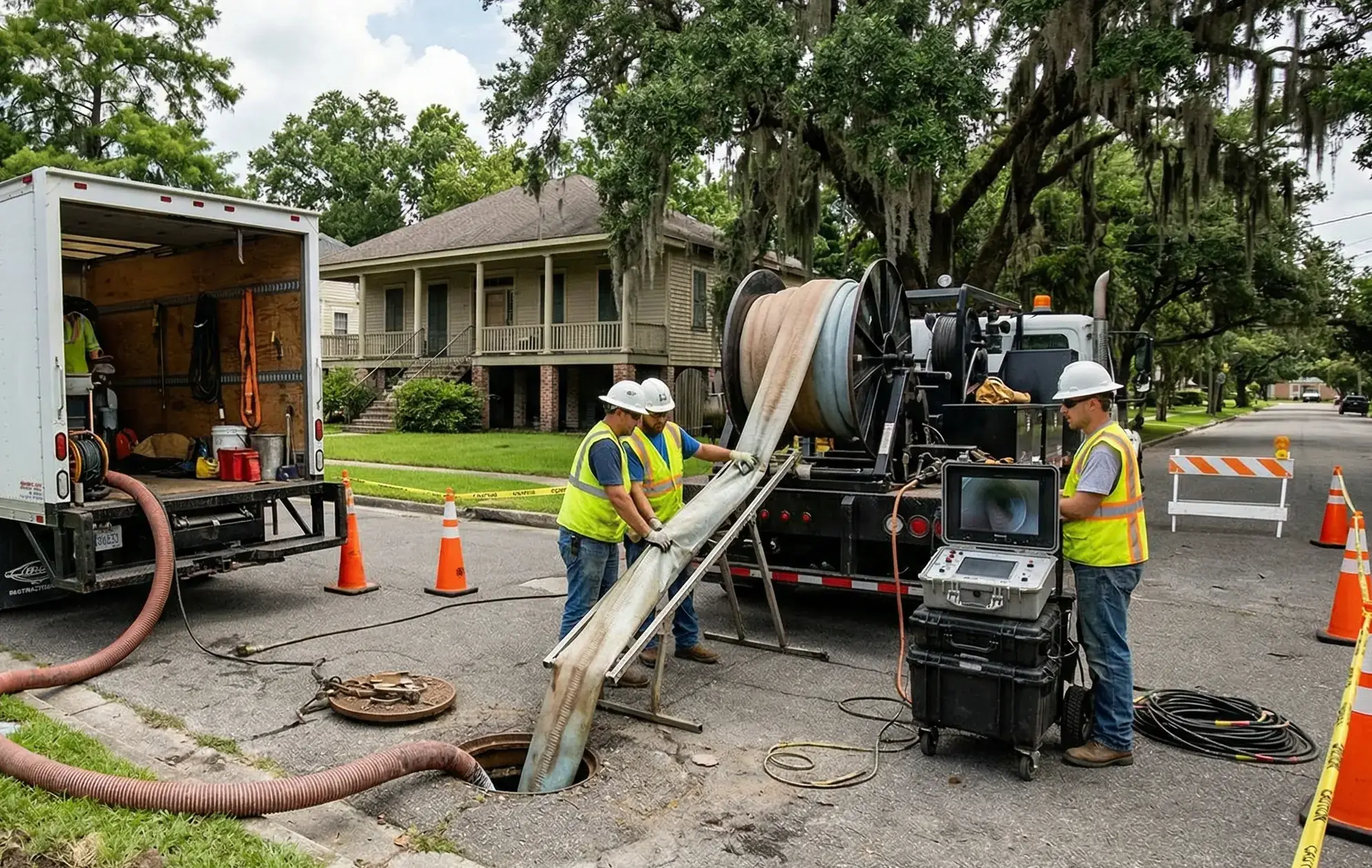
The pipe lining process begins with a condition assessment of the sewer line using closed-circuit video inspection. After assessment, a resin-saturated liner is inserted and inflated to match the host pipe profile, then cured by heat or ultraviolet light to form a new, durable carrier pipe. According to NASSCO’s Specification Guidelines for Cured-In-Place Pipe (CIPP), the cured liner must meet strict material and structural standards to ensure long-term performance. The method is minimally invasive and can often be completed within a single day, limiting disruption to the property.
What Is the Pipe Bursting Method and Its Operational Mechanism?
Pipe bursting uses a specialized bursting head introduced into the existing pipeline. As the head advances it fractures the original pipe material and pulls a new pipe into position behind it. This method works for collapsed or severely damaged pipelines. Research from Purdue University’s trenchless technology studies confirms that pipe bursting typically requires access points at both ends of the run but avoids large-scale excavation and preserves surface features.
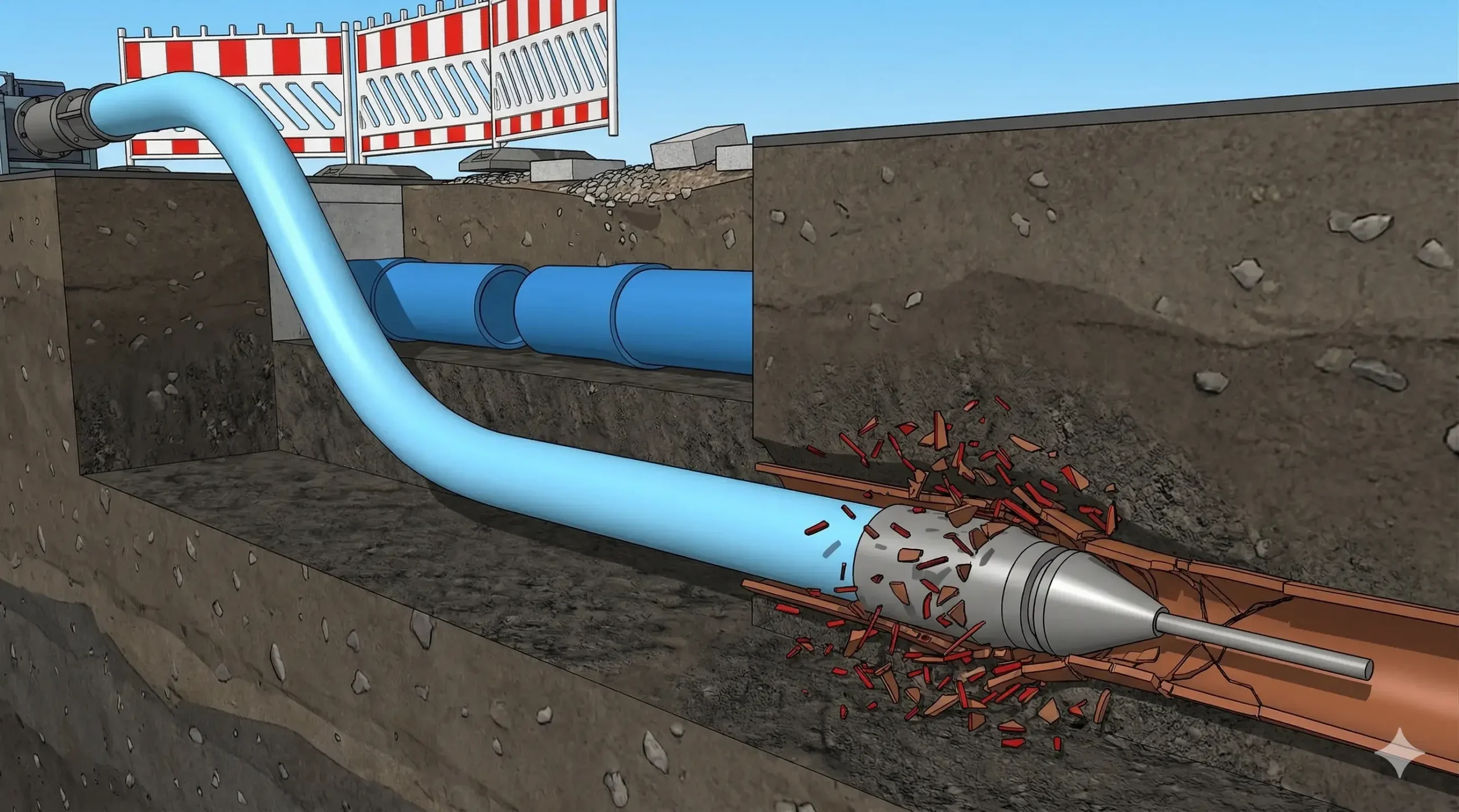
While pipe bursting provides an effective solution for severely damaged pipes, it is necessary to consider potential risks, including damage to lateral connections during the operation.
What Are the Advantages and Limitations of Pipe Lining and Pipe Bursting in Louisiana?
Each technique has distinct advantages and limitations to evaluate when planning sewer repair, especially considering Louisiana’s unique environmental and regulatory context.
Which Benefits Does Pipe Lining Offer for Minimally Invasive Sewer Repair?
- Minimally Invasive: Pipe lining requires only small access points, reducing disruption to landscaping and driveways, which is particularly valuable in Louisiana’s residential areas with mature vegetation and sensitive wetlands.
- Cost-Effective: Generally less expensive than full replacement for minor repairs, helping property owners comply with local budget constraints and municipal sewer maintenance programs.
- Durability: The cured resin forms a corrosion-resistant lining that can extend sewer life, important in Louisiana’s humid climate where corrosion and root intrusion are common issues.
However, pipe lining is unsuitable for pipes with severe structural failure that need complete replacement.
What Are the Operational and Environmental Advantages of Pipe Bursting?
- Complete Replacement: Pipe bursting installs a new pipe in place of a severely damaged one, restoring long-term reliability, which is critical in areas prone to flooding and subsidence common in Louisiana’s coastal and riverine zones.
- Environmental Impact: It minimizes surface disruption and reduces the need for extensive restoration, aligning with Louisiana’s environmental regulations aimed at protecting wetlands and minimizing soil disturbance.
- Speed: Often faster than traditional excavation, reducing downtime for property owners and helping meet local permit timelines enforced by Louisiana’s Department of Environmental Quality (LDEQ).
Pipe bursting usually has higher initial costs and is unnecessary when only minor rehabilitation is required.
How Do Costs and Durability Compare Between Pipe Lining and Pipe Bursting Methods in Louisiana?
Evaluating costs and expected service life is essential when comparing trenchless sewer repair options, especially under Louisiana’s regulatory and environmental conditions.
What Is the Typical Cost Range for Pipe Lining Sewer Repairs in Louisiana?
In Louisiana, residential pipe lining typically ranges from $80 to $250 per linear foot, depending on damage extent and site conditions. Cost drivers include run length, accessibility, and any preparatory work. Additionally, compliance with local permitting requirements, such as those from parish governments and the LDEQ, can influence project timelines and costs.
How Does Pipe Bursting Cost Compare and What Influences Pricing?
Pipe bursting typically ranges from $100 to $300 per linear foot. Pricing varies with run length and site conditions and can increase with greater equipment and labor needs. Projects in flood-prone or environmentally sensitive areas may require additional mitigation measures to comply with Louisiana’s Coastal Zone Management regulations, potentially affecting costs.
| Method | Typical Cost Range (per linear foot) | Durability |
|---|---|---|
| Pipe Lining | $80 – $250 | 50+ years |
| Pipe Bursting | $100 – $300 | 50+ years |
The table summarises cost and durability comparisons and indicates both methods can provide long-term service life.
Which Trenchless Sewer Repair Method Is Best Suited for Your Louisiana Property?
Choosing the right trenchless method depends on pipe condition, budget, and property-specific constraints, including local environmental and regulatory factors unique to Louisiana.
What Local Factors Should Influence Your Choice Between Pipe Lining and Pipe Bursting?
- Soil Conditions: Louisiana’s diverse soil types—from alluvial clays to sandy loams—affect feasibility; rocky or unstable soils may favor pipe bursting, while softer soils may be more suitable for pipe lining.
- Existing Infrastructure: Nearby utilities, drainage canals, and space constraints common in Louisiana’s urban and suburban areas can influence the chosen method.
- Local Regulations: Building codes, environmental permits, and compliance with Louisiana Department of Environmental Quality (LDEQ) and Coastal Zone Management requirements may limit available options or require specific mitigation measures.
How Does Pelican Underground LLC Provide Expertise in Selecting the Appropriate Method?
Pelican Underground LLC specializes in trenchless sewer-repair solutions in Louisiana, emphasizing efficient and cost-effective techniques such as pipe lining and pipe bursting. Drawing on experience with local sewer infrastructure and familiarity with Louisiana’s regulatory landscape, the company advises property owners on the most suitable method for site-specific conditions. Its focus on client service supports delivery of tailored solutions that meet project requirements while ensuring compliance with state and local regulations.
Understanding the differences between pipe lining and pipe bursting helps property owners make informed choices aligned with their sewer-repair objectives. Whether choosing the minimally invasive approach of pipe lining or the full replacement provided by pipe bursting, both methods restore sewer functionality while limiting surface disruption.
To explore benefits and applications further, research sewer repair options in your area. A precise understanding of techniques and materials will facilitate an informed selection.
Frequently Asked Questions (FAQ)
What types of sewer pipe damage are best suited for pipe lining?
Pipe lining is ideal for repairing cracks, leaks, and minor corrosion within pipes that are structurally sound but need rehabilitation without full replacement.
When should pipe bursting be considered over pipe lining?
Pipe bursting is recommended when the existing pipe is severely damaged, collapsed, or structurally compromised and requires complete replacement to restore functionality.
How long does each trenchless method typically take to complete?
Pipe lining can often be completed within a single day due to its minimally invasive nature, while pipe bursting may take longer depending on pipe length and site conditions but generally is faster than traditional excavation.
Are there risks associated with pipe bursting?
Yes, pipe bursting carries risks such as potential damage to lateral connections and nearby utilities due to the fracturing process, which should be carefully assessed before proceeding.
How do costs compare between pipe lining and pipe bursting?
Pipe lining generally costs between $80 and $250 per linear foot, while pipe bursting ranges from $100 to $300 per linear foot, with costs influenced by pipe condition, length, and site accessibility.
Can both methods extend the life of my sewer system?
Yes, both pipe lining and pipe bursting can provide durable solutions with expected service lives exceeding 50 years when properly installed.
Choose Pelican Underground for Expert Pipe Lining in Louisiana
Understanding the distinctions between pipe lining and pipe bursting enables Louisiana property owners to make informed decisions about sewer repairs. Each method offers advantages—from the minimally invasive nature of pipe lining to the comprehensive replacement capacity of pipe bursting. Consider cost, expected service life, and local site conditions, including Louisiana’s unique environmental and regulatory requirements, when choosing a method. For tailored guidance and technical assistance, contact Pelican Underground LLC.

Owner of Pelican Underground LLC and NASSCO-certified trenchless sewer specialist with expertise in CIPP lining, pipe bursting, and sewer rehabilitation across Louisiana, Mississippi, and Alabama. Licensed contractor by the Louisiana State Licensing Board for Contractors.