
Underground construction choices shape costs, schedule and risk. This piece compares three leading trenchless methods — Pipe Jacking, Microtunneling, and Horizontal Directional Drilling (HDD) — so engineers and project managers can match method to site conditions and project goals. We explain how each method works, where it excels, and the trade-offs to expect, covering operational principles, typical applications, cost and time drivers, environmental impacts, and recent equipment innovations.
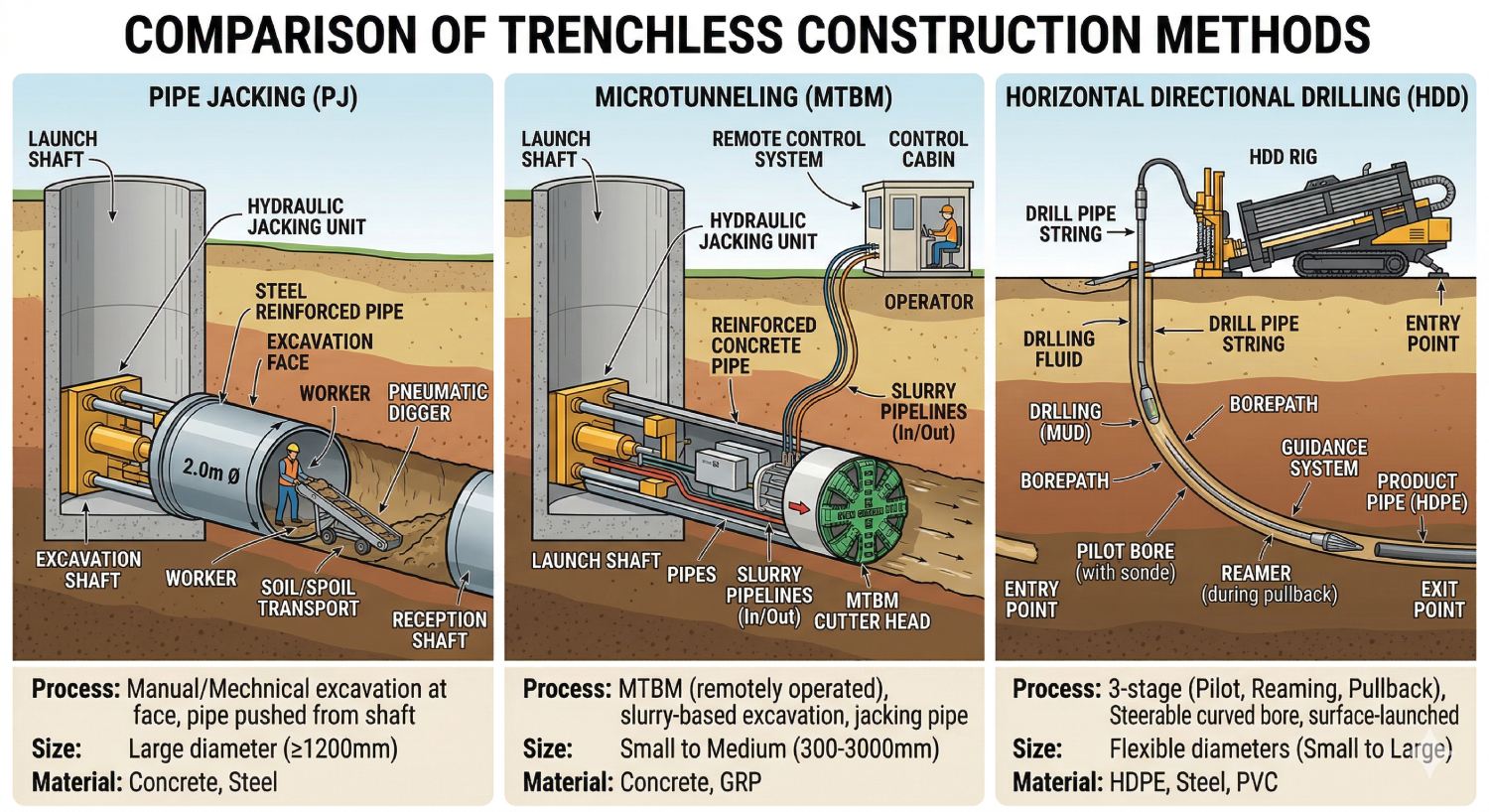
Comparison of Trenchless Pipe Installation Methods: Pipe Jacking, Microtunneling, and Horizontal Directional Drilling (HDD)
Trenchless installation reduces surface disruption and improves program predictability. Pipe Jacking, Microtunneling and HDD use different mechanics and controls, and each is best suited to particular distances, diameters, and site constraints. Below we summarize the core distinctions and typical use cases so you can evaluate which approach fits your project brief.
Pipe Jacking
Pipe jacking installs pipe by pushing successive sections from a drive shaft to a reception shaft using hydraulic jacks. It works well for short to medium-length drives and can accommodate large-diameter lines, so it’s commonly used for sewer and stormwater work in urban environments where limiting surface impact and controlling ground settlement are priorities. Its relative simplicity and capacity for large diameters make it a cost-effective option for many constrained sites.
Microtunneling
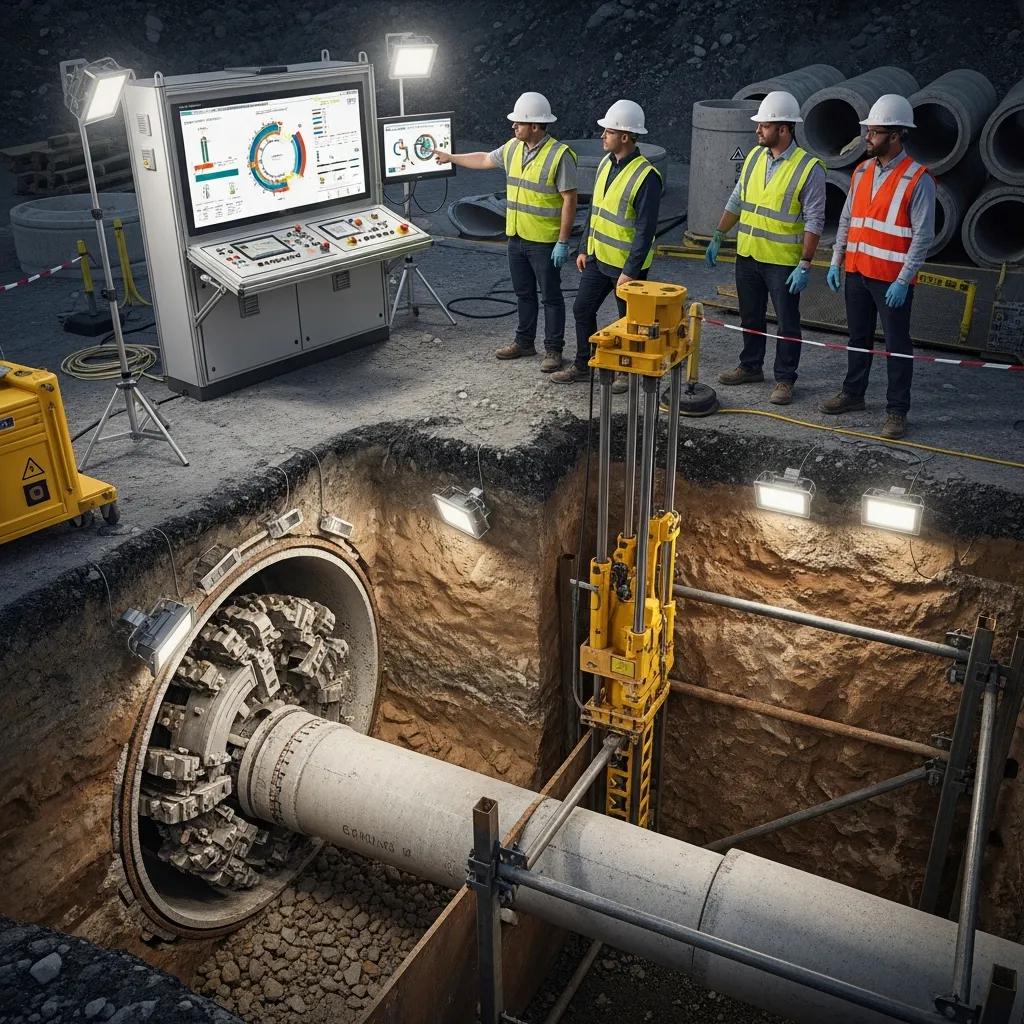
Microtunneling uses a remotely operated microtunnel boring machine (MTBM) that excavates and installs pipe in a single controlled sequence. The method delivers very tight alignment and grade control with low vibration and noise, making it ideal for dense urban areas or projects near sensitive structures. Microtunneling supports a range of pipe materials (PVC, steel, concrete) and is often paired with CIPP lining solutions when precision and minimal surface disruption are required.
Horizontal Directional Drilling (HDD)
HDD is a steerable technique: operators drill a pilot bore along a planned path, ream to the required diameter, and pull the product pipe into place. HDD is well suited to longer crossings and for navigating obstacles such as rivers, roadways, and congested utility corridors. Its flexibility and range typically exceed that of pipe jacking and microtunneling, making HDD a preferred option for long-distance trenchless pipe repair and utility installations.
Each trenchless method — Pipe Jacking, Microtunneling, and HDD — has distinct strengths. The right choice depends on drive length, pipe diameter, alignment tolerance, ground conditions, community impact and budget. Evaluate these factors early to reduce risk and optimize cost and schedule.
What Are the Key Differences Between Pipe Jacking, Microtunneling, and Horizontal Directional Drilling?
The principal differences fall into operational mechanics, typical applications, and site or environmental impacts — all of which affect cost, schedule and risk.
- Operational Mechanism : Pipe Jacking relies on hydraulic jacks to push pipe strings through the ground from a drive shaft. Microtunneling uses a remotely controlled MTBM to excavate and simultaneously install pipe with high alignment precision. HDD drills a steerable pilot bore, then reams and pulls the pipe into the finished hole.
- Applications : Pipe Jacking suits short-to-medium runs and large-diameter pipelines where shaft construction is feasible. Microtunneling is preferred in congested urban areas or near sensitive structures that require tight tolerances and low disturbance. HDD is effective for long crossings and obstacle negotiation, such as under waterways, roads, and existing utilities — and is frequently used to install HDPE pipe and conduit for utility crossings.
- Environmental Impact : Pipe Jacking preserves soil structure and reduces settlement risk compared with open-cut methods. Microtunneling minimizes noise and vibration, making it suitable for sensitive sites. HDD limits surface disruption and preserves existing infrastructure along the drill path.
How Do Guided Boring Methods Like Pipe Jacking and Microtunneling Compare?
Guided boring methods share the goal of trenchless utility installation but differ in complexity and control. Pipe jacking is mechanically straightforward and effective for larger diameters over shorter distances, while microtunneling adds remote controls and closed-face excavation to deliver higher alignment accuracy and reduced site disturbance. Project constraints — drive length, required tolerances, and available shaft locations — typically determine which guided-boring approach is appropriate.
What Makes Horizontal Directional Drilling a Steerable Trenchless Technique?
HDD’s steerability comes from a guided drill head and real-time tracking systems that let operators adjust azimuth and inclination during the pilot bore. That capability enables precise navigation around obstacles and along complex alignments, which is why HDD is favored for crossings where surface disruption must be minimized and where long, continuous runs are needed. For a deeper comparison of trenchless versus traditional excavation, see our guide on microtunneling vs. open-cut excavation in Louisiana.
How Do Cost and Time Factors Influence the Choice of Trenchless Installation Method?
Cost and schedule drivers vary by method: equipment and setup costs, crew experience, ground conditions, and site logistics all influence total project cost and duration. Consider both direct construction costs and indirect impacts — traffic management, restoration, and community disruption — when comparing options. The FHWA’s guidance on reducing pavement utility cuts through trenchless technology provides a useful framework for quantifying these trade-offs.
| Method | Cost | Benefits |
|---|---|---|
| Pipe Jacking | Moderate | Effective for short distances; supports large-diameter pipes |
| Microtunneling | High | High-precision installation with minimal surface disturbance |
| HDD | Variable | Well-suited to long distances and obstacle negotiation |
Understanding these cost and schedule implications helps project teams choose an approach that fits budgetary constraints without compromising operational or environmental objectives.
What Environmental and Site Impact Benefits Do Trenchless Methods Offer?
Trenchless techniques offer measurable site benefits that favor urban and sensitive-location projects, including reduced excavation footprint, faster reinstatement, and fewer disruptions to traffic and businesses.
Traditional open-cut approaches create both visible and intangible costs — traffic delays, noise, aesthetic impacts and the public frustration of street cuts — factors that are hard to quantify but affect long-term planning and public acceptance.
- Reduced Surface Disruption : Trenchless methods limit open excavation, preserving streetscapes and reducing traffic and pedestrian impacts.
- Lower Emissions : Less heavy equipment on site and shorter active work windows can reduce project carbon footprint.
- Soil Integrity Preservation : Methods such as pipe jacking help maintain in‑situ soil structure, lowering settlement and erosion risk — a key advantage for storm water management projects in the Gulf South.
These benefits make trenchless approaches attractive for sustainable infrastructure delivery in dense or environmentally sensitive locations.
How Do These Methods Minimize Surface Disruption and Carbon Footprint?
By avoiding long open trenches, trenchless technologies reduce excavation, spoil handling and extensive restoration work — all of which cut truck movements, fuel use and onsite emissions. Advanced rigs and efficient workflows further shorten work durations and lessen community impact compared with traditional open‑cut replacements.
Which Trenchless Technology Is Best Suited for Sensitive or Urban Environments?
For sensitive urban settings, prioritize methods that minimize noise, vibration and surface access needs. Microtunneling delivers the tightest alignment and lowest disturbance, while HDD offers route flexibility and minimal surface footprint for longer crossings. The final selection depends on alignment tolerance, available shaft locations, and proximity to existing utilities or structures.
What Equipment and Technological Innovations Support Each Trenchless Method?
Equipment and technology directly affect feasibility and risk. Key components include:
- Tunneling Machines : MTBMs and larger tunnel boring units provide controlled excavation and simultaneous pipe installation in microtunneling and related methods.
- Hydraulic Jacks : Robust jacking systems deliver the thrust and control required for pipe jacking installations.
- Directional Drills : Modern HDD rigs use sophisticated guidance, torque heads and reamers to achieve long, steerable bores.
Advances in guidance systems, remote monitoring and cutterhead technology continue to improve accuracy, reduce risk and expand the conditions under which trenchless methods are practical.
How to Decide Which Trenchless Method Is Right for Residential Versus Commercial Projects?
Project scale, access constraints and budget typically drive the decision between residential and commercial applications:
- Residential Projects : Smaller scope and shorter runs often make Pipe Jacking or HDD appropriate for residential utility connections where cost and limited disruption are priorities.
- Commercial Projects : Larger, more complex installations may favor Microtunneling for its precision and ability to manage congested subsurface conditions.
Matching method to project scale and constraints helps control cost, schedule and community impact.
What Factors Should Homeowners Consider When Choosing a Trenchless Installation Method?
Homeowners evaluating trenchless options should focus on a few practical factors:
- Cost Implications : Understand both direct construction costs and potential savings from reduced restoration and downtime.
- Environmental Impact : Consider surface disruption, noise and the timeframe for reinstatement.
- Project Scope : Drive length, pipe diameter and property access will determine feasible methods.
These considerations will help homeowners weigh contractor proposals and choose an approach that balances cost, convenience and long‑term performance.
How Do Commercial Project Requirements Influence Method Selection?
Commercial projects introduce scale, scheduling and regulatory pressures that shape method selection. Key factors include:
- Project Scale : Larger installations often benefit from the precision and repeatability of Microtunneling.
- Timeline : Projects with tight deadlines may favor methods with faster mobilization or shorter on‑site durations, such as HDD for longer bores.
- Regulatory Compliance : Local permitting, environmental constraints and utility coordination can dictate allowable techniques and support requirements.
Addressing these commercial requirements early reduces scope creep and helps align procurement with delivery expectations.
Frequently Asked Questions
What are the safety considerations when using trenchless methods?
Safety is paramount in trenchless construction. Operators must ensure that all equipment is properly maintained and that workers are trained in safe operating procedures. Additionally, site assessments should identify potential hazards, such as existing utilities or unstable ground conditions. Implementing safety protocols, including the use of personal protective equipment (PPE) and regular safety audits, can help mitigate risks. Moreover, real-time monitoring systems can enhance safety by providing immediate feedback on equipment performance and site conditions.
How do trenchless methods impact existing utilities?
Trenchless methods are designed to minimize disruption to existing utilities, but careful planning is essential. Before starting a project, utility mapping and subsurface investigations should be conducted to identify all existing lines. Techniques like Horizontal Directional Drilling (HDD) allow for precise navigation around utilities, reducing the risk of accidental strikes. However, communication with utility companies and adherence to local regulations are crucial to ensure that all safety measures are in place and that service interruptions are minimized.
What are the maintenance requirements for trenchless installations?
Maintenance for trenchless installations varies based on the method used and the materials employed. Regular inspections are essential to identify any potential issues, such as leaks or structural integrity concerns. A sewer camera inspection is an effective way to assess alignment, grade, and condition for pipe jacking and microtunneling installations. Establishing a maintenance schedule that includes routine assessments and prompt repairs can extend the lifespan of the installation and ensure optimal performance over time.
Can trenchless methods be used in environmentally sensitive areas?
Yes, trenchless methods are particularly advantageous in environmentally sensitive areas due to their reduced surface disruption and lower emissions. Techniques like microtunneling minimize noise and vibration, making them suitable for projects near wildlife habitats or residential neighborhoods. However, it is essential to conduct thorough environmental assessments and obtain necessary permits to ensure compliance with local regulations. Engaging with environmental consultants can help identify best practices for minimizing ecological impact during installation.
What are the common challenges faced during trenchless installations?
Common challenges in trenchless installations include unexpected ground conditions, such as varying soil types or the presence of boulders, which can complicate drilling or jacking operations. Additionally, equipment malfunctions or delays in material delivery can impact project timelines. Effective project management, including thorough site assessments and contingency planning, can help address these challenges. Collaborating with experienced contractors who understand local geology and have a track record of successful trenchless projects can also mitigate risks.
How do trenchless methods compare in terms of long-term performance?
Long-term performance of trenchless installations largely depends on the materials used and the method employed. Generally, methods like microtunneling, which utilize high-quality materials and precise installation techniques, tend to offer superior durability and alignment. Pipe jacking can also provide long-lasting results, especially when large-diameter pipes are used. Regular maintenance and monitoring are crucial for all methods to ensure that any issues are addressed promptly, thereby extending the lifespan of the installation and maintaining service reliability.
Choose the Right Trenchless Method With Pelican Underground
Not sure which trenchless approach fits your project? That’s exactly the kind of question Pelican Underground is built to answer. We serve contractors, municipalities, and project managers across Louisiana, Mississippi, and Alabama — and we help clients choose the method that actually matches their site conditions, budget, and timeline, not just the equipment we happen to have on the truck.
Whether you’re scoping a gravity sewer installation, a utility crossing under a waterway, or a bore under an active road, our team brings the experience to make the right call. Contact Pelican Underground today for a consultation and let’s figure out the best approach for your next job.