
Louisiana cities are turning to CIPP lining at a municipal scale largely because of one driver: EPA consent decrees mandating sanitary sewer overflow (SSO) reduction under the Clean Water Act. These federally enforced agreements require capital improvement programs that can run over a decade and hundreds of millions of dollars — and trenchless rehabilitation is the only way to renew miles of aging gravity sewer under city streets without years of disruptive, budget-breaking excavation. Here’s how these programs actually work and why CIPP specifically fits the scale involved.
Why So Many Louisiana Cities Are Under a Consent Decree
Aging sewer collection systems throughout Louisiana — many built in the mid-20th century from cast iron, vitrified clay, and reinforced concrete — were never designed to handle today’s rainfall volumes combined with decades of deterioration. When cracked pipes and root intrusion let stormwater and groundwater infiltrate the sanitary system, the result is sanitary sewer overflows: untreated wastewater discharging into streets, waterways, or backing up into homes during heavy rain. Under the Clean Water Act, the EPA has the authority to bring enforcement actions against municipalities with chronic SSO problems, typically resolved through a consent decree — a court-approved, legally binding agreement requiring a specific remediation timeline.
The Baton Rouge Example
Baton Rouge and East Baton Rouge Parish provide one of the clearest documented examples of this pattern. In 2001, the city-parish entered into a consent decree with the EPA and the State of Louisiana to resolve Clean Water Act violations tied to sanitary sewer overflows. The settlement required a comprehensive improvement plan estimated at $330 to $461 million, to be carried out over 13 to 15 years, with the explicit goal of reducing discharges of untreated sewage by more than 1.2 billion gallons annually. That program — which grew into what the city now refers to as its Sanitary Sewer Overflow (SSO) Program — has since become one of the largest capital infrastructure undertakings in the parish’s history, and CIPP lining has been a central rehabilitation method throughout.
The pattern repeats across the state: Louisiana cities facing SSO-related consent decrees or administrative orders consistently land on the same conclusion — rehabilitating existing pipe in place is dramatically more cost-effective at scale than replacing it, provided the host pipe is still structurally sound enough to line.
Why CIPP Fits Municipal-Scale Rehabilitation Specifically
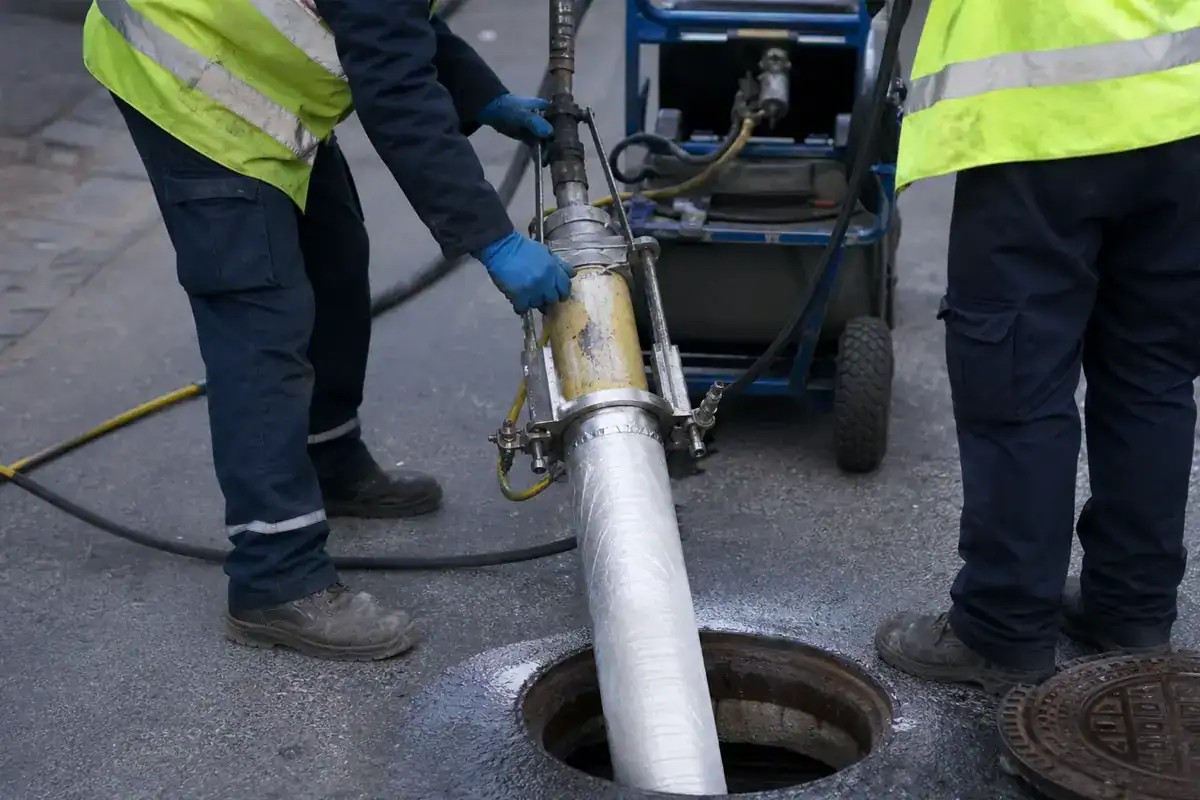
A consent decree doesn’t just require fixing sewers — it requires doing so within a fixed timeline and budget, across potentially hundreds of miles of pipe running beneath active roadways. That combination is exactly where CIPP’s advantages compound at scale.
| Factor | Municipal CIPP Lining | Open-Cut Excavation |
| Roadway disruption | Minimal — small access points at manholes | Full lane or road closures for the excavation length |
| Traffic control cost | Low — brief, localized access | Significant — extended closures, detours, signage |
| Timeline for a given run | Days per segment | Weeks per segment, including restoration |
| Standards compliance | ASTM F1216, NASSCO PACP/MACP | Varies by method; still requires permitting |
| Cost at scale (miles of pipe) | Generally 30-50% less when all costs included | Higher due to restoration, traffic control, disposal |
| Best fit | Structurally sound host pipe needing rehabilitation | Collapsed or severely offset sections |
What a Municipal CIPP Program Actually Involves
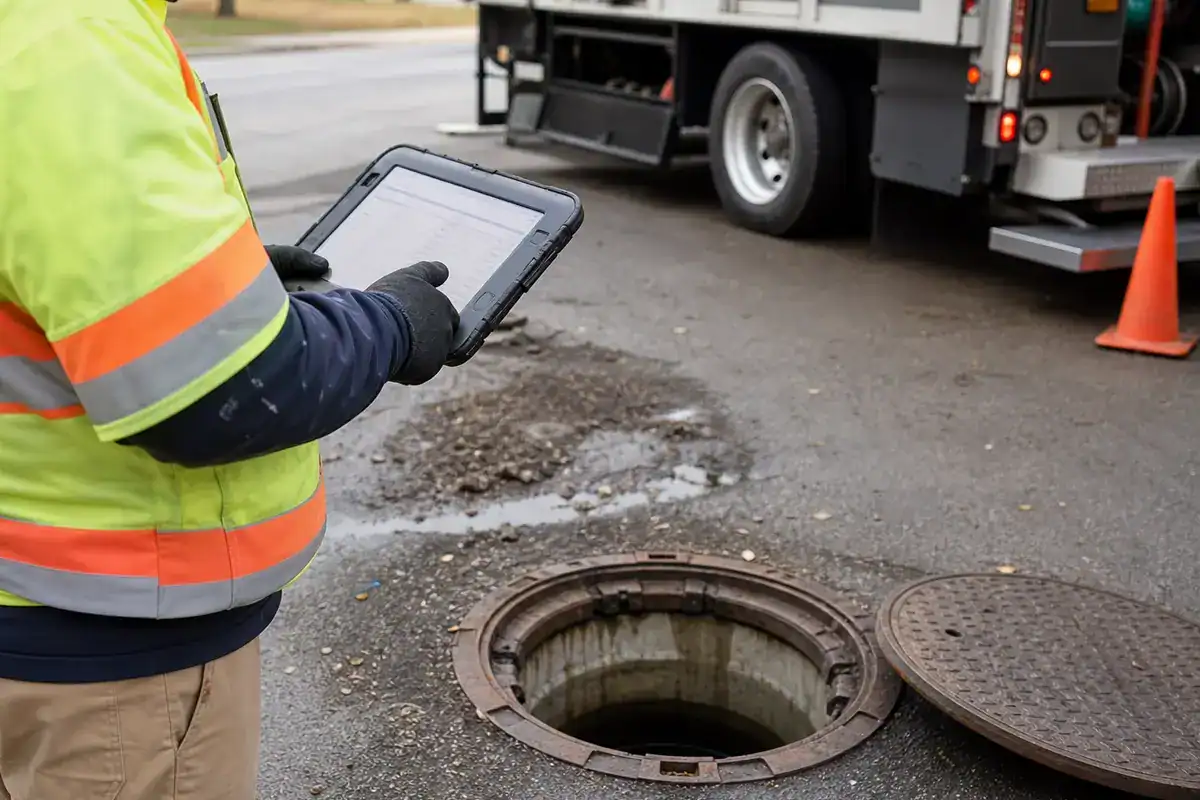
A municipal-scale rehabilitation program typically starts with systematic condition assessment — NASSCO PACP-standard camera inspection across the collection system to document defect type and severity segment by segment. That data feeds a prioritization process: segments with active infiltration, structural defects, or history of overflow get scheduled first, while sound pipe gets deferred. Lining then proceeds in phases, often coordinated with a municipality’s broader capital improvement budget cycle rather than as a single project.
Standards That Govern Municipal CIPP Work
Municipal CIPP installations aren’t judged by the same informal standards as a single residential repair — they’re built to ASTM F1216 specifications, NASSCO PACP/MACP/LACP condition assessment protocols, and often AWWA guidelines where pressure or water-adjacent infrastructure is involved. For the direct service description covering materials, equipment, and residential-to-municipal applications, see our full CIPP lining overview.
Frequently Asked Questions
Why do Louisiana cities specifically face so many sewer consent decrees?
Much of Louisiana’s municipal sewer infrastructure dates to the mid-20th century, built from materials like cast iron and vitrified clay that deteriorate over decades. Combined with the region’s heavy rainfall and high water tables, aging pipe networks are especially prone to infiltration and sanitary sewer overflows, which is what typically triggers EPA enforcement.
How long do municipal CIPP rehabilitation programs typically take?
Programs tied to a consent decree commonly run a decade or more, since they cover extensive pipe networks and are usually phased around municipal capital budget cycles rather than completed all at once.
Is CIPP lining suitable for every segment of an aging municipal sewer system?
No. CIPP works well on structurally sound host pipe with cracks, root intrusion, or joint separation. Fully collapsed or severely offset sections typically require pipe bursting or traditional excavation instead, which is why condition assessment always precedes a lining decision.
Who pays for municipal CIPP rehabilitation programs?
These programs are typically funded through a combination of municipal capital budgets, sewer revenue bonds, and in some cases state-administered loan programs, since consent decree compliance is treated as a required capital infrastructure investment rather than discretionary spending.
Louisiana’s aging sewer infrastructure and the federal mandates driving its repair aren’t going away, and CIPP lining has become the default method cities reach for precisely because it’s the only approach that fits both the scale and the budget realities these consent decrees impose.
Pelican Underground: Municipal CIPP Lining Across Louisiana
Pelican Underground is a Louisiana-licensed contractor (LSLBC #67347) with NASSCO-certified technicians serving public works departments across Louisiana, Mississippi, and Alabama with condition assessment, prioritization support, and CIPP installation to ASTM F1216 standards.
Contact us today to discuss condition assessment and CIPP rehabilitation for your municipal sewer system.
| Managing a municipal sewer rehabilitation program?
Pelican Underground provides NASSCO-certified CIPP lining and condition assessment for municipalities across Louisiana, Mississippi, and Alabama. Discuss Your Municipal Project | (504) 387-9909 |