
Quick Answer: Storm drain lining is a trenchless rehabilitation method that restores damaged stormwater pipes from the inside — without digging up your yard, road, or property. A resin-saturated liner is inserted into the existing pipe, expanded to fit, and cured in place to form a seamless new conduit. Most projects are completed in one to three days and meet ASTM F1216 and F2019 standards for stormwater use.
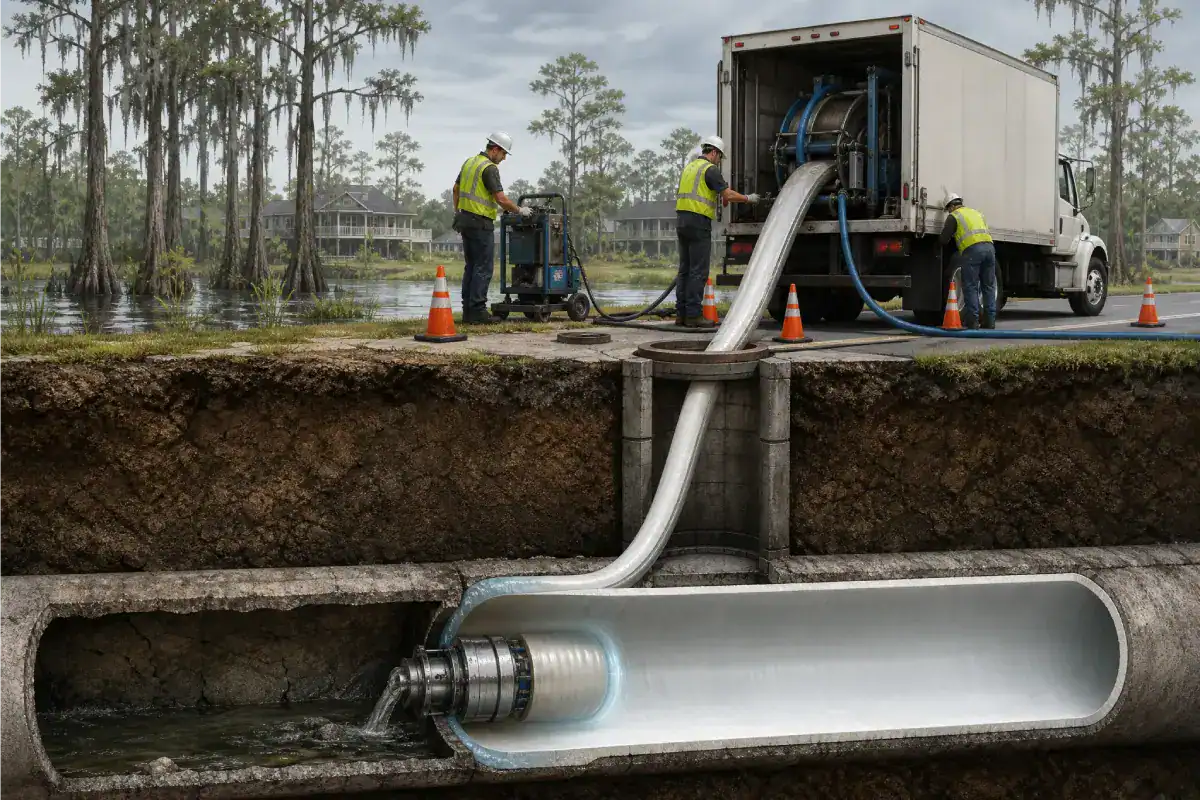
Storm drain lining inserts a cured material inside an existing conduit to form a new internal surface. In Louisiana, where heavy rainfall, expansive clay soils, and live oak root intrusion accelerate pipe wear, trenchless rehabilitation limits surface disruption and reduces cost compared with open-trench reconstruction.
What Are the Key Takeaways?
- Storm drain lining restores pipes from the inside with limited excavation.
- Common trenchless methods include CIPP lining, vertical stack lining, and pipe bursting.
- Epoxy resin and fiberglass composites are typical lining materials.
- Regular inspections and cleaning extend lining life and performance.
- Permits and local regulation compliance are essential in Louisiana projects.
- Trenchless repair generally reduces cost, restoration time, and surface disruption.
- Choose experienced, certified contractors familiar with trenchless technologies.
- Proper cleaning and preparation are critical for adhesion and durability.
What Is Storm Drain Lining and How Does It Work?
Storm drain lining seals defects and bonds to the pipe wall, preventing infiltration and restoring structural capacity. Epoxy resins and fiberglass composites form a continuous, load-bearing inner surface that mitigates further deterioration. Interior linings create a corrosion- and abrasion-resistant layer that seals leaks, restores hydraulic conveyance, and improves load-bearing capacity.
What Trenchless Sewer Repair Methods Are Used in Storm Drain Lining?
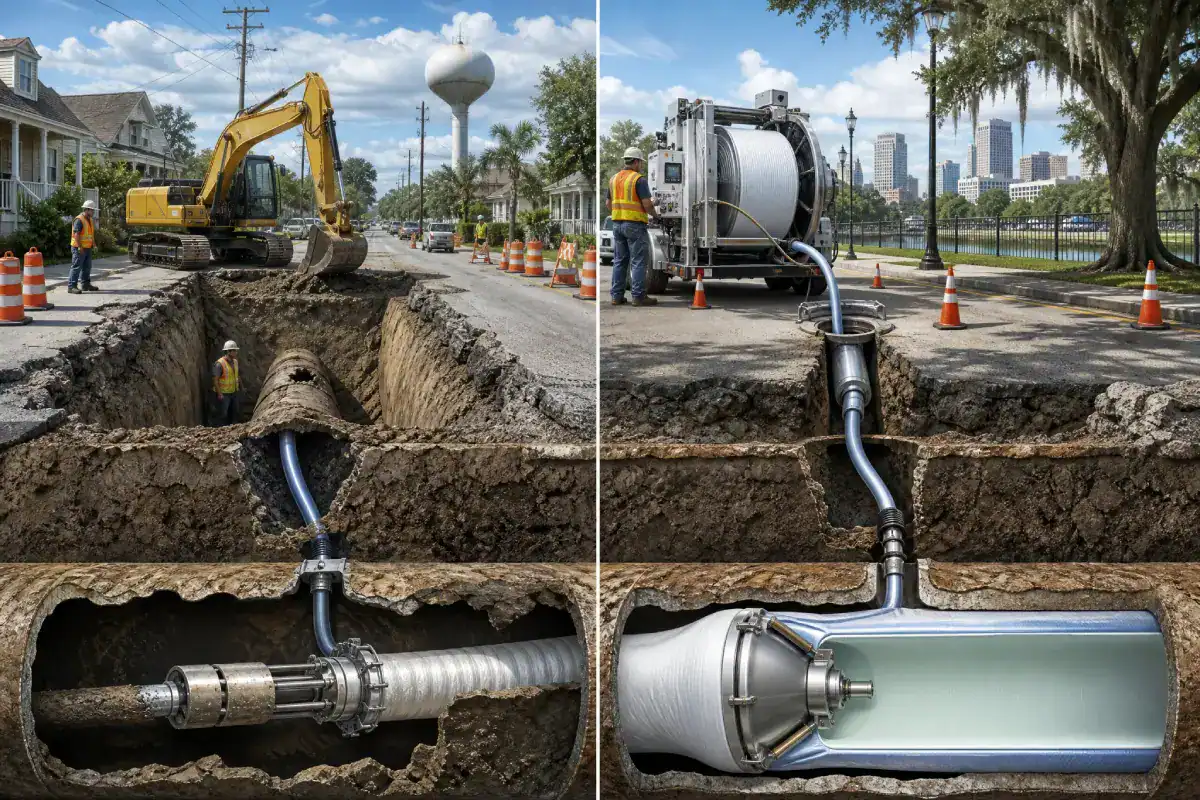
Trenchless repair rehabilitates underground systems with minimal surface work. The main approaches are selected based on pipe condition, access, and hydraulic needs.
- Cured-In-Place Pipe (CIPP) Lining: A resin-saturated liner is inserted, inflated, and cured to form a new seamless pipe. Meets ASTM F1216 and F2019 standards.
- Vertical Stack Lining: Designed for vertical risers and stacks where conventional access is constrained.
- Pipe Bursting: A new pipe is pulled through and replaces the old pipe in a single operation — ideal when the host pipe is severely deteriorated.
These methods cut surface disturbance, lower traffic and utility impacts, and are often preferred in urban or environmentally sensitive sites. Various trenchless renewal lining techniques offer versatile solutions for rehabilitation across pipe diameters and material types.
What Are the Benefits of Storm Drain Lining?
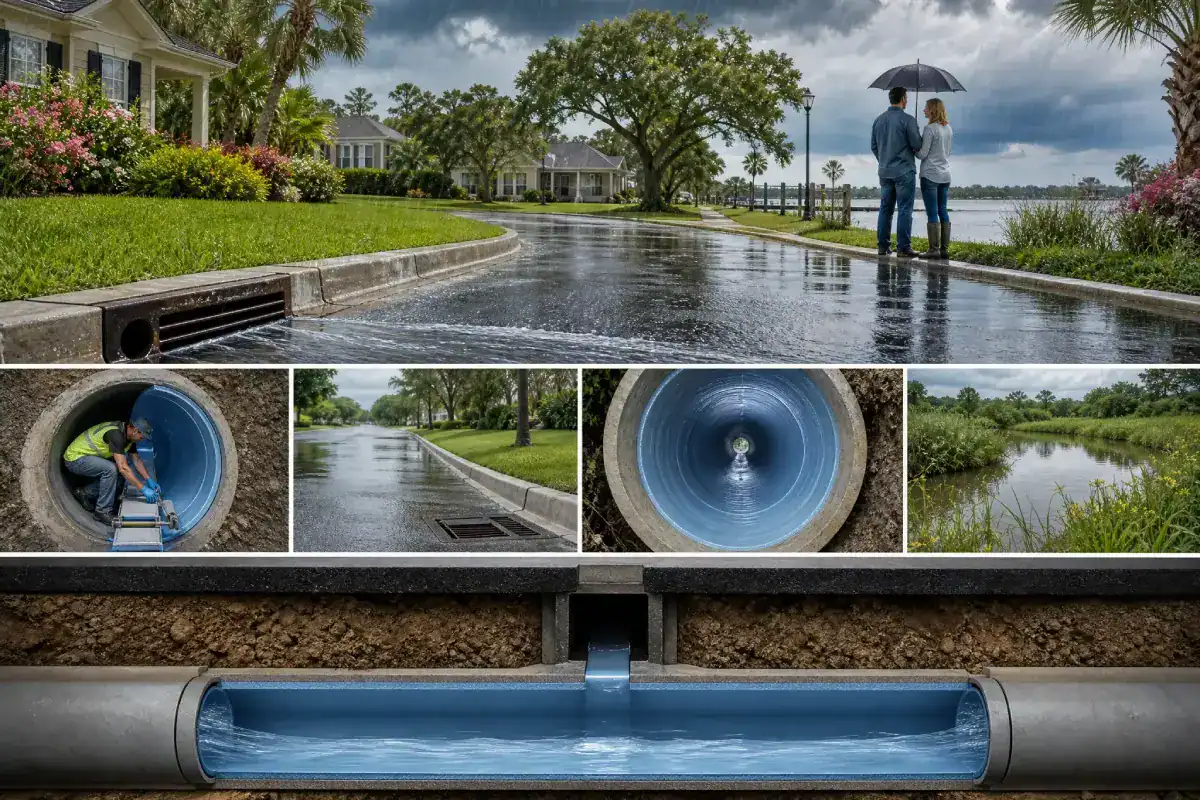
Key benefits include less surface disruption, lower restoration costs, and improved durability of rehabilitated conduits. These outcomes help maintain service continuity and reduce regulatory risk.
- Minimized Disruption: Preserves landscaping and infrastructure by avoiding major digging.
- Cost-Effectiveness: Lowers labor and restoration expenses compared with open-trench work.
- Durability: Lining materials resist corrosive and abrasive conditions for long-term performance.
Pelican Underground LLC offers storm drain lining services to support property owners and public agencies in maintaining functional stormwater systems across Louisiana and the Gulf South.
How Does Storm Drain Lining Compare to Traditional Open-Trench Repair?
Compared with open-trench reconstruction, lining typically reduces excavation-related impacts, shortens project duration, and can lower lifecycle costs while meeting hydraulic and structural specifications when properly applied. Louisiana’s expansive clay soils and ground subsidence risk make trenchless methods especially favorable.
| Factor | Storm Drain Lining | Open-Cut Excavation |
|---|---|---|
| Average Cost | Lower (less labor/restoration) | Higher (excavation + restoration) |
| Project Timeline | 1–3 days typical | 1–3 weeks or more |
| Surface Disruption | Minimal — access pits only | Major — full trench exposure |
| Lifespan | 50+ years with maintenance | 50+ years (depends on material) |
| Louisiana Soil Suitability | Ideal — avoids unstable clay/subsidence risk | High risk — expansive soils, root intrusion |
📞 Ready to Stop Guessing and Start Fixing? Pelican Underground offers free camera inspections to assess your storm drain condition — before you spend a dollar on repairs. Contact us today for a no-obligation evaluation and quote.
What Are the Step-by-Step Processes Involved in Storm Drain Lining?
Work typically follows condition assessment, thorough cleaning, liner installation and curing, then a final inspection to confirm structural and hydraulic integrity.
- Step 1 — Inspection: CCTV camera surveys identify defects, root intrusion, cracks, and access needs.
- Step 2 — Hydrojetting / Cleaning: High-pressure water removes sediment, roots, and debris to prepare the surface.
- Step 3 — Liner Measurement & Cutting: The liner is precisely measured and cut to match the pipe run.
- Step 4 — Inversion / Insertion: The resin-impregnated liner is inserted and expanded against the pipe wall.
- Step 5 — Curing (UV or Ambient): Heat, UV light, or ambient temperature bonds the liner into a rigid new conduit.
- Step 6 — End Cuts & Lateral Reinstatement: End cuts are trimmed and any lateral connections are reopened robotically.
- Step 7 — Post-Lining Camera Verification: A final CCTV pass confirms adhesion, continuity, and hydraulic performance.
How Is the Stormwater Pipe Prepared Before Lining?
Preparation focuses on mechanical cleaning to remove sediments, roots, and obstructions so the lining can bond to a clean, stable substrate. Address any repairs identified during inspection before lining.
What Materials and Equipment Are Used During Pipe Rehabilitation?
Typical materials include epoxy or other resin systems and reinforced liners. Equipment includes inflation and curing apparatus and CCTV for inspection and quality verification.
- Lining Material: Epoxy resins or fiberglass textiles chosen for bonding and durability.
- Inflation Equipment: Expands the liner against the pipe wall during curing.
- Cameras and Inspection Tools: Verify condition before and after work.
Components are selected to meet contractual and engineering performance criteria. ASTM F1216 governs CIPP for sanitary sewers; ASTM F2019 extends that coverage to storm and culvert applications.
What Are the Cost, Time, and Environmental Benefits of Trenchless Storm Drain Repair?
Trenchless repair reduces excavation and restoration costs, shortens schedules, and lowers ecological disturbance by preserving surface features and producing less waste.
- Cost Savings: Fewer labor and restoration costs compared with open-trench methods.
- Time Efficiency: Faster mobilization and completion restore service sooner.
- Environmental Protection: Less disturbance to landscaping, trees, and surrounding terrain.
What Environmental and Regulatory Considerations Apply in Louisiana?
Louisiana projects must address state and local environmental statutes and stormwater ordinances. Implement required erosion, sediment, and pollution controls and obtain necessary permits to protect receiving waters and meet regulatory conditions. The Louisiana Department of Transportation and Development (DOTD) maintains an approved materials list for pipe products used in public infrastructure — verify that your selected lining system appears on that list before procurement.
How Can Louisiana Property Owners and Municipalities Choose the Right Storm Drain Lining Contractor?
Select contractors using objective criteria: documented trenchless experience, relevant certifications, and familiarity with local permitting and compliance.
- Experience: Proven track record in trenchless rehabilitation across pipe types and diameters.
- Certifications: Industry certifications (e.g., NASSCO) and regulatory knowledge.
- References: Client references from municipalities or property managers that confirm reliability and quality.
Evaluate firms against these standards to ensure they can meet technical and regulatory obligations.
What Qualifications and Experience Should a Trenchless Technology Provider Have?
A qualified provider demonstrates technical competence, maintains recognized certifications, and shows project experience that confirms successful execution of comparable works.
- Technical Expertise: Knowledge of trenchless methods, ASTM standards, and Louisiana soil conditions.
- Industry Certifications: Proof of trained personnel and standards compliance.
- Project Experience: Past projects that demonstrate capability on similar repairs.
These qualifications support contractors’ ability to meet performance and contractual requirements.
How Do Maintenance and Longevity Impact Storm Drain Lining Effectiveness?
Lining effectiveness depends on material durability and a systematic maintenance program. Regular inspections and timely corrective actions limit deterioration and help preserve hydraulic capacity over the design life.
- Regular Inspections: Annual visual and CCTV inspections verify lining condition.
- Cleaning Schedules: Routine cleaning prevents blockages and sediment buildup.
- Emergency Preparedness: Have a plan for unexpected failures or flooding events.
Proactive maintenance extends lining life and reduces the chance of premature failure. Properly maintained CIPP linings are routinely documented to last 50 years or more.
TL;DR — Storm Drain Lining at a Glance
- Storm drain lining rehabilitates pipes from the inside using resin-impregnated liners — no excavation required.
- CIPP is the most common method; pipe bursting and vertical stack lining address specialized conditions.
- Properly installed linings last 50+ years and meet ASTM F1216 / F2019 standards.
- In Louisiana, trenchless lining avoids the risks posed by clay soils, subsidence, and root intrusion.
- Always commission a CCTV inspection first; cleaning and preparation are essential before lining.
- Next step: Contact Pelican Underground for a free camera inspection and project quote.
Frequently Asked Questions
What types of materials are used for storm drain lining?
Epoxy-based resin systems and fiberglass-reinforced textiles are the primary materials, chosen for chemical resistance, mechanical strength, and bonding capacity.
How often should storm drain linings be inspected and maintained?
Annual visual and CCTV inspections are standard; cleaning and minor repairs should be scheduled based on inspection findings and local conditions.
Are there specific regulations for storm drain lining in Louisiana?
Yes. Projects must comply with applicable state and local stormwater regulations and permit conditions to protect water quality and avoid enforcement actions.
What is the typical lifespan of a storm drain lining?
Properly installed linings with routine maintenance commonly last 50 years or more, depending on material, installation quality, and exposure conditions.
What are common signs that indicate storm drain linings need repair?
Signs include recurrent localized flooding, reduced conveyance capacity, visible infiltration or exfiltration, deformation, and persistent blockages. Prompt investigation reduces escalation.
Related Resources
- CIPP Lining Services — Louisiana
- Stormwater Management Services
- Storm Drains — Inspection and Repair
- Pipe Lining vs. Pipe Bursting: Which Is Right for You?
- How Long Does Pipe Lining Last?
- Epoxy Pipe Lining Louisiana
- New Orleans, LA Service Area
Get a Free Storm Drain Camera Inspection
Storm drain lining is a proven, cost-effective way to rehabilitate stormwater infrastructure in Louisiana — without the disruption and expense of open-trench excavation. When installed with the right materials, thorough preparation, and regulatory compliance, trenchless rehabilitation delivers durable, decades-long performance.
About Pelican Underground LLC: Pelican Underground LLC is a trenchless pipe rehabilitation specialist serving Louisiana and the Gulf South. We provide CIPP lining, storm drain repair, hydrojetting, and municipal stormwater solutions for property owners, municipalities, and commercial operators. Contact us for a free camera inspection and project quote.