
Quick Answer: High rise sewer lining Baton Rouge stack rehabilitation is a trenchless method that restores failing vertical sanitary stacks in multi-story buildings using cured-in-place pipe (CIPP) technology, without demolishing walls or displacing tenants. A flexible epoxy-saturated liner is inserted into the existing pipe, inflated, and cured to form a new structural pipe inside the old one. Most Baton Rouge high-rise projects finish in 1 to 3 days, compared with 4 to 6 weeks for traditional stack replacement, and the new liner can extend service life by up to 50 years.
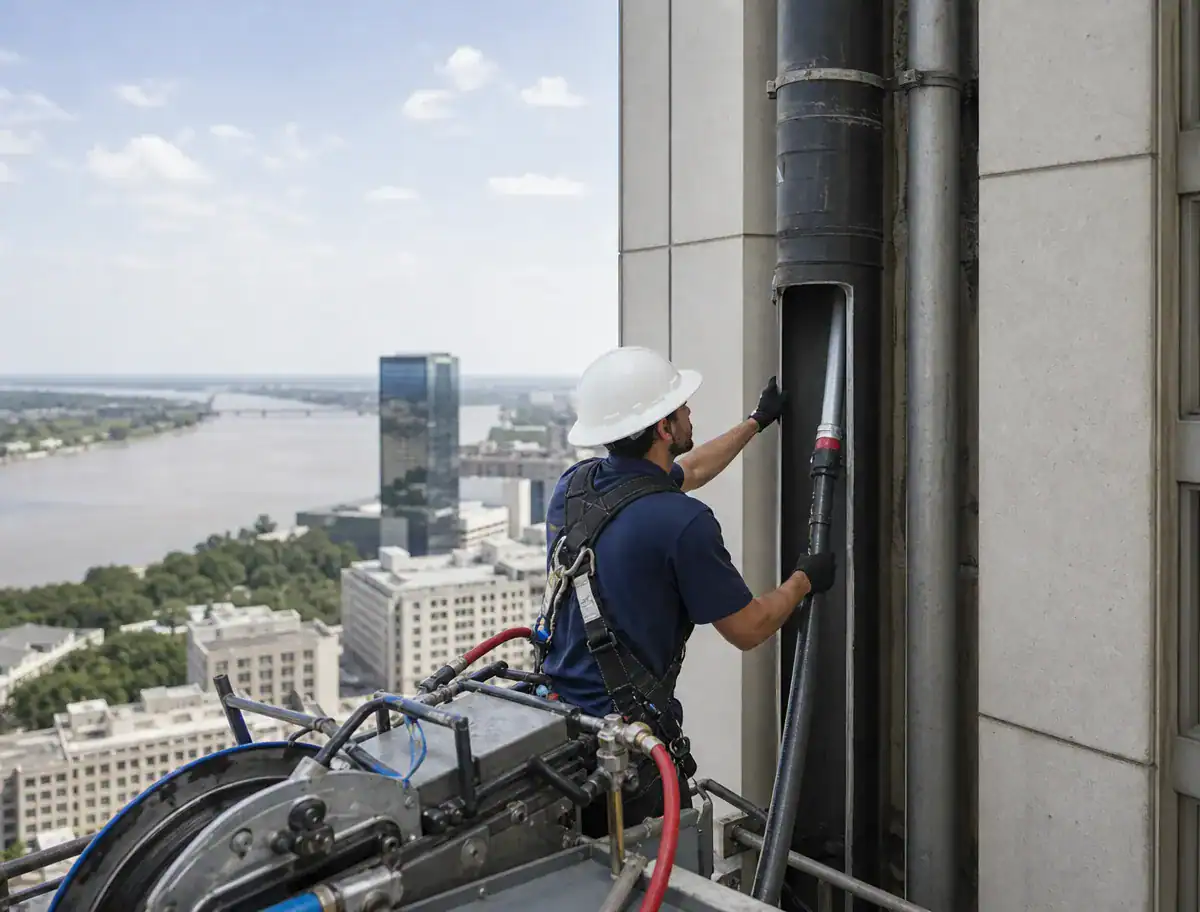
Vertical stack rehabilitation restores failing sanitary waste stacks in Baton Rouge high-rise, multi-story buildings using cured-in-place pipe lining, eliminating excavation and unit-by-unit demolition. Pelican Underground LLC serves Baton Rouge condo boards, HOAs, and commercial property managers from our New Orleans, LA base, delivering camera-verified diagnostics, licensed crews, and code-compliant stack rehabilitation with minimal resident disruption.
Key Takeaways
- Pelican Underground LLC provides vertical sewer stack lining services for high-rise commercial buildings in New Orleans, Louisiana.
- Video camera inspection assesses stack condition before industrial-grade drain cleaning removes debris and ensures optimal liner adhesion.
- Cured-in-place pipe lining technology restores deteriorated vertical sanitary waste stacks without requiring full pipe replacement or excavation.
- Pinhole leaks, rust accumulation, and interior surface degradation necessitate professional stack rehabilitation to prevent system failures.
What Is High Rise Sewer Lining Baton Rouge Stack Rehabilitation?
High rise sewer lining Baton Rouge stack rehabilitation is a trenchless restoration method that repairs deteriorating vertical waste and drainage pipes in multi-story buildings without excavation. Our process at Pelican Underground LLC creates a new structural pipe inside the existing failed one, effectively restoring the entire stack system from top to bottom. This approach eliminates the need to demolish walls, break through concrete slabs, or disrupt building operations for weeks at a time.
How Does the Cured-in-Place Pipe Process Work for Vertical Stacks?
The rehabilitation relies on cured-in-place pipe (CIPP) technology. A flexible liner saturated with epoxy resin is inserted into the existing vertical pipe, inflated against the interior walls, and then hardened using hot water, steam, or UV light. The result is a seamless, jointless pipe-within-a-pipe that restores flow capacity and structural integrity. Most installations cure in 2 to 6 hours, depending on stack height and diameter.
What Lifespan Can Property Owners Expect From This Method?
When properly installed, this trenchless lining extends the service life of sewer and drainage stacks by up to 50 years or more. The new epoxy liner resists corrosion, root intrusion, and mineral buildup that typically degrade cast iron or clay pipes. For Baton Rouge commercial property managers and HOA boards, this represents a single, long-term solution rather than repeated emergency repairs.
Our licensed, bonded crews serve Baton Rouge from our New Orleans base, bringing specialized equipment and NASSCO-certified technicians to each project. The process follows a structured sequence:
- Video inspection — High-definition camera assessment documents the stack’s condition and locates all defects.
- Industrial cleaning — Thorough removal of debris, scale, and obstructions ensures proper liner adhesion.
- Liner installation — The epoxy-saturated liner is inverted or pulled into the vertical stack.
- Curing — Heat or UV energy hardens the resin to create a durable new pipe wall.
- Final inspection — Post-installation video confirms a smooth, leak-free restoration.
What Prerequisites Are Needed Before Starting Stack Lining?
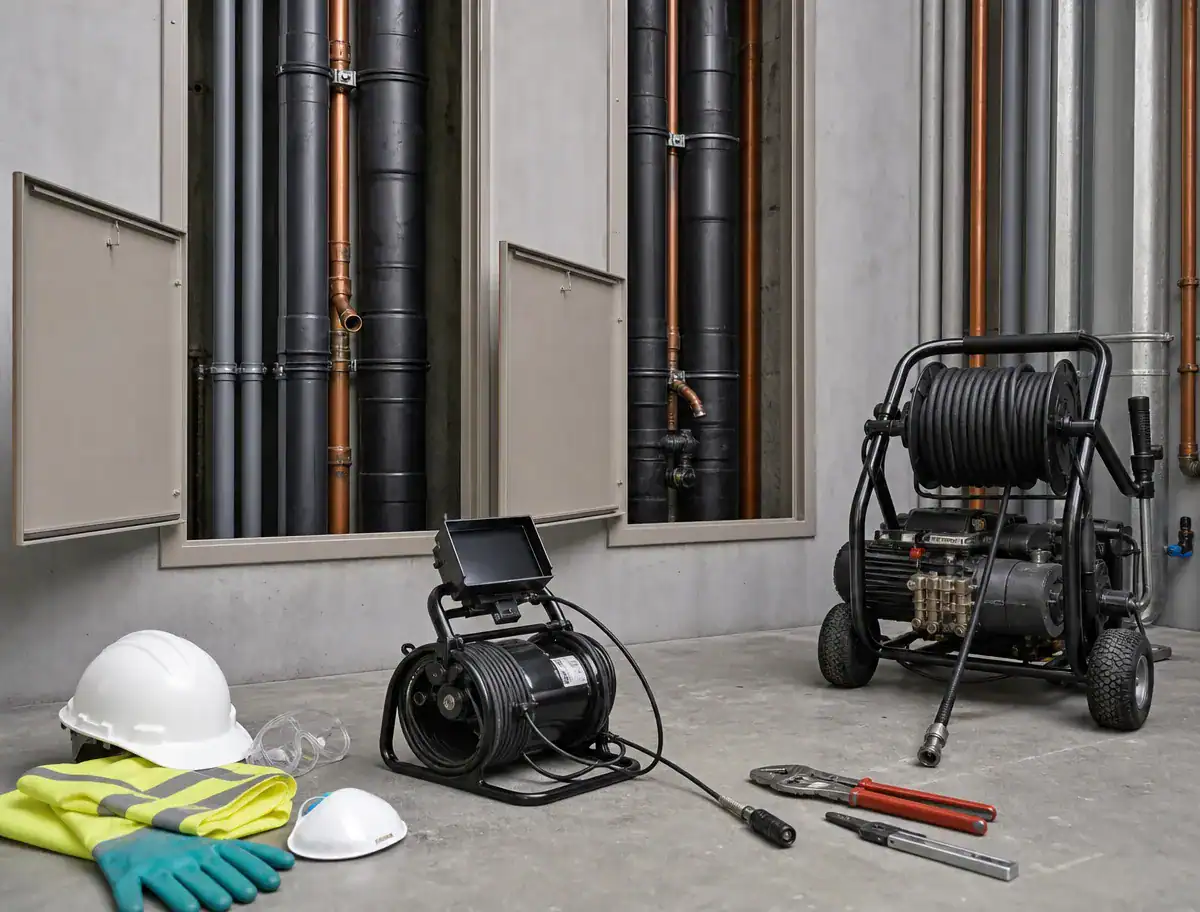
Before our team initiates any high rise sewer lining Baton Rouge project, three prerequisites must be satisfied. A video camera inspection, thorough pipe cleaning, and a mandatory property evaluation form the foundation of every successful stack restoration. Skipping any of these steps compromises liner adhesion, project timelines, and long-term durability.
Why Is a Video Camera Inspection Required First?
We begin every project with a video camera inspection service to assess the stack’s internal condition. This diagnostic step identifies cracks, root intrusions, offset joints, and interior surface degradation that would otherwise remain hidden. The inspection footage provides a permanent record of pre-existing conditions and allows us to determine whether the pipe is structurally suitable for lining. Without this assessment, we cannot guarantee the liner will bond properly or address all failure points.
What Cleaning Is Necessary Before Liner Installation?
Thorough cleaning of the pipe interior is non-negotiable. We perform industrial-grade drain cleaning to remove rust scale, grease deposits, mineral buildup, and biological contamination. This step ensures optimal adhesion of the renewal liner to the host pipe wall. In contaminated environments — common in multi-story commercial stacks — standard drain cleaning proves insufficient. Only industrial-grade equipment removes the embedded debris that prevents epoxy bonding.
Is a Property Evaluation Mandatory?
Yes. A property evaluation is mandatory before we provide accurate time frames for cast iron pipelining. While many repairs complete within the same day, stack height, access constraints, and existing pipe conditions vary significantly between Baton Rouge high-rise buildings. The evaluation allows us to verify access points, confirm stack diameters, and identify any structural deficiencies that require targeted point repairs before full-length lining proceeds.
📞 Ready to Get Started? Don’t let an aging cast iron stack turn into an emergency call. Contact Pelican Underground today for a fast, free quote on high rise sewer lining in Baton Rouge.
How Is the Vertical Stack Lining Process Executed Step by Step?
The vertical stack lining process follows a precise sequence of diagnostic, preparatory, and installation steps designed to restore pipe integrity without excavation. Our team executes this procedure methodically, following NASSCO CIPP best practices, to ensure compliance with building codes and long-term performance for Baton Rouge commercial properties.
Step 1: Video Camera Inspection. We begin with a high-definition video camera inspection to document the pipe’s internal condition. This diagnostic step identifies cracks, root intrusions, corrosion, and connection points, providing a baseline for the restoration plan.
Step 2: Industrial-Grade Cleaning. Thorough cleaning removes debris, scale, and grease that would compromise liner adhesion. For contaminated environments, we perform specialized drain cleaning to prepare the pipe surface for epoxy bonding.
Step 3: Liner Installation and Curing. The epoxy-saturated liner is inserted into the stack and inflated against the existing pipe walls. Curing method selection depends on stack height, diameter, and access points — we use hot water curing, steam curing, or UV curing to harden the epoxy. Most installations cure within 2 to 6 hours.
Step 4: Trim and Final Verification. Once cured, we trim excess liner at all connection points, restoring full flow capacity. A final video inspection verifies a seamless, leak-free installation.
How Long Does the Entire Vertical Stack Lining Process Take?
The complete process typically finishes in 1 to 3 days for most stacks. Total duration depends on stack height, number of connection points, and site complexity. This timeline represents a fraction of the disruption caused by traditional pipe replacement methods.
What Determines the Curing Method for a Baton Rouge High Rise Sewer Lining Project?
Curing method selection depends on three variables: stack height, pipe diameter, and access point configuration. Hot water curing suits standard residential stacks, while steam curing accelerates hardening for taller commercial risers. UV curing provides rapid results for accessible straight sections, minimizing tenant disruption in occupied buildings.
What Are Common Mistakes to Avoid During Stack Rehabilitation?
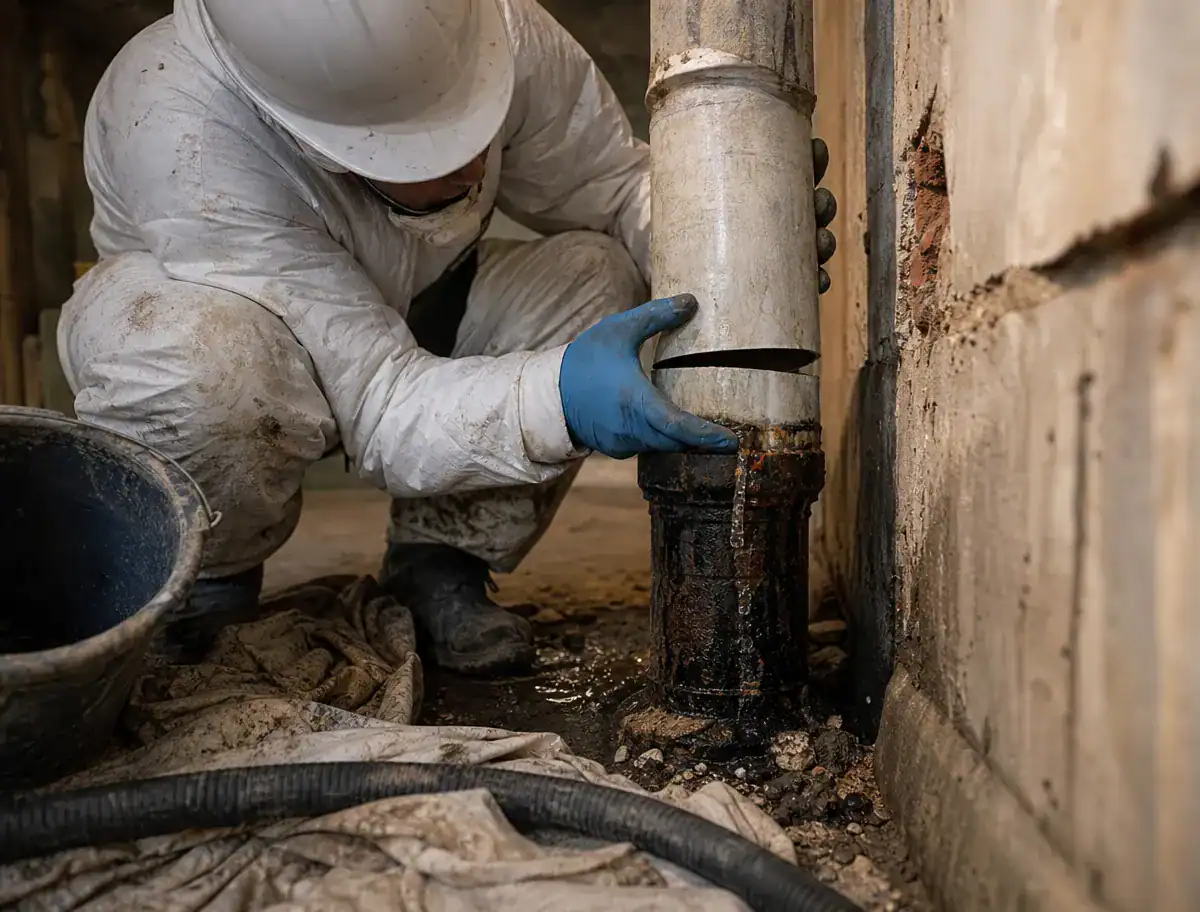
Property managers and building engineers overseeing high rise sewer lining Baton Rouge projects frequently encounter preventable errors that compromise repair durability and increase long-term costs. The most critical mistake involves proceeding without a thorough diagnostic assessment. Our team begins every stack rehabilitation with a video camera inspection to evaluate the pipe’s internal condition. Skipping this step leaves cracks, root intrusions, and joint displacements undetected, leading to repairs that address symptoms rather than root causes.
Why Does Inadequate Cleaning Cause Liner Failure?
Industrial-grade drain cleaning must precede any lining installation. Contaminants, grease buildup, and mineral deposits prevent epoxy adhesion, creating voids that weaken the structural integrity of the cured liner. We perform thorough cleaning to ensure optimal adhesion and performance of renewal liners in contaminated environments. Property owners who authorize lining without verifying proper cleaning protocols risk premature liner detachment within months.
What Happens Without a Mandatory Property Evaluation?
Many building owners assume same-day completion without recognizing that accurate time frames require a site-specific evaluation. We can perform most repairs in the same day, but a property evaluation is mandatory to provide accurate cast iron pipelining time frames. Failing to conduct this evaluation results in scheduling conflicts, extended tenant disruption, and budget overruns.
How Do Unlicensed Contractors Create Compliance Risks?
Engaging unlicensed or unbonded contractors introduces liability for code violations and safety infractions. Our fully licensed and insured team follows the ASTM standard practice for pipeline rehabilitation and emphasizes safety, compliance, and transparency throughout every project. Without proper credentials, property owners assume responsibility for any regulatory penalties or structural damage that occurs during rehabilitation.
How Do You Troubleshoot Issues After Stack Lining Is Complete?
Post-installation troubleshooting begins with a final video inspection to confirm the liner is properly seated and free of defects. Our technicians run a high-definition camera through the entire restored stack, examining every joint and connection point. This inspection documents the liner’s integrity and identifies any irregularities before the system returns to service.
What Causes Flow Problems After Lining?
If water flow remains slow or backups occur after lining, the issue typically stems from residual debris or an incomplete seal at a lateral connection. High rise sewer lining Baton Rouge projects require precise trimming at every branch entry. Our NASSCO-certified technicians (holding PACP/MACP/LACP credentials) use advanced diagnostic tools to pinpoint the exact location of any obstruction. When a blockage is identified, we perform targeted point repairs or additional cleaning to restore full flow capacity.
When Should You Request Same-Day Service?
Property managers should request immediate service when post-lining issues disrupt building operations. Pelican Underground offers same-day service availability for urgent concerns. Our crews arrive with specialized equipment to diagnose and resolve problems without delay. Common post-lining issues include:
- Residual debris lodged at connection points
- Incomplete curing at stack transitions
- Lateral liner misalignment requiring trimming
- Blockages from dislodged scale or sediment
Each issue requires a specific corrective action. Our technicians document every step and provide a final report confirming the stack meets operational standards. This systematic approach ensures the lining investment delivers its full service life without unexpected failures.
Vertical stack rehabilitation through trenchless pipe repair technology represents a proven solution for high-rise properties throughout Baton Rouge confronting aging or failing drainage infrastructure. By addressing root intrusions, corrosion, and structural deterioration without extensive excavation, property managers and owners preserve building integrity while minimizing operational disruption. Pelican Underground’s licensed technicians and advanced diagnostic capabilities ensure compliant, durable outcomes that protect both residential and commercial assets across the region.
Frequently Asked Questions
What Is High Rise Sewer Lining Baton Rouge Stack Rehabilitation?
This trenchless restoration method repairs deteriorating vertical waste and drainage pipes in multi-story buildings without excavation. Pelican Underground LLC creates a new structural pipe inside the existing failed one, restoring the stack system top to bottom.
How Does the Cured-in-Place Pipe Process Work?
A flexible liner saturated with epoxy resin gets inserted into the pipe, inflated against interior walls, and hardened using hot water, steam, or UV light. This creates a seamless, jointless pipe-within-a-pipe that restores flow capacity and structural integrity.
What Steps Happen Before Liner Installation Begins?
Video camera inspection assesses stack condition and documents defects, followed by industrial-grade drain cleaning that removes debris and scale. This process ensures optimal liner adhesion before the epoxy-saturated liner installation.
Is There Odor During Curing?
Some curing methods produce a mild, temporary odor as the epoxy resin sets, typically noticeable for a few hours near the work area. Crews ventilate the space and the smell dissipates quickly once curing finishes, so residents rarely need to leave the building.
Does Lining Meet Louisiana Plumbing Code?
Yes. Cured-in-place pipe rehabilitation follows ASTM F1216 and NASSCO CIPP best practices, and our NASSCO-certified technicians install liners that satisfy Louisiana plumbing code requirements for existing building stack repairs.
TL;DR — High Rise Sewer Lining Baton Rouge at a Glance
- High rise sewer lining Baton Rouge stack rehabilitation restores failing vertical stacks with CIPP technology, no demolition required.
- The process runs through video inspection, industrial cleaning, liner installation, curing, and final verification.
- Most projects finish in 1 to 3 days, versus 4 to 6 weeks for traditional stack replacement.
- A property evaluation and video inspection are mandatory before any lining begins.
- The cured liner can extend stack service life by up to 50 years.
- Next step: Contact Pelican Underground for a free property evaluation and stack lining quote.
Related Resources
- Vertical Stack Lining Services
- Vertical Stack Lining in Baton Rouge
- Vertical Stack Lining in Louisiana
- High-Rise Pipe Lining in New Orleans
- Vertical Stack Lining Cost Breakdown
- Apartment Building Sewer Pipe Lining
Get a Free Stack Rehabilitation Quote
Aging cast iron stacks in Baton Rouge high-rises rarely improve on their own, and waiting increases the odds of an emergency failure. Pelican Underground’s licensed crews can evaluate your building’s stacks and provide a clear, written estimate before any work begins. Contact Pelican Underground today for a free, no-obligation quote on high rise sewer lining in Baton Rouge.
About Pelican Underground LLC: Pelican Underground LLC is a licensed, NASSCO-certified trenchless pipe rehabilitation contractor based in New Orleans, Louisiana, serving Baton Rouge, New Orleans, and the greater Gulf South with cured-in-place pipe lining, vertical stack lining, and sewer line repair for commercial and residential properties. Contact us for a free, no-obligation quote.