
High-rise buildings create specific operational challenges for vertical sewer (stack) systems. Vertical stack rehabilitation is a trenchless approach that repairs deteriorated vertical sewer lines with minimal disruption. This article summarizes the key procedures, benefits, and applications of trenchless sewer repair for tall buildings in New Orleans.
Key Takeaways
- Vertical stack rehabilitation restores vertical sewer lines in high-rise buildings using trenchless methods to limit disruption.
- The core steps are inspection, cleaning, liner installation, and curing to form a durable internal sleeve.
- Trenchless repair typically saves time and money versus open excavation in urban settings.
- Materials such as Cured-In-Place Pipe (CIPP) and epoxy resin extend service life and strengthen the pipe.
- The method preserves building fabric and resident convenience, suitable for condos, hotels, healthcare, and historic properties.
- Select experienced, certified contractors familiar with local infrastructure; Pelican Underground LLC offers specialized services in New Orleans.
Processes Involved in Vertical Stack Rehabilitation
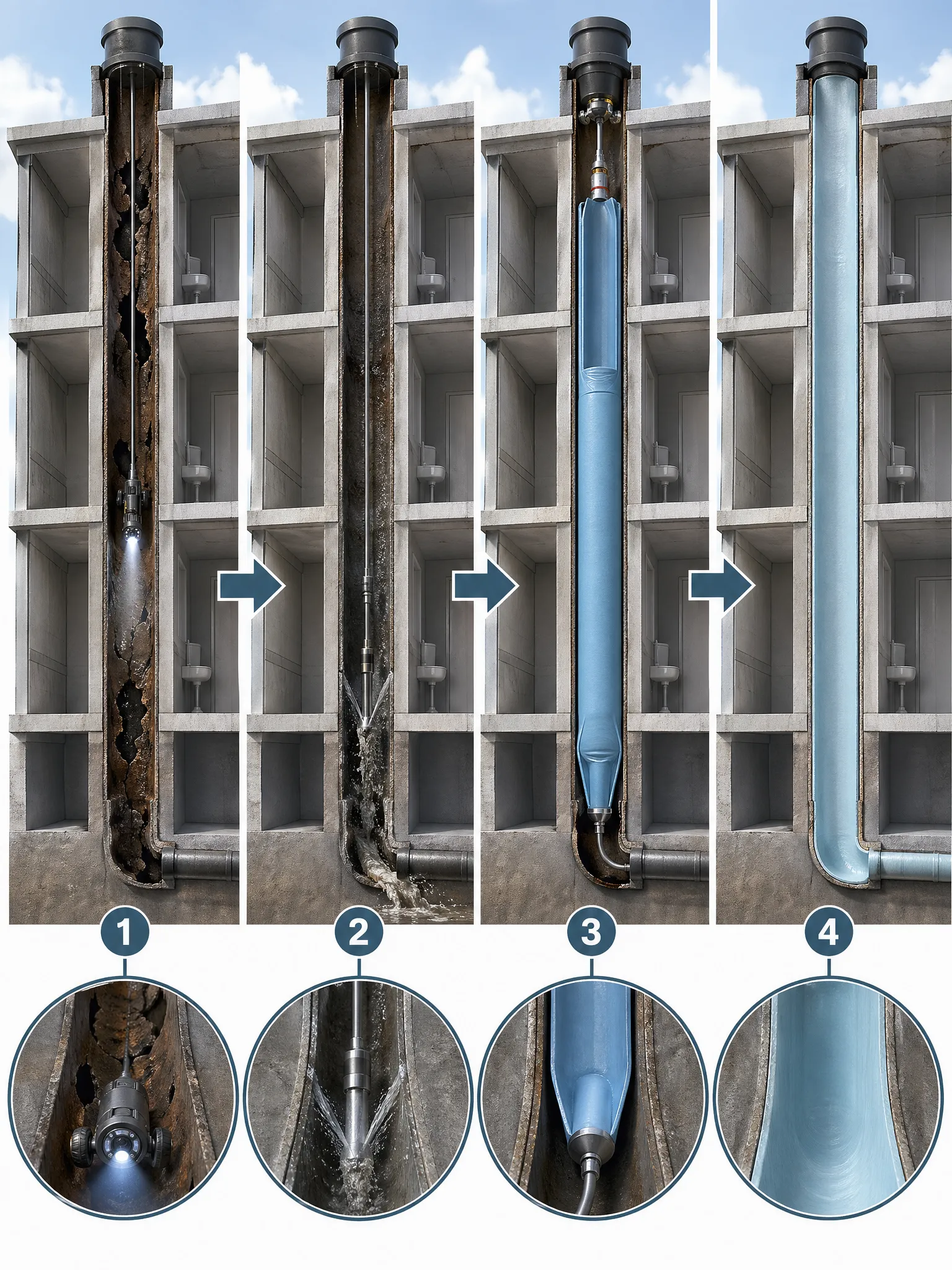
Typical phases include a video inspection to assess defects, mechanical or hydro cleaning to prepare the host pipe, insertion of a flexible liner (often epoxy-based or CIPP), and curing in situ to create a seamless, structural inner pipe. According to ASTM F1216, the industry standard for Cured-In-Place Pipe lining, this sequence ensures structural integrity and avoids extensive excavation — making it well suited to constrained urban sites like those found throughout New Orleans.
Benefits for Efficient Sewer Repair
The principal advantages of trenchless technology for high-rise sewer repairs are listed below.
- Minimal Disruption to Residents: Work is localized and does not require open trenches through occupied spaces.
- Cost-Effectiveness: Reduced excavation and restoration lower overall project costs.
- Longevity: Modern liners and resins provide durable, long-lasting rehabilitation.
Pelican Underground LLC provides vertical stack rehabilitation services using trenchless technologies, combining field experience and technical systems to complete efficient repairs with limited tenant impact.
Application in Tall Buildings
Vertical stack lining applies to condominiums, hotels, healthcare facilities, and historic buildings that have complex vertical plumbing. Trenchless methods repair and reinforce stacks while preserving structural and architectural elements, making the approach attractive for property managers seeking minimal operational disruption. Learn more about commercial pipe lining in New Orleans for additional building-type applications.
What Is Vertical Stack Rehabilitation in High-Rise Buildings?
It is the restoration and structural reinforcement of vertical sewer lines inside tall buildings. Where open excavation would be disruptive or impractical, trenchless lining restores hydraulic performance and structural capacity with reduced impacts on occupants and adjacent infrastructure.
How Trenchless Sewer Repair Technology Applies to Tall Buildings
Trenchless sewer repair begins with advanced diagnostics to define defects and sizes, followed by targeted cleaning and liner installation. Post-installation inspections confirm continuity and compliance with operational standards. The approach reduces on-site footprint and scheduling complexity in occupied buildings.
How Does the Vertical Stack Rehabilitation Process Work?
The process follows a concise sequence:
- Inspection: Camera surveys and diagnostics establish condition and scope.
- Cleaning: Hydro or mechanical cleaning removes debris for proper adhesion.
- Liner Installation: A flexible, resin-saturated liner is positioned within the host pipe.
- Curing: Heat, ambient cure, or UV methods cure the liner to form a new pipe.
These stages restore hydraulic function and create a structurally improved pipe with minimal disturbance.
Step-by-Step Overview of Trenchless Pipe Lining Procedures
In practice, contractors sequence the same core stages with controlled access points and phased work to maintain building services. A focused inspection and preparation phase keeps installation efficient and predictable.
- Initial Inspection: Confirm defects, lateral connections, and stack geometry.
- Cleaning and Preparation: Achieve a clean substrate for resin bonding.
- Liner Installation: Insert and position the liner safely within the stack.
- Curing Process: Cure to final strength, then perform final CCTV verification.
This streamlined workflow reduces project duration and overall cost compared with open-cut alternatives.
Materials and Technologies Used in Sewer Pipe Lining
Successful vertical stack rehabilitation depends on appropriate material selection. Common materials include:
- Cured-In-Place Pipe (CIPP): A resin-saturated liner cured in place to form a new pipe. CIPP installations follow ASTM F1216, the primary industry standard governing inversion and curing of resin-impregnated tubes in existing pipelines.
- Epoxy Resin: Provides a strong bond and chemical resistance when specified.
- Flexible Liners: Conform to irregular shapes and provide a continuous sleeve.
These systems are chosen for durability, adaptability to existing geometry, and proven service life extension.
What Are the Benefits of Trenchless Sewer Repair for High-Rise Structures?
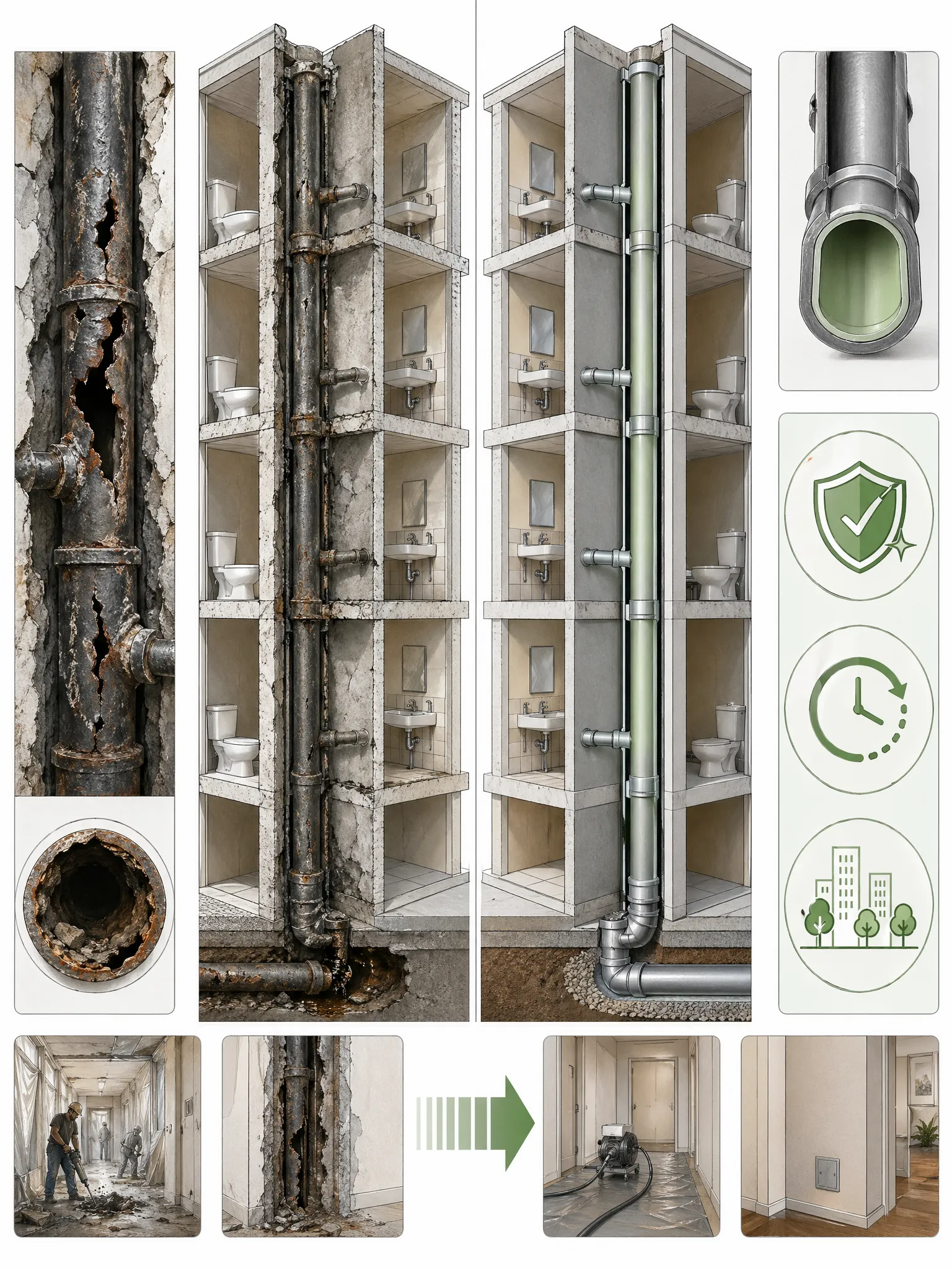
Trenchless repairs offer practical benefits for tall buildings:
- Cost Savings: Less excavation and restoration reduce total project cost.
- Reduced Disruption: Occupant impacts and access needs are minimized.
- Long-Term Durability: Modern liners deliver years of reliable service.
For property managers, trenchless technology is a pragmatic maintenance strategy that balances performance, cost, and resident continuity.
Cost and Time Savings Compared to Traditional Excavation
Trenchless methods lower labor and material inputs and shorten project schedules. This is particularly valuable where tenant disruption can affect occupancy or revenue. For a detailed breakdown of what drives project pricing, see our guide on pipe lining project costs, allowing faster service restoration with a smaller site footprint.
Minimizing Disruption and Enhancing Durability
By avoiding open excavation, property managers can maintain occupant satisfaction while completing necessary repairs. Durable lining materials also reduce the need for frequent rework, lowering lifecycle maintenance demands. Explore our commercial solutions for a full picture of available services.
Pelican Underground’s Expertise in Vertical Stack Rehabilitation
Pelican Underground LLC is a specialist in vertical stack rehabilitation, applying trenchless technologies and project controls to deliver efficient, tenant-sensitive sewer repairs across New Orleans and surrounding communities.
Selecting Qualified Contractors for High-Rise Sewer Solutions
When selecting contractors, evaluate:
- Experience: Proven track record with trenchless stack projects.
- Certifications: Relevant licenses and industry credentials.
- Local Expertise: Familiarity with New Orleans’ infrastructure and permitting requirements.
These criteria help ensure contractors have the technical competence to manage high-rise sewer projects safely and efficiently.
Frequently Asked Questions
What types of buildings benefit most from vertical stack rehabilitation?
High-rise condominiums, hotels, healthcare facilities, and historic buildings benefit most because trenchless methods repair stacks without major structural or aesthetic disturbance.
How long does the vertical stack rehabilitation process typically take?
Timelines vary by building size and condition; many stack repairs complete in days to a few weeks, shorter than comparable open-excavation projects.
Are there any environmental benefits to using trenchless technology?
Yes. Trenchless work limits soil disturbance, reduces construction waste, and can improve pipeline integrity to lower leak risk and contamination potential.
What should property owners look for in a trenchless technology contractor?
Look for documented trenchless experience, certifications, local project references, and transparent procedures for maintaining building services during work.
Can vertical stack rehabilitation be performed in occupied buildings?
Yes. Trenchless methods are routinely executed in occupied buildings with operational controls and phased work to maintain essential services.
What are the signs that a building may need vertical stack rehabilitation?
Recurrent blockages, slow drainage, sewer odours, or water staining often indicate stack deterioration and warrant a diagnostic sewer camera inspection.
Conclusion
Vertical stack rehabilitation using trenchless technology is an effective option for high-rise sewer repair, offering reduced disruption, cost and schedule advantages, and durable results. Property owners in New Orleans benefit from selecting experienced contractors familiar with local conditions to achieve reliable rehabilitation outcomes.
Contact Pelican Underground for Your Vertical Stack Rehabilitation Needs
If you are managing a high-rise building in New Orleans and need expert vertical stack rehabilitation services, Pelican Underground LLC is ready to help. Our experienced team specializes in trenchless sewer repair that minimizes disruption and maximizes efficiency. Contact us today to schedule a consultation and learn how we can support your building’s sewer system maintenance with proven, cost-effective solutions.