
Quick Answer: Food processing plant drain cleaning in Louisiana must remove biofilm mechanically, not just apply surface sanitizer, because floor drains are the leading site where Listeria persists inside food plants. FDA’s 21 CFR Part 117 and USDA-FSIS sanitation performance standards require documented, recurring drain maintenance backed by environmental monitoring. Pelican Underground LLC provides hydro jetting, camera inspection, and scheduled preventive-maintenance drain cleaning that helps Louisiana food and seafood processors stay audit-ready between USDA-FSIS inspector visits.
Key Takeaways
- FDA’s 21 CFR Part 117 current good manufacturing practice rule and USDA-FSIS sanitation performance standards set objective-based drain sanitation requirements for Louisiana food and meat processing plants.
- Floor drains are widely identified as the #1 site where Listeria monocytogenes persists in food plants, because biofilm inside pipe walls shields bacteria from surface sanitizer.
- USDA-FSIS inspectors maintain daily on-site presence in meat and poultry establishments and expect documented cleaning schedules, chemical logs, and environmental monitoring results.
- Mechanical cleaning methods like hydro jetting physically remove biofilm that chemical sanitizer alone cannot reach, which is why recurring jetting service outperforms pouring sanitizer down a drain.
Why Do Louisiana Food Plants Face Drain Risks?
Regulatory scrutiny drives much of the risk calculus at Louisiana food processing facilities. Public consumption of manufactured products keeps these plants under constant federal and state oversight. That oversight extends well past the production line. We treat drainage systems as a compliance issue first and a maintenance issue second, because inspectors do too.
Floor drains rank among the most overlooked contamination risks inside any food manufacturing facility. Plants across Louisiana run high-volume washdown cycles, humid processing floors, and cold storage zones that all depend on functioning floor drain services. A single unsealed drain introduces pests, sewer gas, and pathogenic bacteria directly into areas where food gets processed, packaged, and stored. That risk multiplies in Louisiana’s climate, where heat and humidity accelerate bacterial growth and pest activity between cleaning cycles, a pattern consistent with the CDC’s food poisoning prevention guidelines.
The stakes of getting this wrong made national headlines in 2024, when a listeria outbreak linked to a Boar’s Head processing plant caused multiple deaths and a full plant shutdown, with floor and drain sanitation failures identified as contributing factors. That outbreak is a widely reported industry cautionary tale, not a claim about any specific Louisiana facility, but it illustrates why regulators and plant managers alike treat drain sanitation as a life-safety issue, not a housekeeping task.
For quality assurance directors and sanitation supervisors, drains function as critical control points, not simple plumbing fixtures. Pelican Underground LLC applies that same standard when we perform food processing plant drain cleaning Louisiana facilities depend on to stay audit-ready.
What Makes a Drain a Contamination Risk?
Cracked seals, slow drainage, and buildup along pipe walls create conditions where bacteria colonize and pests find entry points. Left unaddressed, these conditions compromise the sanitary zones surrounding drains, not just the drains themselves.
How Does Drain Condition Affect Compliance Audits?
Inspectors evaluate drains as part of overall facility sanitation, not as isolated fixtures. A facility with unresolved drain issues faces documentation gaps and repeat citations during routine reviews.
Common risk factors we encounter across Louisiana plants include:
- Aging cast-iron or clay piping beneath production floors
- Grease and organic buildup from continuous washdown cycles
- Standing water near drains signaling slow or blocked lines
- Missing or damaged drain seals allowing gas and pest entry
We serve Louisiana facilities directly, bringing trenchless diagnostic and repair capability to plants that cannot afford extended downtime.
What Do FDA and USDA Sanitation Rules Require?
Federal sanitation rules require Louisiana meat, poultry, and food processing plants to meet defined performance outcomes for cleanliness, not a fixed checklist of methods. The Food Safety Inspection Service published a final rule on October 20, 1999, establishing regulatory sanitation performance standards for all official meat and poultry establishments nationwide, a framework that still shapes compliance expectations at Louisiana facilities today. That rule sets an objective rather than dictating exact procedures. Plants decide how to reach it.
For facilities regulated under FDA rather than USDA-FSIS, the applicable rule is FDA’s 21 CFR Part 117 preventive controls regulation, the current good manufacturing practice standard for human food. Part 117 requires food facilities to maintain and clean physical plant elements, including floor drains, in a manner that prevents contamination of food, food-contact surfaces, and packaging materials. USDA-FSIS-regulated meat and poultry plants operate under a parallel expectation, but with one key difference: FSIS inspectors work on-site daily, not on a periodic audit cycle, which leaves these plants far less room to let sanitation records lapse between visits.
This distinction matters for Louisiana operators. Facilities may design sanitation and processing procedures tailored to their own production volume and product line, rather than following a one-size-fits-all protocol. A crawfish processing plant in Acadiana and a poultry facility in northern Louisiana can meet the same standard through different, site-specific approaches.
How do inspectors verify compliance on the plant floor?
FDA and USDA inspectors evaluate three core areas during routine audits: cleaning procedures, chemical usage, and hygiene practices. Drain systems fall squarely within this scope, since standing water, biofilm, and residue in floor drains create direct contamination risk. We provide food processing plant drain cleaning Louisiana operators rely on to keep drain lines clear and audit-ready, using the USDA-FSIS sanitation performance standards compliance guide as our baseline.
Inspectors typically review the following at Louisiana plants:
- Documentation of cleaning schedules and chemical logs
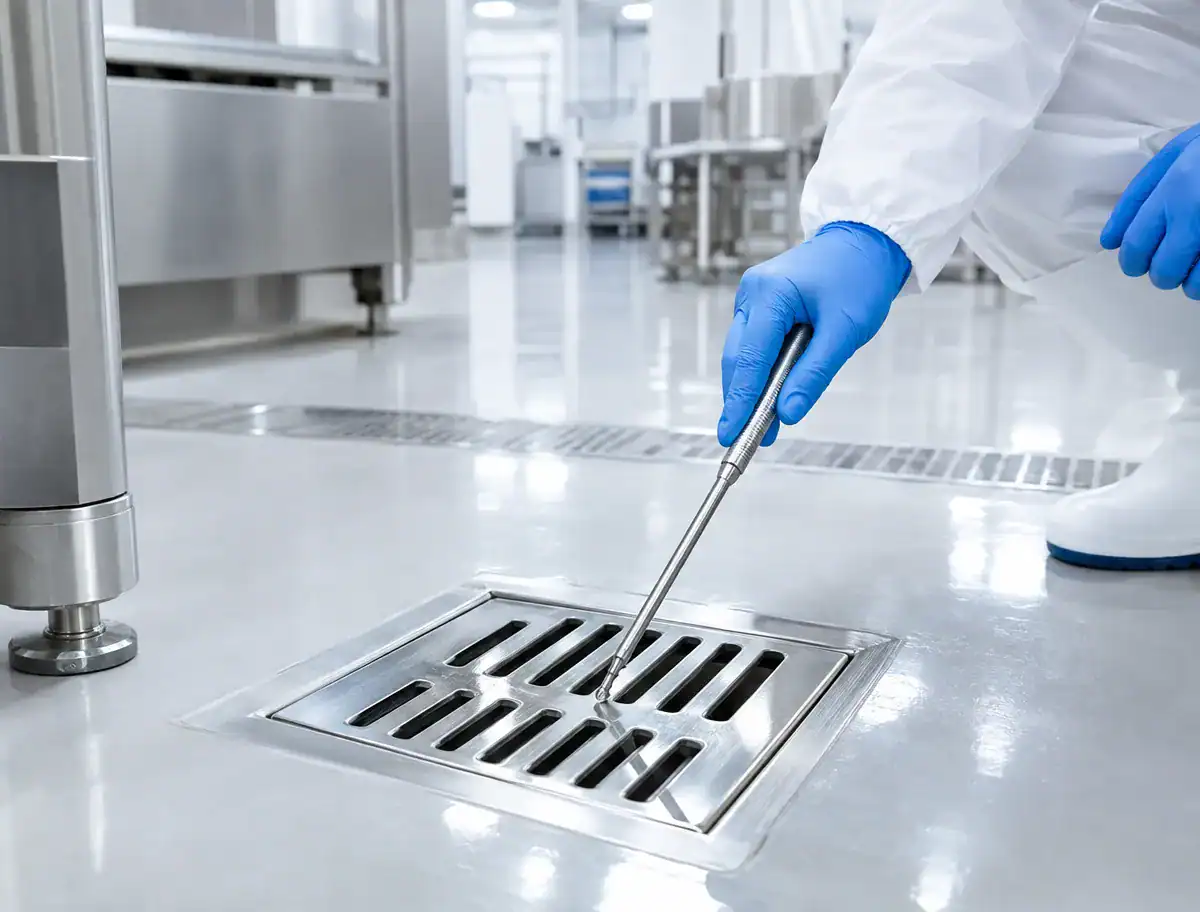
- Physical condition of floor drains, trench drains, and trap systems
- Evidence of standing water or slow drainage near production zones
- Staff training records tied to sanitation procedures
- Environmental monitoring and swab results for pathogens such as Listeria in and around drain zones
Meeting these standards demands consistent execution, not a one-time fix. Our crews serve Louisiana facilities that need drain systems maintained to support ongoing regulatory readiness, without the disruption of traditional excavation methods.
Need a Documented Drain Cleaning Program for Your Louisiana Facility?
Pelican Underground LLC schedules recurring hydro jetting, camera inspection, and audit-ready documentation for food and seafood processing plants across Louisiana. Request a free drain assessment and build a preventive-maintenance schedule before your next FDA or USDA-FSIS inspection.
How Do Floor Drains Threaten HACCP Compliance?
Floor drains create direct pathways for contamination inside any Louisiana food processing operation. These fixtures intersect with HACCP principles, NSF/ANSI 2 certification standards, and FDA and USDA expectations at nearly every point in a facility’s layout. We treat drain performance as a compliance issue first and a maintenance issue second, because inspectors do too.
Drains appear throughout production environments, not just in one corner of a plant. They handle washdown water, process runoff, condensation, and spills across production floors, cold storage rooms, and sanitation zones. A single Louisiana plant may operate dozens of these access points, each one a potential entry for pests, standing water, or bacterial growth if neglected.
Floor drains are consistently identified as the number-one site where Listeria monocytogenes persists inside food processing facilities, a risk covered directly in FDA’s guidance on controlling Listeria monocytogenes in ready-to-eat foods. Biofilm — a slick layer of bacteria and organic residue that builds up on interior pipe walls — physically shields Listeria and other pathogens from surface-level sanitizer, letting the organism recolonize the drain area between cleanings even when the visible floor looks clean.
Why does drain condition matter for a HACCP plan?
A HACCP plan identifies critical control points where contamination risk peaks. Slow, clogged, or biofilm-lined drains sit squarely in that category because they hold moisture and organic residue near food contact surfaces. Cleaning in a food plant is not a cosmetic task; it functions as evidence of compliance during an audit.
What do USDA and FDA inspectors expect from drain maintenance?
Inspectors do not grade drains on appearance alone. Every surface, tool, and process across a Louisiana facility, drains included, must meet strict standards set by USDA and FDA regulators. That expectation covers flow rate, sanitation frequency, and documentation showing the work occurred on schedule.
Facilities that treat food processing plant drain cleaning Louisiana operators rely on as routine maintenance, rather than a regulatory obligation, risk gaps in their compliance record. We recommend building drain service into the same audit-readiness framework as any other critical control point.
Why Does Mechanical Cleaning Beat Pouring Sanitizer Alone?
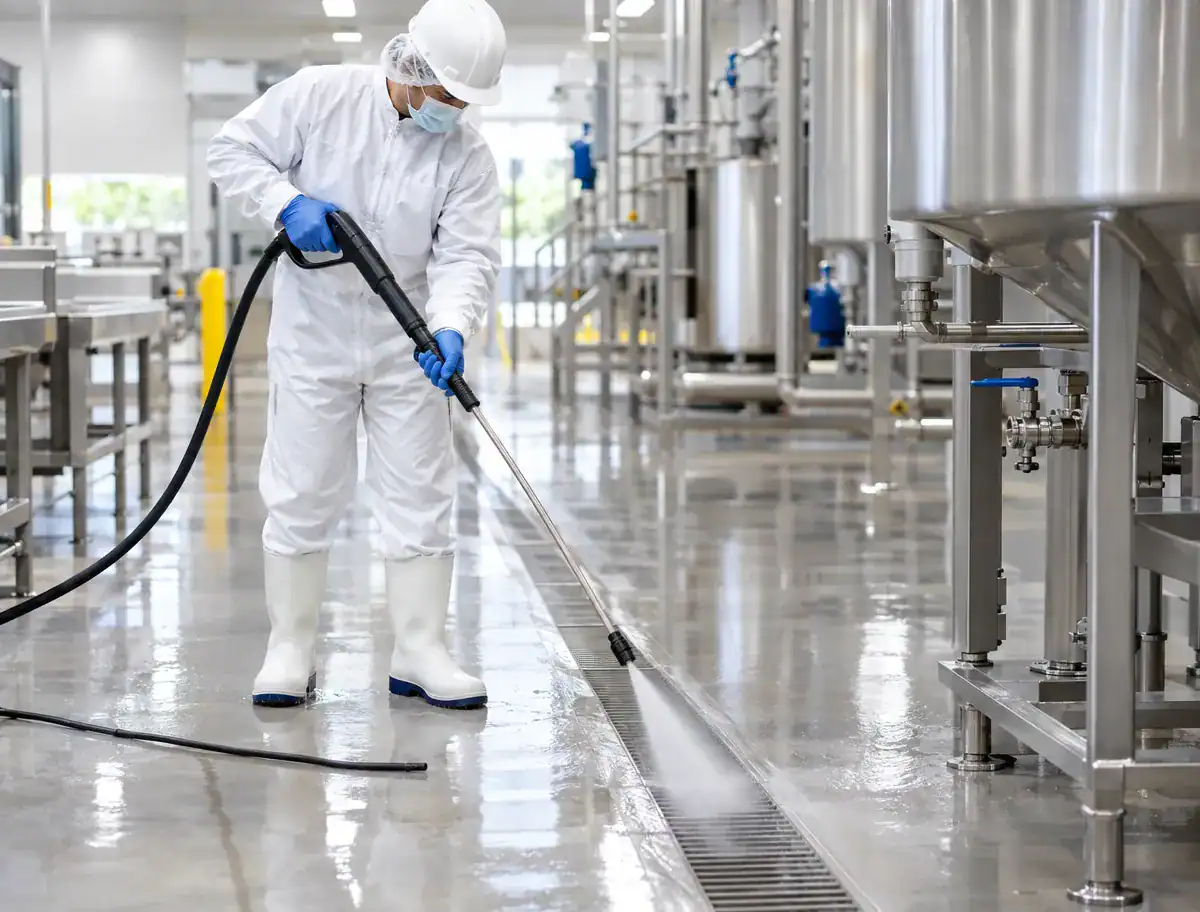
Pouring chemical sanitizer down a floor drain treats the surface, not the problem. Biofilm inside the pipe wall below the drain opening blocks sanitizer from reaching the bacteria living underneath it, so the colony often survives the next washdown cycle and rebuilds. Mechanical cleaning methods — high-pressure hydro jetting in particular — physically scour that biofilm off the pipe wall instead of trying to kill it in place with chemicals alone.
This is why FDA and USDA-FSIS guidance frames drain sanitation around removal, not disinfection alone. A drain cleared by jetting and verified with a camera inspection gives a plant a documented, repeatable baseline. A drain treated only with pour-in sanitizer gives a plant an assumption.
What Does Environmental Monitoring Add to a Cleaning Program?
Environmental monitoring — swabbing floor drains and the surrounding zone for pathogens such as Listeria — tells a plant whether its cleaning program is actually working, rather than just documenting that cleaning happened. Pairing a recurring hydro jetting schedule with periodic swab results gives sanitation and QA managers evidence, not assumptions, when a USDA-FSIS or FDA inspector asks for it.
Because hydro jetting displaces grease, organic residue, and wastewater that must be handled properly before it leaves the facility, plants also need to keep discharge practices aligned with EPA’s industrial effluent guidelines for the food processing sector, and with LSU AgCenter’s guidance on cleaning and sanitizing food contact surfaces for validating that a cleaning step actually worked.
How Can Contract Sanitation Partners Reduce Risk?
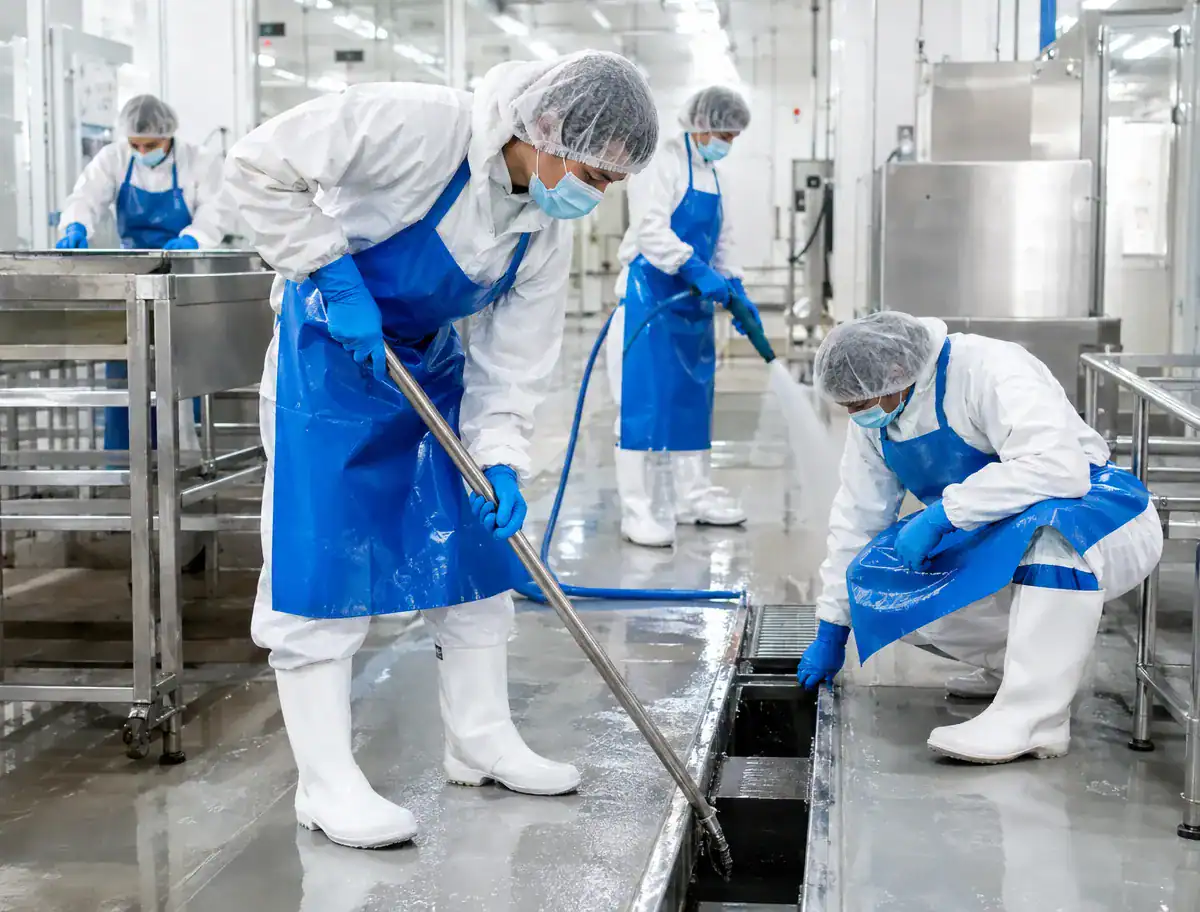
Contract sanitation partners reduce risk by pairing food-grade cleaning expertise with documented, verifiable compliance practices. We approach every Louisiana facility engagement with this standard in mind, treating food processing plant drain cleaning Louisiana work as a regulatory obligation, not a routine maintenance task.
Under USDA and FDA frameworks, sanitation functions as a regulatory pillar. It ties directly to food safety outcomes, brand protection, and audit readiness for any Louisiana processing operation subject to federal inspection, and it sits alongside state-level expectations set by the Louisiana Department of Health’s food safety guidance. A facility that treats drain maintenance as an afterthought exposes itself to findings that jeopardize certification and production continuity.
A knowledgeable cleaning partner changes that equation. We help facilities stay ahead of shifting requirements and avoid the costly compliance failures that follow deferred maintenance. Our teams support that objective through:
- NASSCO-credentialed technicians, including PACP, MACP, and LACP certifications, applied to Louisiana pipeline and drain assessments
- High-definition camera inspections that document existing drain conditions before any repair begins
- Licensed, bonded crews executing corrective work to reduce downstream liability
- Trenchless methods that limit disruption to active production floors
Why Does Documentation Matter During an Inspection?
Inspectors evaluate evidence, not intentions. Camera-based documentation gives Louisiana plant managers a defensible record of drain condition and completed corrective action. Without that record, facilities rely on memory and verbal assurance, which rarely satisfies an auditor’s request for proof.
What Happens When Sanitation Providers Lack Food-Grade Expertise?
Providers unfamiliar with food-grade standards risk introducing contamination pathways rather than eliminating them. A commercial cleaning partner with food-grade expertise helps facilities maintain compliance and pass inspections consistently, rather than scrambling before each audit cycle. That distinction separates a reliable partner from a liability.
What Should Louisiana Plants Do Next?
Louisiana food processing plant managers should schedule a professional drain assessment before minor buildup becomes a compliance failure. We operate from New Orleans, LA, which positions our crews to reach production facilities across the state, from rural processing operations to large-scale industrial sites. Waiting for a visible backup costs more than early inspection ever will.
We recommend starting with a free inspection or consultation. Our team reviews drain conditions, documents findings, and provides a clear estimate before any work begins. That transparency matters in a regulated environment where every maintenance decision needs a paper trail.
How Often Should a Processing Plant Schedule Drain Maintenance?
Maintenance frequency depends on production volume and the type of waste entering the system. Neglect is never a safe strategy. We schedule service daily from 7am to 9pm, giving plant operators flexibility around shift changes and production windows. Facilities running multiple shifts benefit most from this scheduling range. Downtime for maintenance can be planned around slower production hours rather than forced during peak output.
What Services Address Recurring Plant Drain Problems?
Recurring buildup, grease accumulation, and slow drains usually point to deeper line issues that surface cleaning cannot resolve. Our core offerings for food processing plant drain cleaning Louisiana facilities include:
- Industrial drain cleaning for high-volume production lines
- Hydro jetting to clear grease, scale, and organic buildup
- Comprehensive drain cleaning across floor drains and process lines
- Sewer camera inspection to document line conditions before problems escalate
Pairing camera inspection with jetting service gives plant engineers a documented baseline. We build every recommendation from that documentation, not guesswork.
Frequently Asked Questions
What sanitation standards apply to food processing plant drains in Louisiana?
FSIS sanitation performance standards, finalized October 20, 1999, and FDA’s 21 CFR Part 117 current good manufacturing practice rule set objective-based requirements for drain systems in Louisiana meat, poultry, and food processing plants, rather than prescribing one specific cleaning method.
Why do floor drains pose contamination risks in food plants?
Floor drains are widely recognized as the #1 site where Listeria monocytogenes persists inside food plants, because biofilm builds up inside pipe walls and shields bacteria from surface sanitizer. Louisiana’s heat and humidity accelerate that biofilm growth between cleaning cycles.
Why doesn’t pouring sanitizer down a drain solve the problem?
Surface sanitizer kills bacteria it touches but can’t penetrate the biofilm layer coating pipe walls below the drain opening. Mechanical cleaning methods like hydro jetting physically strip that biofilm out of the line, which is why drain sanitation guidance treats mechanical cleaning, not chemical dosing alone, as the more reliable control.
How often should a food processing plant schedule drain cleaning for compliance?
Most Louisiana food and seafood processing plants schedule recurring preventive-maintenance drain cleaning based on production volume and shift schedule, rather than waiting for a visible backup. Pelican Underground services facilities daily between 7am and 9pm to fit maintenance around active production windows.
What is environmental monitoring and why does it matter for drain sanitation?
Environmental monitoring, or swabbing floor drains and surrounding zones for pathogens such as Listeria, verifies that cleaning procedures are actually working. USDA-FSIS inspectors maintain daily on-site presence in meat and poultry plants and expect documented monitoring results alongside cleaning logs during routine reviews.
TL;DR — Food Processing Plant Drain Cleaning at a Glance
- FDA’s 21 CFR Part 117 and USDA-FSIS sanitation performance standards require documented, objective-based drain sanitation, not a fixed checklist.
- Floor drains are the top site where Listeria persists in food plants because biofilm shields bacteria from surface sanitizer.
- Mechanical cleaning (hydro jetting) removes biofilm that sanitizer alone can’t reach, and pairing it with camera inspection creates an audit trail.
- Recurring preventive-maintenance schedules and environmental swabbing catch problems between USDA-FSIS inspector visits.
- The 2024 Boar’s Head listeria outbreak, publicly tied to floor and drain sanitation failures, a plant shutdown, and multiple deaths, shows why proactive drain maintenance is a food-safety priority industrywide.
- Schedule a free drain assessment with Pelican Underground LLC to build a documented, recurring cleaning program for your Louisiana facility.
Related Resources
- Industrial Drain Cleaning Services
- Pelican Underground in New Orleans, LA
- 60-Year-Old Sewer Line Clog Removal Case Study
- What Is Sewer Cleaning?
- Why Do I Need a Sewer Camera Inspection?
Get a Free Drain Cleaning Quote From Pelican Underground LLC
Louisiana food and seafood processing facilities that treat drain cleaning as a documented, recurring part of their sanitation program protect both their FDA/USDA compliance standing and their production schedule. Trenchless drain cleaning and inspection technologies provide the precision and documentation necessary to ensure compliance while minimizing operational disruption.
Pelican Underground LLC provides trenchless hydro jetting, camera inspection, and preventive-maintenance drain cleaning built around the audit trail your next FDA or USDA-FSIS inspection will ask for. Contact us today for a free drain assessment and a documented cleaning plan for your facility.
About Pelican Underground LLC
Pelican Underground LLC is a licensed, insured trenchless drain and sewer service provider based in New Orleans, Louisiana, serving food and seafood processing facilities, municipalities, and commercial properties across the Gulf Coast. Our NASSCO-credentialed technicians pair hydro jetting, sewer camera inspection, and documented preventive-maintenance programs to help regulated facilities stay audit-ready for FDA and USDA-FSIS inspections.
