
Epoxy pipe lining offers a trenchless way to repair damaged pipes without tearing up your yard. It’s a practical, cost-savvy option for Louisiana homeowners and businesses facing aging plumbing, corrosive soils, or repeated backups. This guide explains how epoxy lining works, the benefits it delivers, and the situations where it’s the smart choice for your property.
Benefits of Epoxy Pipe Lining
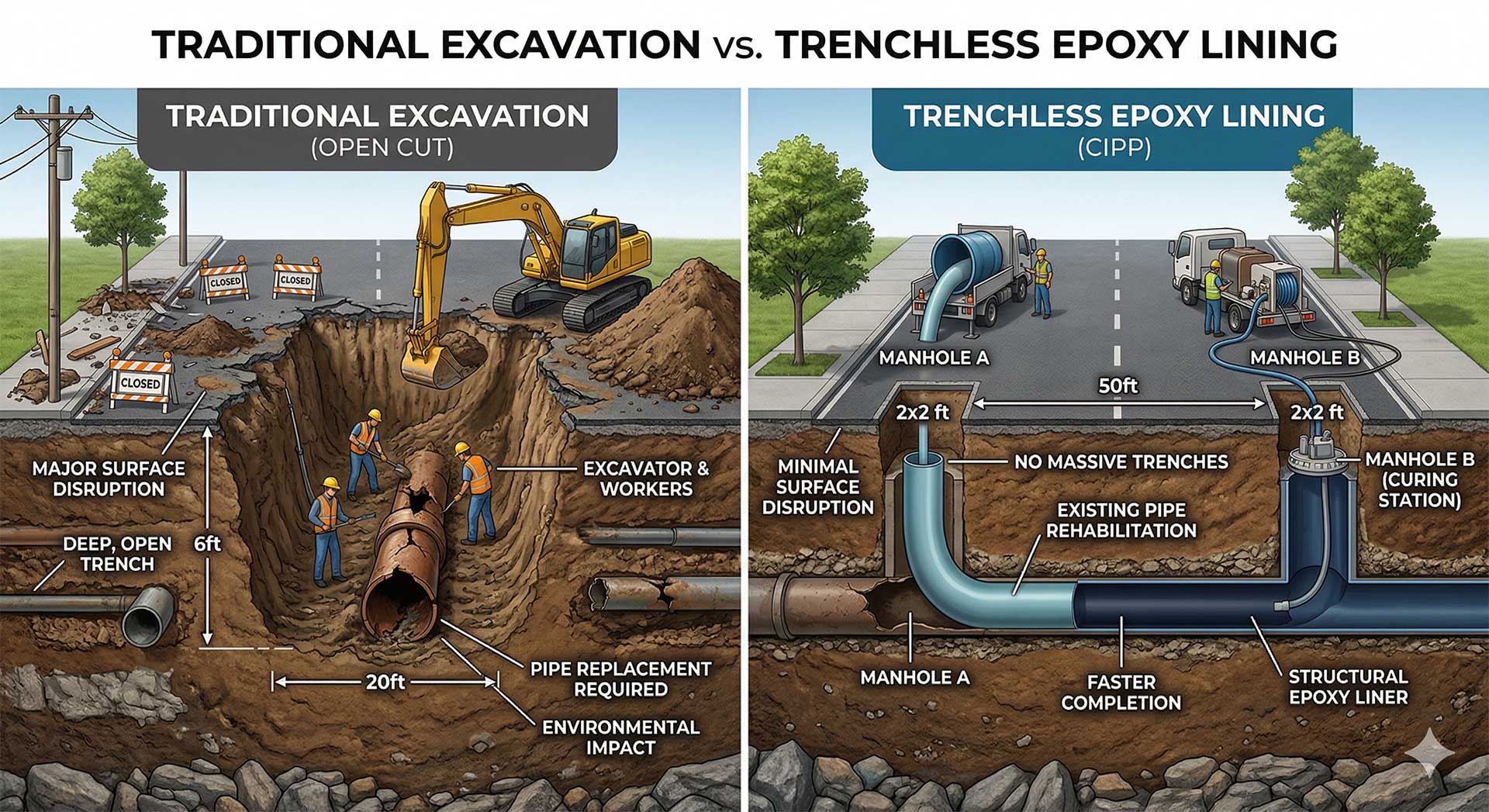
Compared with digging up and replacing pipes, epoxy lining reduces time, cost, and disruption. Below are the main advantages that make it a popular choice for homes and businesses across Louisiana.
- Minimal Disruption to Property : Instead of large trenches and heavy restoration work, epoxy lining is installed with minimal disturbance to landscaping, driveways, and daily life.
- Cost-Effective Compared to Traditional Methods : Because it avoids excavation and major restoration, epoxy lining usually costs less than full pipe replacement when you factor in labor and repair of surfaces.
- Durability and Longevity of the Lining : A cured epoxy layer forms a seamless, corrosion-resistant barrier that can add many years of service to existing pipes.
| Benefit | Description | Value |
|---|---|---|
| Minimal Disruption | No excavation required | High |
| Cost-Effectiveness | Lower overall costs | Medium |
| Durability | Long-lasting protection | High |
These advantages explain why many property owners in Louisiana prefer epoxy lining when pipes can be rehabilitated rather than replaced.
Ideal Situations for Pipe Repair and Maintenance:
Epoxy pipe lining isn’t a one-size-fits-all fix, but it’s especially effective in several common scenarios. Consider lining when you encounter:
- Aging Infrastructure: Older sewer and drain lines that show wear, cracks, or frequent leaks are prime candidates for lining.
- Frequent Clogs and Backups: Persistent blockages caused by buildup or rough pipe interiors can often be resolved by installing a smooth epoxy liner.
- Root Intrusion: Where tree roots have penetrated joints or small cracks, epoxy lining can seal the pipe and prevent further intrusion.
What Is Epoxy Pipe Lining and How Does It Work in Louisiana?
Epoxy pipe lining is a trenchless repair that applies a resin to the inside of existing pipes to form a new, seamless interior. It’s especially useful in Louisiana because it reduces excavation in areas with sensitive landscaping, soggy soils, or dense development.
How It Works
The process starts with a camera inspection to identify problem sections. Technicians clean the pipes, then insert a resin-saturated liner or spray the resin onto the pipe interior. The epoxy cures in place—using heat, steam, or UV—creating a continuous, durable pipe within the original pipe.
Real-world infrastructure projects show CIPP (Cured-In-Place Pipe) lining can provide decades of additional service when applied correctly.
Materials Used
The core materials for epoxy lining typically include:
- Epoxy Resin: A tough, corrosion-resistant polymer that bonds to the pipe interior and forms the new inner surface.
- Felt Liners: Flexible liners that hold the resin during insertion and ensure even coverage while curing.
Benefits
When applied correctly, epoxy lining delivers several practical benefits:
- Cost-Effectiveness: Often less expensive than tearing out and replacing pipe runs.
- Minimal Disruption: Trenchless installation preserves landscaping and property surfaces.
- Durability: The seamless epoxy layer resists corrosion and can last for decades.
What Is Trenchless Pipe Repair and Its Benefits?
Trenchless pipe repair lets crews fix or line pipes without open trenches. It’s a practical approach in neighborhoods, commercial areas, and sites where excavation would be costly or disruptive.
How It Works
Trenchless repairs generally follow three main steps:
- Inspection and Cleaning: A video inspection identifies issues, then crews clean the pipe to prepare for lining.
- Lining Insertion: The resin-saturated liner or spray system is inserted and positioned inside the pipe.
- Curing Process: Heat, steam, or UV light cures the resin so it hardens into a smooth, continuous lining.
Benefits
Trenchless methods deliver clear advantages:
- Minimal Disruption: Keeps yards, sidewalks, and traffic lanes intact by avoiding large excavations.
- Cost-Effectiveness: Cuts labor and restoration costs compared with full replacement.
- Speed: Many repairs finish in hours or days rather than weeks.
State transportation and public-works agencies increasingly choose trenchless lining to repair culverts and pipelines while avoiding open-trench work and traffic disruption.
CIPP Lining: Trenchless Culvert Repair & Excavation Avoidance
Many U.S. stormwater culverts need repair, and departments of transportation are using spray-on and cured-in-place lining methods to rehabilitate them. These techniques manufacture a new liner inside the damaged structure, which helps avoid open-trench excavations that disrupt traffic and create safety concerns during roadway work.
Contaminant Release from Storm Water Culvert Rehabilitation Technologies: Understanding Implications to the Environment and Long-Term Material Integrity, AJ Whelton, 2019
How Is Epoxy Resin Applied Inside Pipes?
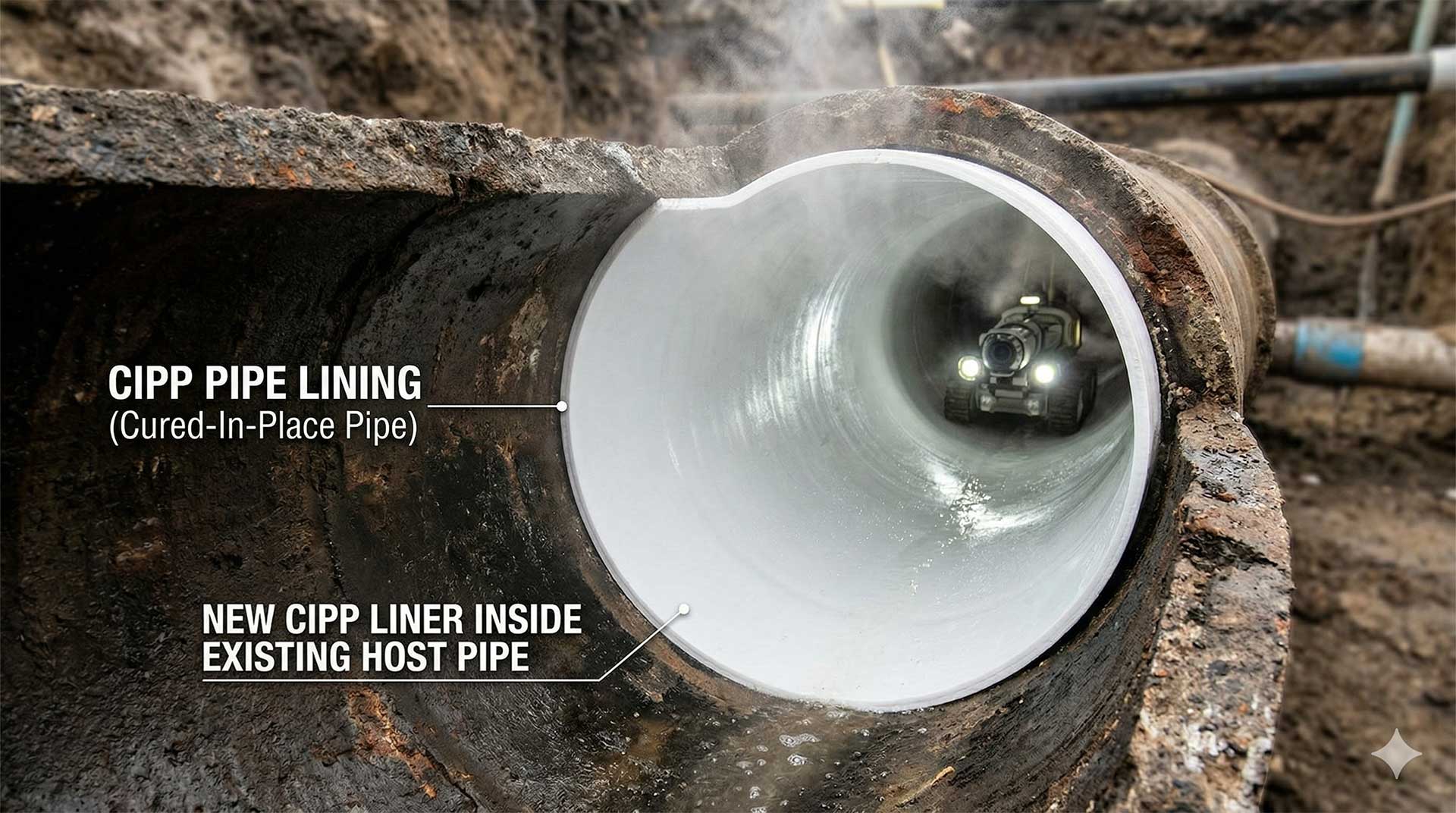
Applying epoxy resin correctly is essential to a durable repair. The steps below summarize the typical workflow used by trained technicians.
The process involves:
- Inspection and Cleaning : A video inspection and mechanical cleaning remove roots, scale, and buildup so the resin can bond evenly.
- Liner Insertion : A felt or fabric liner saturated with epoxy is fed into the pipe or the resin is sprayed onto the interior.
- Curing : The resin is cured to form a solid, durable inner pipe that restores flow and seals defects.
What Are the Key Benefits of Epoxy Pipe Coating Compared to Traditional Replacement?
Epoxy coating keeps many benefits of trenchless repair front and center:
- Cost-Effectiveness : Typically lower total cost than full replacement when you include labor and surface restoration.
- Longevity : A properly applied epoxy liner can last for decades, reducing repeat repairs.
- Environmental Impact : Less digging means fewer disturbances to soil, plants, and neighborhoods.
How Does Epoxy Pipe Lining Extend Pipe Lifespan and Prevent Corrosion?
Epoxy lining creates a seamless, non-porous barrier between water and the original pipe material. That barrier blocks corrosive elements and stops leaks at pinholes and minor cracks, which together extend the useful life of the existing pipe.
What Cost Savings and Property Disruption Reductions Can Louisiana Customers Expect?
Louisiana property owners usually see lower overall costs and less property damage when they choose epoxy lining. Jobs finish faster with reduced labor and minimal restoration work, which translates to real savings and less hassle.
When Should Homeowners and Commercial Businesses Choose Epoxy Pipe Lining in Louisiana?
Consider epoxy lining when your system shows recurring problems or when a full replacement would be disruptive or costly. Typical triggers include:
- Frequent Clogs: Persistent blockages that resist standard cleaning.
- Aging Infrastructure: Older pipes with multiple defects or general deterioration.
- Root Intrusion: Roots entering joints or small cracks that cause leaks and blockages.
In Louisiana, Pelican Underground LLC specializes in epoxy pipe lining and trenchless repairs—helping property owners restore pipes efficiently with minimal disruption.
What Residential Plumbing Issues Are Best Suited for Epoxy Pipe Lining?
Epoxy lining works well for a range of household plumbing issues, including:
- Frequent Clogs: Smoother pipe interiors reduce buildup and improve flow.
- Visible Damage: Small cracks and leaks can often be sealed without replacing sections.
- Low Water Pressure : Restoring a smooth, unobstructed interior can help recover pressure in some systems.
How Does Epoxy Pipe Lining Address Commercial Pipe Rehabilitation Needs?
For commercial properties, epoxy lining minimizes downtime and disruption—critical for businesses that can’t afford extended outages. It restores pipe integrity quickly so operations can continue with minimal interruption.
What Are the Typical Costs and Pricing Factors for Epoxy Pipe Lining in Louisiana?
Lining costs depend on several variables. The main factors include pipe length and diameter, the existing pipe material, and how much prep work the job requires.
- Length and Diameter of the Pipe: Larger or longer runs need more materials and time.
- Material Compatibility: Some pipe materials require specific epoxy formulations or prep methods.
- Extent of Damage: Severe damage may need additional cleaning or repairs before lining.
Which Factors Influence Pipe Lining Cost in Louisiana?
Expect costs to vary based on the same primary drivers: pipe size and length, compatibility of the existing material, and the scope of damage or cleaning required before lining.
- Length and Diameter of the Pipe: Bigger pipes require more product and longer work time.
- Material Compatibility: Different bases may call for tailored epoxy systems.
- Extent of Damage: Heavily damaged sections add prep time and cost.
How Does Epoxy Pipe Lining Compare Cost-Wise to Full Pipe Replacement?
In many cases, epoxy lining is more economical than full replacement because it avoids heavy excavation and the associated labor and restoration expenses. That said, replacement may still be necessary for pipes that are collapsed or extensively compromised.
What Environmental and Regulatory Considerations Affect Epoxy Pipe Lining in Louisiana?
Epoxy lining is often an environmentally preferable option because it reduces excavation and soil disturbance. When performed to code, it meets local plumbing regulations and provides a compliant method for restoring piping systems.
How Do Louisiana Plumbing Codes Support Trenchless Pipe Repair?
Louisiana plumbing codes recognize trenchless methods as acceptable repair techniques when installed to the applicable standards. Proper permits and inspections ensure safety and code compliance for lined systems.
What Are the Environmental Benefits of Using Epoxy Resin for Pipe Rehabilitation?
Choosing epoxy resin for rehabilitation helps protect the environment by limiting excavation, preserving landscaping, and reducing the risk of groundwater contamination from leaking pipes.
- Minimized Landscape Disruption: Trenchless repairs keep yards and vegetation intact.
- Reduced Groundwater Contamination: A continuous liner helps stop leaks that could impact soil and groundwater.
How to Select the Best Epoxy Pipe Lining Contractor in Louisiana?
Choose a contractor with hands-on experience, proper licensing, and clear references. The right team will provide transparent estimates, documented warranties, and a plan for testing and inspection after the work is complete.
- Experience and Expertise: Prefer contractors with proven projects and trained crews.
- Licenses and Certifications: Verify relevant licenses and industry certifications.
What Should You Look for in a Louisiana Pipe Lining Service Provider?
When vetting providers, focus on qualifications and real customer feedback. Reliable companies provide clear scopes of work, references, and post-installation testing.
- Qualifications: Confirm technical credentials and project experience.
- Customer Reviews: Check testimonials and independent reviews for quality and reliability.
Frequently Asked Questions
What is the typical lifespan of an epoxy-lined pipe?
The lifespan of an epoxy-lined pipe can vary based on several factors, including the quality of the installation and the conditions of the existing pipes. Generally, when installed correctly, epoxy lining can extend the life of pipes by 30 to 50 years. This durability is due to the seamless, corrosion-resistant barrier that the epoxy creates, which protects against leaks and deterioration. Regular maintenance and inspections can further enhance the longevity of the lined pipes.
Are there any limitations to using epoxy pipe lining?
While epoxy pipe lining is a highly effective solution, it does have limitations. It is not suitable for pipes that are severely collapsed or extensively damaged, as the lining requires a stable structure to adhere to. Additionally, the process may not be effective for certain types of materials, such as those that are heavily corroded or have significant structural issues. A thorough inspection by a qualified technician is essential to determine if epoxy lining is the right choice for your specific situation.
How long does the epoxy pipe lining process take?
The duration of the epoxy pipe lining process can vary depending on the size and condition of the pipes being treated. Typically, the entire process can be completed within a few hours to a couple of days. This includes the initial inspection, cleaning, lining insertion, and curing time. The trenchless nature of the method significantly reduces the time compared to traditional pipe replacement, which can take weeks and involve extensive excavation.
Is epoxy pipe lining safe for drinking water pipes?
Yes, epoxy pipe lining is considered safe for drinking water pipes when the materials used are certified for potable water applications. The epoxy resin used in the lining process is designed to be non-toxic and compliant with health and safety regulations. It creates a barrier that prevents contaminants from leaching into the water supply, making it a reliable option for residential and commercial plumbing systems that deliver drinking water.
What maintenance is required after epoxy pipe lining?
After epoxy pipe lining, minimal maintenance is typically required. However, regular inspections are recommended to monitor the condition of the pipes and ensure that the lining remains intact. Homeowners should also be cautious about what goes down the drains to prevent clogs and damage. If any issues arise, such as unusual leaks or blockages, it’s important to contact a plumbing professional promptly to address the situation before it escalates.
Can epoxy pipe lining be used in all types of pipes?
Epoxy pipe lining can be used in various types of pipes, including PVC, cast iron, and clay. However, its effectiveness may depend on the condition and material of the existing pipes. Some materials may require specific epoxy formulations or additional preparation before lining. A professional assessment is crucial to determine compatibility and ensure that the chosen method will provide the desired results for your plumbing system.
What should I expect during the epoxy pipe lining installation process?
During the epoxy pipe lining installation, you can expect a few key steps. First, a video inspection will be conducted to assess the condition of the pipes. Next, the pipes will be thoroughly cleaned to remove any debris or buildup. After cleaning, a resin-saturated liner will be inserted or the resin will be sprayed onto the pipe interior. Finally, the resin will be cured using heat, steam, or UV light, creating a durable, seamless lining that restores the pipe’s functionality.
Partner with Pelican Underground for Local Expertise in Epoxy Pipe Lining
Epoxy pipe lining is a modern, efficient way to repair and protect pipes with less disruption and often lower total cost than full replacement. For Louisiana properties dealing with aging lines, root intrusion, or recurring clogs, trenchless epoxy solutions can restore function and extend pipe life. Contact Pelican Underground LLC to discuss your system, schedule an inspection, or get a clear estimate from a local expert.

Owner of Pelican Underground LLC and NASSCO-certified trenchless sewer specialist with expertise in CIPP lining, pipe bursting, and sewer rehabilitation across Louisiana, Mississippi, and Alabama. Licensed contractor by the Louisiana State Licensing Board for Contractors.