
In the first 24–72 hours after a flood-related sewer or storm drain failure, Louisiana municipalities need three things moving in parallel: a rapid CCTV condition assessment to confirm what actually failed, bypass pumping to keep wastewater flowing while repairs are planned, and — where the pipe is structurally sound enough — trenchless lining to restore the line without a full emergency excavation. A local emergency declaration is what makes fast action possible in the first place: it lets a parish or city bypass normal competitive-bid procedures and unlocks state and federal disaster funding that a routine repair timeline would not qualify for.
The Louisiana Flood-to-Failure Pattern
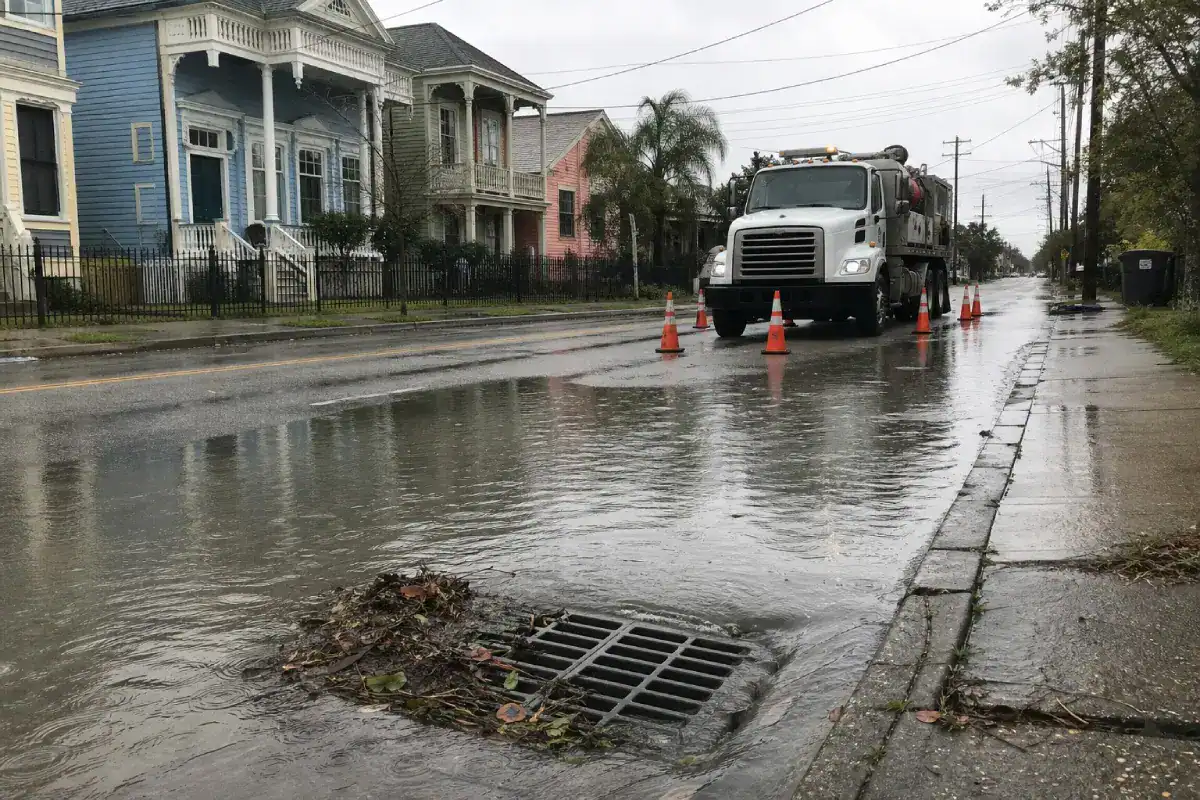
The same sequence repeats across Louisiana parishes almost every hurricane season: heavy rainfall saturates soil and overwhelms aging combined or separate sewer systems, a section of sewer or storm drain collapses or offsets under the added hydraulic load, the parish or city issues an emergency declaration, and a bypass pumping operation is deployed to keep sewage moving while a permanent fix is scoped. Understanding this pattern in advance — rather than improvising it mid-event — is what separates a contained failure from a multi-week public health hazard. For general preparation between events, our sewer line repair resource covers the underlying causes of pipe failure common across Louisiana’s soil and climate conditions.
The First 24 Hours: Rapid CCTV Condition Assessment
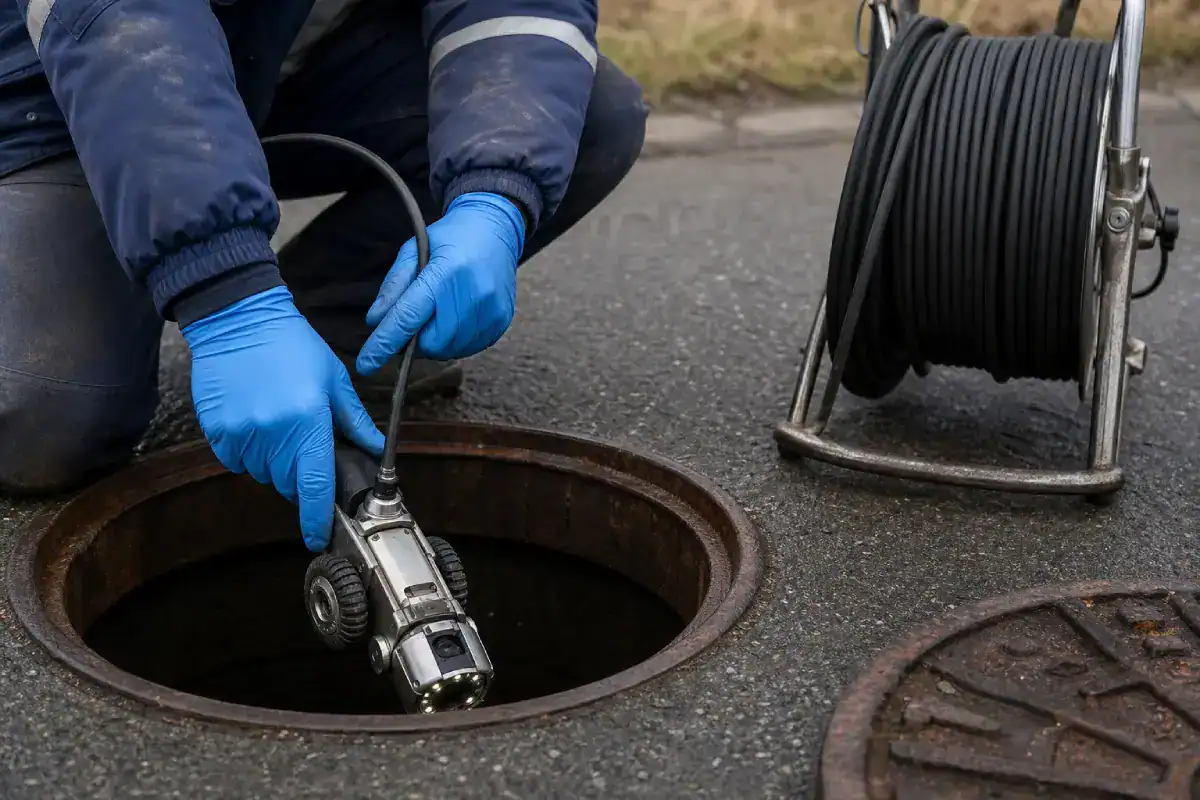
Before committing to any repair method, a CCTV camera inspection of the affected line confirms exactly where the failure is, its severity, and whether the surrounding pipe is intact enough for a trenchless fix. This is the step that keeps an emergency response from turning into guesswork: NASSCO PACP-standard footage gives public works staff and any FEMA reviewer a documented, defensible record of conditions at the time of the incident — evidence that matters both for choosing the right repair and for any later funding reimbursement request.
Bypass Pumping: Keeping Flow Moving During Repair
When a sewer or storm drain segment has collapsed or is otherwise unusable, bypass pumping routes flow around the damaged section using temporary above-ground piping while the permanent repair is planned and executed. This is almost always the first physical action taken after a flood-related collapse, because it addresses the immediate public health risk — sewage backing up into streets, homes, or waterways — without requiring the final repair decision to be made under pressure. Bypass systems can run for days or weeks depending on the scope of the underlying failure.
When Trenchless Lining Can Avoid Emergency Excavation
Once bypass pumping has stabilized the situation, the camera inspection determines whether the damaged section can be rehabilitated with CIPP trenchless lining rather than full open-cut excavation. A structurally sound pipe with cracks, offset joints, or root intrusion is typically a strong candidate for lining — restoring the line from the inside through existing manhole access, in days rather than the weeks a full excavation and street closure would require. A fully collapsed or severely misaligned section usually still requires traditional excavation or pipe bursting, which is why the camera assessment has to come first rather than defaulting to whichever method is fastest to mobilize.
How Emergency Declarations Change the Rules
A parish or municipal emergency declaration does two practical things for a public works department. First, it triggers an exception to normal competitive-bid procurement: under federal rules governing FEMA Public Assistance funding, exigent or emergency circumstances allow noncompetitive procurement when a competitive solicitation process would delay the immediate action needed to protect public health and safety — installing a bypass pumping system after a sewer collapse is the exact scenario FEMA’s own guidance cites as qualifying. Second, an emergency declaration is generally a prerequisite for accessing state and federal disaster recovery funding streams. That noncompetitive procurement exception applies only for the duration of the actual emergency — once the bypass is in place and sewage flow is contained, FEMA generally expects the permanent repair to go through standard competitive procurement, so documentation of when the emergency phase ends matters for reimbursement.
Building Toward Hurricane Season
Louisiana’s hurricane season runs June through November, and the parishes that fare best when heavy rain hits are the ones with an emergency response plan and contractor relationship already in place before the storm — not the ones scrambling to find a trenchless contractor mid-event. Pre-season planning should include a baseline CCTV assessment of known problem areas, a standing bypass pumping arrangement, and a clear understanding of which funding mechanisms apply if a declaration becomes necessary.
Funding the Permanent Repair
Emergency response gets a failed sewer or storm drain line stabilized, but the permanent rehabilitation that follows is typically funded separately — through FEMA Public Assistance for disaster-related damage, or through grant programs specifically built for municipal sewer and stormwater rehabilitation in non-emergency years. A companion resource on Louisiana municipal grant funding for trenchless sewer and stormwater rehabilitation covers those programs and how a documented CCTV condition assessment strengthens a grant application.
Frequently Asked Questions
What’s the first call a municipality should make after a sewer collapse from flooding?
A camera inspection contractor and a bypass pumping resource, ideally the same company, so the condition assessment and the immediate stabilization happen in parallel rather than in sequence.
Can trenchless lining be used in an emergency situation?
Yes, when the camera inspection confirms the pipe is structurally sound enough to line rather than fully collapsed. It’s typically faster to mobilize than excavation and avoids the street closures and traffic disruption that come with open-cut repair.
Does an emergency declaration guarantee FEMA funding?
No. A declaration is generally a prerequisite for accessing disaster funding streams, but reimbursement still requires that costs be eligible, reasonable, properly documented, and — once the immediate emergency phase ends — procured competitively for any permanent repair work.
How long can bypass pumping run before a permanent fix is required?
There’s no fixed limit — it depends on the scope of the underlying failure and how quickly a permanent repair can be scoped, funded, and executed. Bypass systems have run for days on straightforward failures and weeks on more extensive damage.
A flood-related sewer or storm drain failure puts a municipality on the clock, but the response that holds up under review is the same one that works fastest in the field: assess first, stabilize with bypass pumping, repair trenchlessly where the pipe allows it, and document every step for the funding process that follows.
Pelican Underground: Emergency Response for Louisiana Municipalities
Pelican Underground is a Louisiana-licensed contractor (LSLBC #67347) with NASSCO-certified technicians (PACP, MACP, LACP) serving public works departments across Louisiana, Mississippi, and Alabama with both emergency response and planned municipal trenchless rehabilitation.
Contact our municipal team today to build or activate your parish’s emergency sewer and storm drain response plan.
| Preparing your parish or city for the next flood event?
Pelican Underground provides emergency response and ongoing municipal sewer and stormwater services across Louisiana — CCTV assessment, bypass pumping, and trenchless rehabilitation. (504) 387-9909 |