
Quick Answer: Cast iron stack lining Louisiana property owners rely on is a trenchless repair method that installs a resin-saturated felt liner inside an aging cast iron vertical drain, curing it into a seamless pipe-within-a-pipe. It seals pinhole leaks, hairline cracks, and separated joints while restoring full hydraulic capacity, all without demolishing walls or floors. Pelican Underground LLC performs this rehabilitation across Louisiana on stacks affected by decades of graphitization, hydrogen sulfide gas erosion, and soil-movement-driven joint failure, typically at 30–50% less cost than full stack replacement.
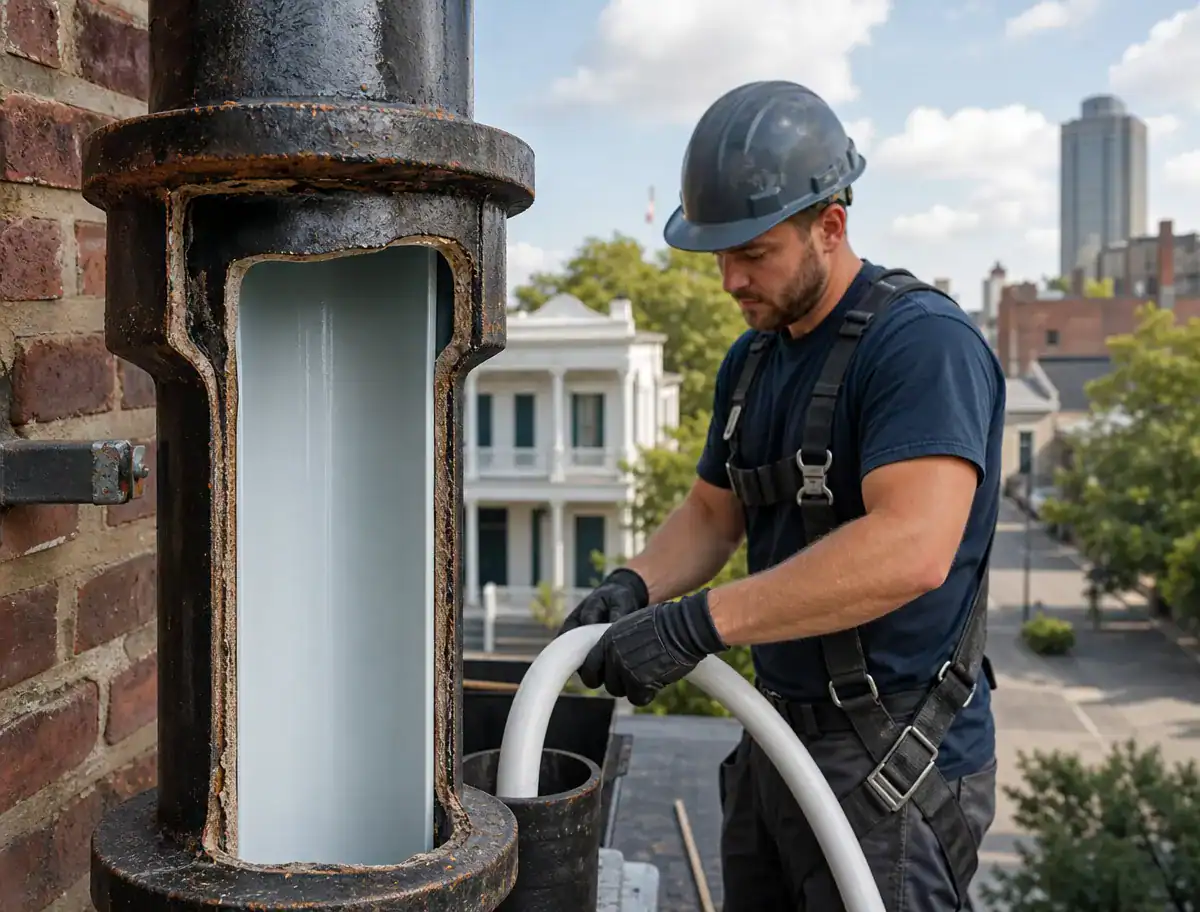
Louisiana’s building stock is older than most people realize, and that age shows up first in the vertical drain lines hidden inside the walls. Most multi-family and commercial buildings constructed before 1980 were plumbed with cast iron stacks, and in New Orleans that inventory stretches back even further, into pre-war construction from the 1920s through the 1950s. Decades of use, humidity, and ground movement have pushed many of these original stacks toward the end of their service life, leaving property owners across the state searching for a way to rehabilitate failing vertical drains without opening up finished walls, floors, and ceilings.
What Are the Key Takeaways on Cast Iron Stack Lining in Louisiana?
- Pipe lining installs a new resin-saturated liner inside deteriorating cast iron pipes without excavation.
- Pelican Underground LLC provides trenchless pipe lining services in New Orleans, Louisiana for aging drain systems.
- The felt liner inflates against pipe walls and cures to form a seamless “pipe within a pipe” structure.
- Pipe lining eliminates leaks, root intrusion, and structural damage while restoring cast iron pipes’ integrity.
Does Cast Iron Stack Lining Work in Louisiana?
Our team installs a new resin-saturated felt liner inside failing vertical pipes without excavation. This cast iron stack lining solution forms a seamless pipe within a pipe, restoring structural integrity while eliminating leaks, root intrusion, and joint separation. The process works for many Louisiana structures, but success depends on the condition of the original cast iron. Lining provides substantial savings in both cost and property disruption when the pipe walls remain intact enough to support the liner.
When Does Stack Lining Succeed?
Stack lining works extremely well when the cast iron has developed pinhole leaks, minor joint separation, or shallow corrosion. The felt liner bonds directly to the pipe interior, creating a durable new surface rated for 50-year service life. Louisiana properties with these conditions avoid the expense and demolition of full stack replacement.
When Does Replacement Remain the Better Option?
| Pipe Condition | Lining Viable? | Recommended Action |
| Minor pinhole leaks | Yes | Cured-in-place pipe lining |
| Severe pitting or holes | No | Partial or full replacement |
| Shattered or crushed sections | No | Stack replacement |
| Active leaks under pressure | Conditional | Inspection required first |
Lining fails when cast iron has holes large enough for the epoxy resin to escape during installation, or when the pipe wall has lost its circular shape. Our technicians evaluate each stack with high-definition camera inspection before recommending any approach.
What Causes Cast Iron Stacks to Fail in Louisiana?
Cast iron stacks fail from the inside out, long before any exterior sign appears. Three failure modes account for most of the deterioration our technicians document in Louisiana buildings.
- Internal graphitization — over decades, the iron matrix corrodes and converts to a soft, graphite-like material that keeps its shape but loses structural strength, eventually crumbling or perforating under normal use.
- Hydrogen sulfide gas erosion — sewer gas reacts with moisture on the pipe crown to form sulfuric acid, which eats away at the cast iron pipe wall from the top down, a problem that is especially pronounced in Louisiana’s humid, hydrogen-sulfide-rich sewer environment.
- Joint failure from settlement — Louisiana’s soil movement and building settlement stress the hub-and-spigot joints between sections, cracking the original seals and opening paths for leaks and root intrusion.
Cast iron manufactured under recognized cast iron soil pipe product specifications was built to last generations, but no material is immune to decades of sulfuric acid exposure. Left unaddressed, any of these failure modes eventually leads to the visible symptoms property managers dread: leaks, odors, and drainage backups throughout the building.
What Are the Warning Signs of a Failing Cast Iron Stack?
Because vertical stacks run inside walls and chases, most failures go unnoticed until they produce visible symptoms elsewhere in the building. Property managers and homeowners should treat any of the following as reasons to schedule a camera inspection right away:
- Rust-colored or discolored water coming from fixtures on multiple floors
- Slow drainage on more than one floor at the same time, especially when it happens simultaneously rather than fixture-by-fixture
- Damp walls or ceilings near a stack chase, particularly on lower floors below the affected section
- Bubbling, peeling, or discolored paint near pipe chases, which often signals a slow leak inside the wall
Any one of these signs can point to a stack that has already progressed past minor corrosion — the sooner it is inspected, the more likely lining remains a viable option instead of replacement.
📞 Ready to Get Started? If you’re seeing any of these warning signs in a Louisiana multi-story building, don’t wait for a full backup. Contact Pelican Underground LLC today for a fast camera inspection and a straightforward lining recommendation.
What Affects Cast Iron Stack Lining Cost in Louisiana?
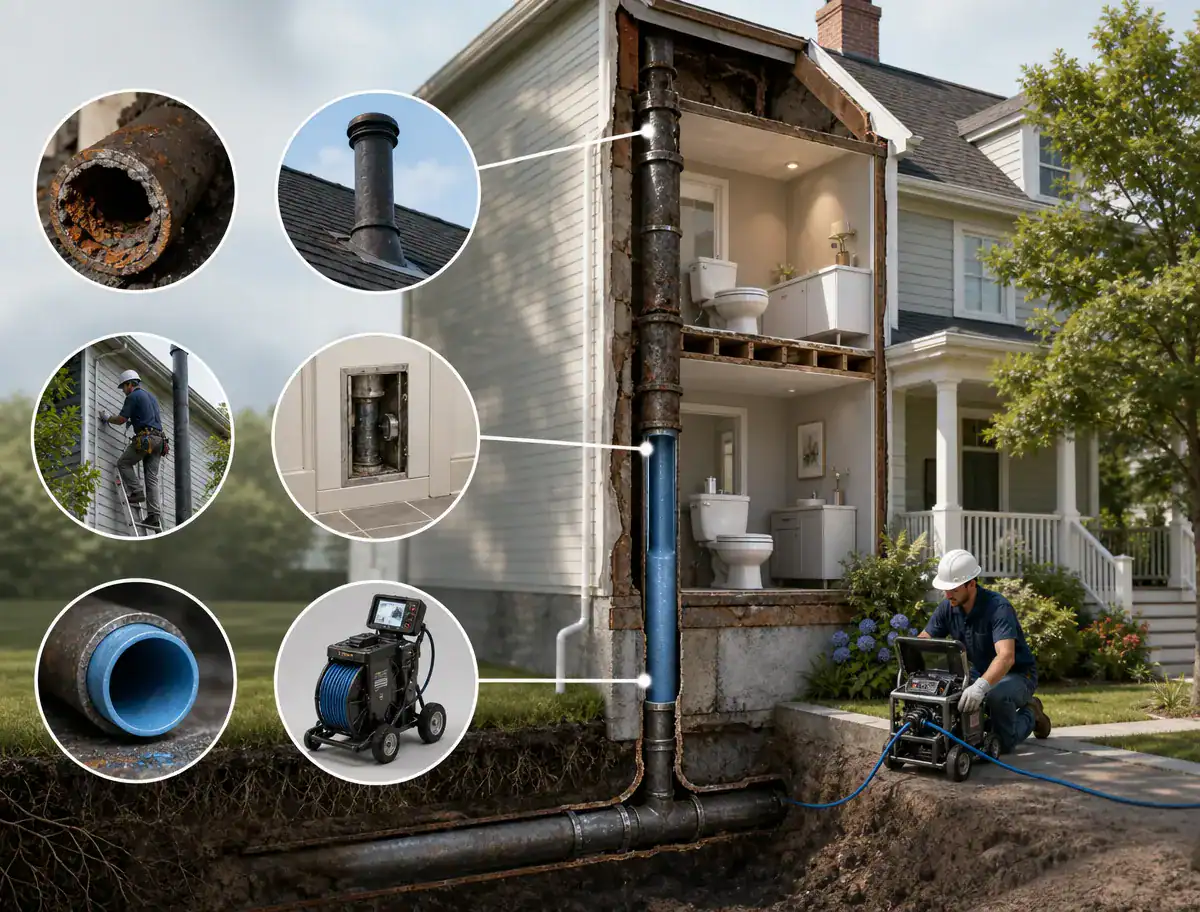
Cast iron stack lining cost in Louisiana varies significantly by project scope, making a site evaluation essential before any accurate estimate can be provided. Our team cannot determine pricing without first assessing the specific conditions of each vertical stack, including pipe diameter, total length, number of bends, and current deterioration level. Our technicians follow NASSCO CIPP best practices for inspection and installation quality control on every project. Several key factors directly influence the final cost for Louisiana property owners.
Cured-in-place pipe lining for cast iron stacks typically costs 30–50% less than full pipe replacement, representing substantial savings for commercial and residential clients alike. The liner is inserted, inflated against the pipe walls, and cured to form a seamless new structural pipe wall inside the existing cast iron stack. This process eliminates the need for excavation and avoids the high restoration costs associated with traditional replacement methods.
How Does Stack Length Affect Lining Cost?
Longer vertical stacks require more liner material and extended curing time, increasing labor and material expenses proportionally. A single-story stack costs less than a multi-story stack spanning three or more floors.
What Condition Issues Increase Pricing?
Severe corrosion, collapsed sections, or heavy root intrusion may require additional preparation before lining can proceed. Our technicians document all conditions during the initial video inspection to provide transparent pricing.
| Cost Factor | Impact on Pricing |
| Stack length (linear feet) | Directly proportional increase |
| Number of bends or offsets | Moderate increase |
| Pipe diameter (3–6 inches) | Minor increase for larger diameters |
| Existing damage severity | Variable increase |
| Access difficulty | Moderate to significant increase |
How Long Does a Cast Iron Stack Lining Last in Louisiana?
A cast iron stack typically provides 50 to 70 years of service before deterioration reaches the point where lining or replacement becomes necessary. A CIPP liner installed to the ASTM F1216 standard for resin-impregnated tube inversion and curing carries its own 50-year service life rating, effectively giving the original pipe a full second lifespan at a fraction of the cost of tearing out and replacing it.
| Component | Typical Service Life | Notes |
| Original cast iron stack | 50–70 years | Varies with water chemistry, gas exposure, and installation quality |
| CIPP resin-saturated liner | ~50 years | Installed inside the existing host pipe, no excavation required |
| Full stack replacement | 50–70 years (new pipe) | Requires wall or floor demolition and restoration |
Because the liner bonds directly to the existing pipe wall and does not rely on the original cast iron for structural strength, a stack that has already used up most of its natural lifespan can still gain another five decades of reliable service through lining alone.
Why Do Louisiana’s Climate and Soil Conditions Accelerate Cast Iron Stack Failure?
Cast iron stacks fail faster in Louisiana than in drier, more stable climates for three interlocking reasons.
- High humidity — keeps moisture in constant contact with pipe interiors and surrounding wall cavities, speeding both graphitization and general corrosion.
- Ground movement from expansive clay soils — shifts building foundations enough, over time, to stress the joints in a vertical stack; settlement transmitted up through the building frame still reaches every joint in the run even though the stack sits inside the structure.
- A hydrogen sulfide-rich sewer environment — common in New Orleans’ older sewer infrastructure, means sewer gas entering the stack is more corrosive than in many other regions, accelerating crown erosion in vertical runs.
Together, these factors mean Louisiana property owners often see cast iron stacks reach the end of their service life sooner than the 50–70 year range would suggest in a milder climate.
Can Vertical Cast Iron Stacks Be Lined or Replaced?
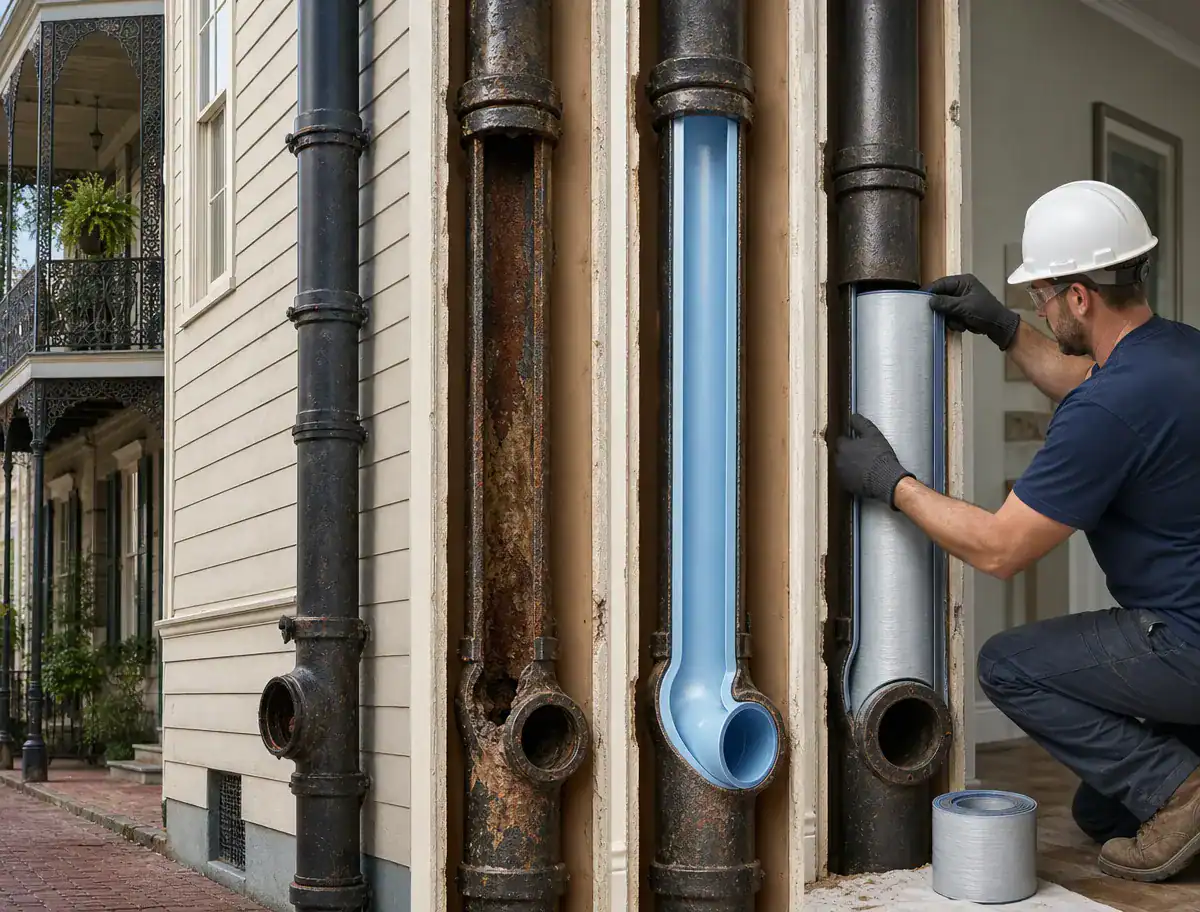
Vertical cast iron stacks in Louisiana properties can be either lined or replaced, depending on the extent of deterioration. Pelican Underground specializes in cast iron stack lining Louisiana for multi-story buildings, applying trenchless technology to restore failing vertical stacks without excavation. However, severely compromised stacks may require full replacement from top to bottom.
When Is Lining Appropriate for a Vertical Cast Iron Stack?
Lining works best when the cast iron pipe retains structural integrity despite corrosion, pinhole leaks, or joint separation. Our team uses advanced video inspection to provide real-time diagnostics, determining whether the pipe wall is sound enough to support a resin-saturated liner. If the stack shows isolated damage without widespread shattering, lining typically restores function for decades.
When Does Replacement Become Necessary?
Replacement becomes necessary when the cast iron is severely shattered or structurally unsalvageable. In cases where the pipe at a floor level is completely shattered and held together by only minimal material, lining cannot create a reliable new pipe wall. Our technicians assess each stack individually:
- Lining option: Suitable for pipes with moderate corrosion, minor leaks, or root intrusion
- Replacement option: Required for pipes with shattered sections, extensive wall loss, or complete structural failure
For Louisiana properties with multi-story stacks, we evaluate the full vertical run to recommend the most durable, code-compliant solution.
Cast iron stack lining represents a proven solution for property owners throughout Louisiana confronting deteriorating vertical drainage systems. Pelican Underground’s trenchless approach eliminates the disruption and expense associated with traditional excavation while restoring structural integrity and extending asset life. By combining advanced video diagnostics with specialized rehabilitation techniques, the firm delivers durable, code-compliant outcomes that protect both residential and commercial properties across the region.
TL;DR — Cast Iron Stack Lining in Louisiana at a Glance
- Most Louisiana multi-family and commercial buildings built before 1980 (and many New Orleans buildings dating to the 1920s–1950s) still run on original cast iron stacks.
- Stacks typically fail from internal graphitization, hydrogen sulfide gas erosion, or joint failure caused by settlement and soil movement.
- Warning signs include rust-colored water, simultaneous slow drainage on multiple floors, damp walls or ceilings, and bubbling paint near pipe chases.
- CIPP lining installs a resin-saturated felt liner that bonds to the existing pipe, sealing leaks and restoring full flow without tearing out walls.
- A cast iron stack lasts 50–70 years and a CIPP liner adds roughly 50 more years of service, at a fraction of full replacement cost.
- Next step: Schedule a camera inspection with Pelican Underground LLC to find out whether your Louisiana building’s stacks qualify for lining.
Frequently Asked Questions
Can You Line a Partially Collapsed Cast Iron Stack?
Partial collapse can sometimes be lined if enough of the original pipe wall remains intact and round enough to support the resin-saturated liner during inversion. If a section has fully collapsed or lost its circular shape, that segment typically needs point repair or replacement before the rest of the stack can be lined. A camera inspection determines which approach applies to each specific stack.
What Diameter Stacks Can Be Lined?
Pelican Underground LLC lines cast iron stacks ranging from about 3 to 6 inches in diameter, which covers the vast majority of vertical drain and vent stacks found in Louisiana multi-family and commercial buildings. Diameter affects liner selection and cure time but rarely rules out lining on its own.
Does the Liner Smell During Curing?
The resin used in the felt liner produces a mild, temporary odor while it cures, similar to a styrene or resin smell, which typically clears within a few hours of completion. Crews ventilate the work area during installation, and the smell does not return once the liner has fully cured.
How Long Does a Cast Iron Stack Liner Last?
A properly installed CIPP liner carries a rated service life of about 50 years, giving an aging cast iron stack a full second lifespan without the cost or disruption of replacement. Actual longevity depends on how well the host pipe was prepared and cleaned before installation.
Is Cast Iron Stack Lining Code-Compliant in Louisiana?
Yes, cured-in-place pipe lining for building drains and stacks is recognized under the Louisiana State Plumbing Code and the International Plumbing Code’s relining provisions when installed to recognized ASTM standards. Pelican Underground LLC installs every liner to meet these code requirements.
Related Resources
- Vertical Stack Lining
- New Orleans, LA Service Area
- Vertical Stack Lining in Louisiana
- Vertical Stack Lining Cost
- High-Rise Pipe Lining in New Orleans
- Apartment Building Sewer Pipe Lining
- Multi-Unit Building Drain Lining in Louisiana
Get a Free Cast Iron Stack Lining Quote
Aging cast iron stacks don’t have to mean tearing out walls, floors, or ceilings. Pelican Underground LLC’s trenchless lining process restores vertical drains across Louisiana’s multi-family and commercial buildings while keeping tenants in place and disruption to a minimum. Contact Pelican Underground LLC today for a free, no-obligation quote on cast iron stack lining in Louisiana.
About Pelican Underground LLC: Pelican Underground LLC specializes in trenchless pipe and vertical stack lining for residential, commercial, and municipal properties across Louisiana and the greater Gulf South. Contact us today for a free, no-obligation quote on cast iron stack lining for your building.