
Top Pipe-Lining Materials for Long-Lasting Repairs
Underground plumbing calls for material choices that balance durability with sensible cost. This guide breaks down the common pipe-lining options, explains their properties and benefits, and shows where each material performs best so you can decide with confidence. We cover epoxy resin, polyurethane, and Cured-in-Place Pipe (CIPP) technology, plus typical installation steps and cost considerations.
We also review alternative, lower-cost materials used in pipe rehabilitation.
Natural Fiber Composites: Affordable, Corrosion-Resistant Pipe Lining
Jute mats made from natural fibers were selected as reinforcement because they are cost-effective and highly resistant to corrosion.
Application of natural fiber reinforced composites to trenchless rehabilitation of underground pipes, HN Yu, 2008
Key Materials Used in Pipe-Lining Services
Pipe lining relies on a handful of proven materials for effective rehabilitation. The most common are:
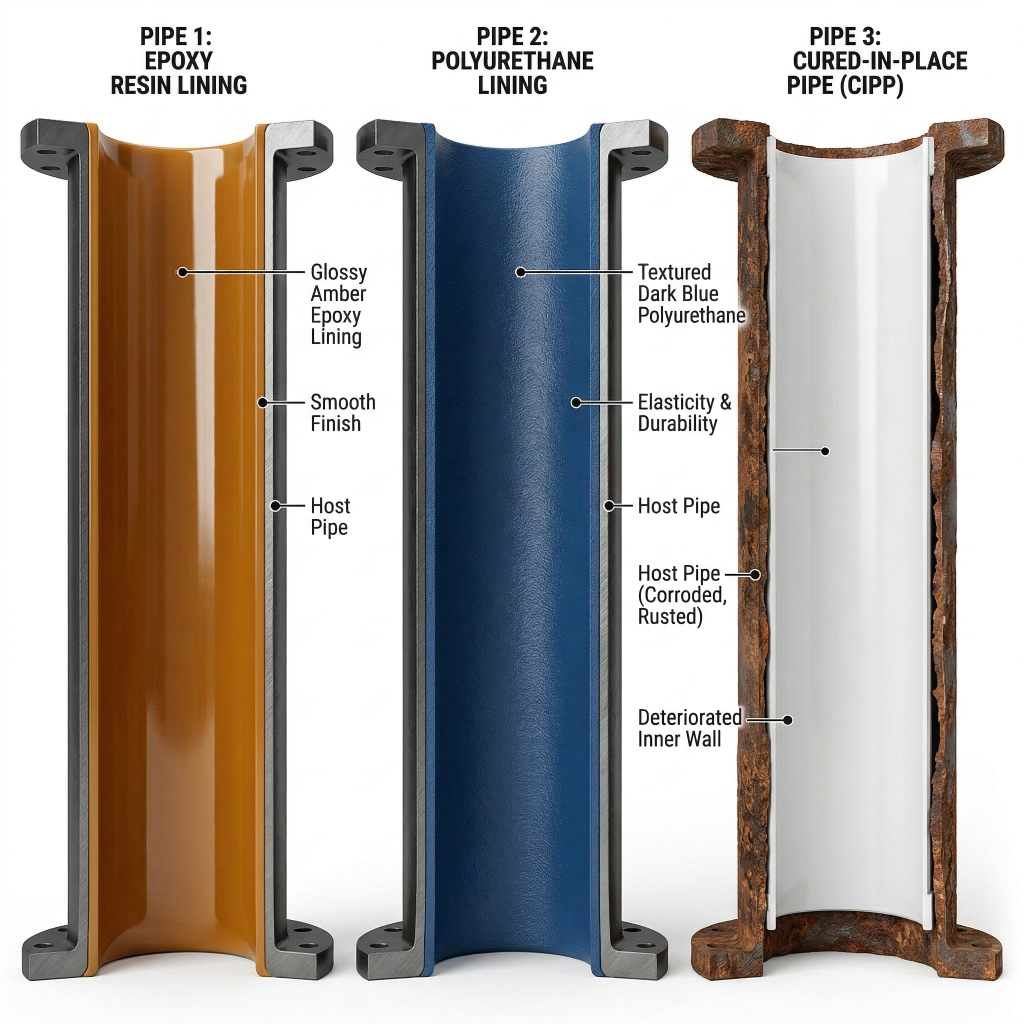
- Epoxy Resin: Valued for strong adhesion and excellent corrosion resistance, epoxy creates a durable interior barrier that seals cracks and slows further deterioration.
- Polyurethane: Chosen for its flexibility and chemical resistance, polyurethane adapts well to shifting soils and aggressive environments.
- Cured-in-Place Pipe (CIPP): CIPP uses a resin-saturated liner installed inside the existing pipe and cured in place to form a new, seamless pipe within the old one.
Contractors select materials by matching performance characteristics to the project’s needs to deliver reliable, long-lasting results.
If you need dependable pipe lining, our underground plumbing services use these proven materials to provide durable, cost-effective repairs.
How Epoxy Resin Improves Pipe Durability
Epoxy resin strengthens pipes by bonding tightly to the interior surface and sealing leaks and hairline cracks. Its corrosion resistance makes it especially useful in aging systems.
Epoxy tolerates pressure changes and elevated temperatures, so it fits many plumbing applications. Its longevity can reduce the frequency of repairs or replacements.
Research indicates epoxy relining can improve distribution performance and water quality.
Epoxy Pipe Lining: Improving Water Quality & Flow
This review highlights in situ pipe relining as a method that improves water quality and flow while reducing leakage in distribution systems.
Impact of an epoxy pipe lining material on distribution system water quality, 1999
Benefits of Polyurethane in Pipe Rehabilitation
Polyurethane stands out for its flexibility and broad chemical resistance. It accommodates ground movement, making it a good option in areas prone to settling or seismic activity.
Because it resists many corrosive substances, polyurethane is well-suited for pipes carrying aggressive fluids. It often lowers long-term maintenance costs, which is why many professionals prefer polyurethane for demanding applications.
How Cured-in-Place Pipe (CIPP) Extends Service Life
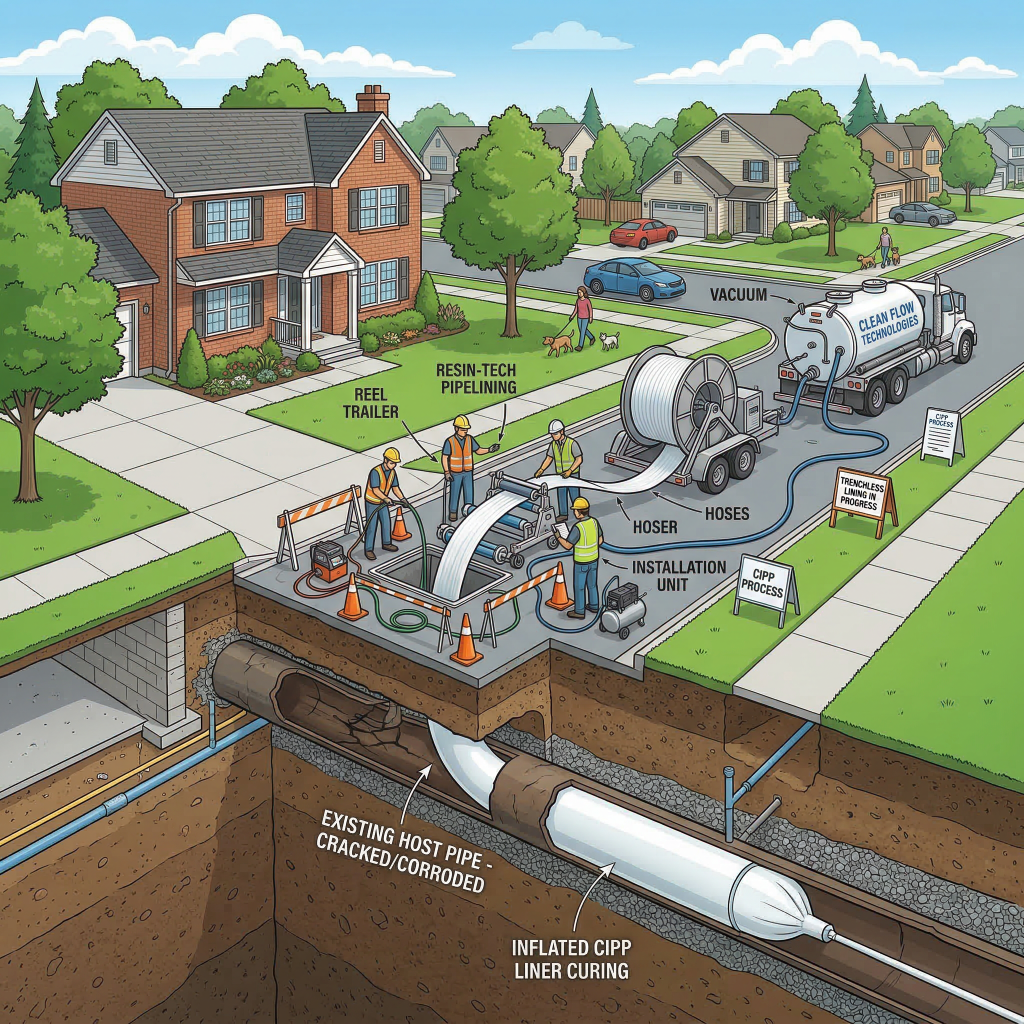
CIPP extends a pipe’s useful life by creating a new pipe inside the old one. A resin-saturated liner is inserted, inflated, and cured using heat or UV light.
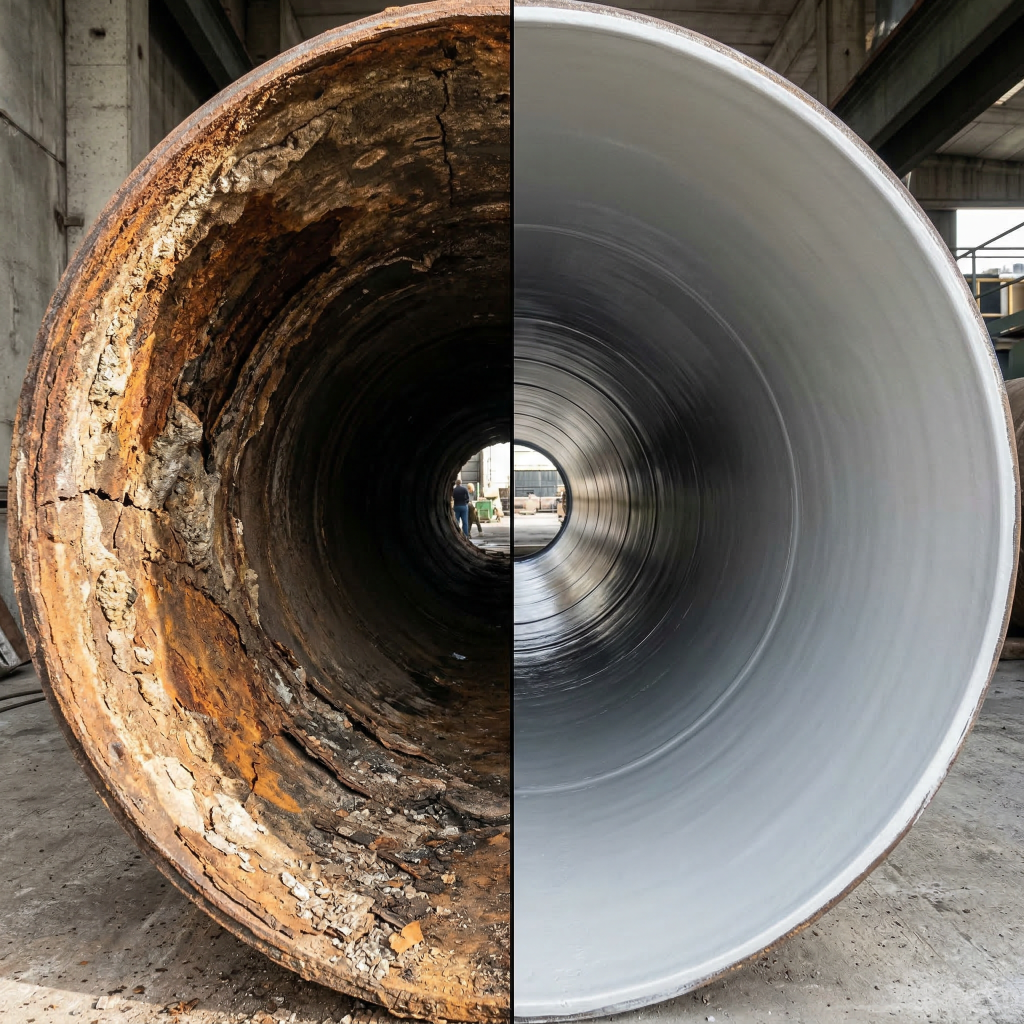
The result is a seamless, joint-free pipe that resists leaks and corrosion. CIPP also minimizes the disruption and expense of full pipe replacement—an advantage in built-up areas where excavation is costly.
Industry standards describe CIPP as producing a continuous, snug-fitting repair.
CIPP Pipe Lining: Continuous, Tight-Fitting Repairs
Cured-in-place pipe (CIPP) is a trenchless rehabilitation process that produces a continuous, tight-fitting finished pipe (ASTM, 2007).
Evaluation of cured-in-place pipe lining installations, 2016
What Is the Installation Process for CIPP Lining?
CIPP installation follows a straightforward sequence:
- Inspection: Technicians inspect the existing pipe with video to evaluate damage.
- Cleaning: The pipe is cleaned to remove debris and buildup.
- Liner insertion: A resin-saturated liner is positioned inside the pipe.
- Curing: The liner is inflated and cured with heat or UV light to form the new pipe.
- Final inspection: A post-cure inspection verifies the integrity of the lining.
For residential jobs this process typically takes about 4–8 hours, depending on pipe length and condition.
How CIPP Lowers Replacement Costs
CIPP reduces replacement costs by avoiding large-scale excavation. Traditional methods often require digging up the entire pipe run, which increases labor and restoration expenses.
Trenchless lining saves on labor, protects landscaping and infrastructure, and—because of its long service life—often leads to fewer repairs over time.
How Pipe-Lining Materials Compare: Durability and Cost
Comparing materials means weighing durability, upfront cost, and where each material performs best.
| Material | Durability | Cost | Application Suitability |
|---|---|---|---|
| Epoxy Resin | High | Moderate | General pipe rehabilitation |
| Polyurethane | Moderate | Moderate | Flexible applications |
| CIPP | Very High | Higher | Extensive damage repair |
Although CIPP has a higher initial cost, its longevity and effectiveness for severe damage often make it the best long-term investment.
Expected Lifespans: Epoxy, Polyurethane, and CIPP
Service life depends on material, installation, and operating conditions.
- Epoxy Resin: Commonly lasts 10–20 years, depending on environment.
- Polyurethane: Typically lasts 5–15 years, varying with exposure and use.
- CIPP: Often exceeds 50 years, making it the longest-lasting option.
Understanding these ranges helps property owners plan maintenance and future work.
Chemical Resistance and Environmental Considerations
Chemical resistance is critical for pipes that carry hazardous or aggressive substances.
- Epoxy Resin: Provides strong resistance to many chemicals but can degrade with prolonged exposure to certain solvents.
- Polyurethane: Offers high resistance across a wide chemical range, suitable for many demanding pipelines.
- CIPP: Generally chemically resistant, though performance depends on the resin formulation used.
Environmental impact matters too—some materials can emit harmful substances during installation or over time. Choosing greener options and proper handling reduces those risks.
Installation Considerations for Trenchless Options
When evaluating trenchless methods, consider these key factors: trenchless pipe repair.
- Site conditions: Soil and nearby infrastructure can affect feasibility and approach.
- Access requirements: Adequate entry points are needed for equipment and liners.
- Cost implications: Trenchless methods can lower excavation and restoration costs but may require a higher upfront investment.
Careful assessment helps avoid surprises and keeps the project on schedule.
How Long Does Installation Usually Take?
Installation time varies by method and pipe condition. Generally, the CIPP installation process takes about 4–8 hours for a typical residential run.
Pipe length, the extent of damage, and material choice influence the timeline. Good planning and pre-inspection streamline the work.
Minimally Invasive Benefits of Trenchless Technology
Trenchless methods offer several minimally invasive advantages, as outlined by leading trenchless pipe rehabilitation organizations, including:
- Reduced disruption: Minimal digging preserves landscaping and structures.
- Faster installation: Many trenchless jobs finish more quickly than open excavation.
- Cost savings: Lower labor and restoration costs can reduce the total project price.
Those benefits make trenchless approaches a strong choice for property owners seeking efficient, low-impact repairs.
Why Choose Durable Pipe Repair with Advanced Materials?
Opting for advanced lining materials supports long-term plumbing health. Key benefits include: essential maintenance tips for lined systems.
- Longevity: Materials such as CIPP can last for decades, cutting down on repeat work.
- Cost-effectiveness: Higher upfront costs often pay off through reduced maintenance and fewer replacements.
- Performance assurances: Many systems come with warranties that back material performance.
Investing in quality lining solutions improves system reliability and gives you greater peace of mind.
How Warranties and Service Guarantees Protect Performance
Warranties and service guarantees help ensure materials and workmanship meet expectations over time.
- Warranty details: Manufacturers often provide coverage for defects and performance issues for a set period.
- Service guarantees: Professional installers commonly offer guarantees that the work meets industry standards.
These protections give property owners confidence in their repair decisions.
Recent Trends: Polyurethane Liner Adoption
Recent industry data show growing use of polyurethane liners in pipe rehabilitation.
- Adoption rates: Roughly 30% of plumbing professionals now prefer polyurethane for its flexibility and chemical resistance.
- Industry insights: The move toward more effective, sustainable materials reflects growing attention to environmental impact and lifecycle costs.
These trends underline the importance of choosing the right material for each rehabilitation project: pipe rehabilitation.
Frequently Asked Questions
What factors should I consider when choosing pipe-lining materials?
Consider the pipe material and condition, environmental exposure, the types of fluids the pipe carries, installation complexity, upfront cost, and expected lifespan. Reviewing installation requirements and long-term maintenance needs helps you match the right lining to the job.
How do I know if my pipes need lining or replacement?
Signs that lining may be appropriate include recurring leaks, reduced flow, or visible corrosion. A professional video inspection can assess structural integrity—if the pipe isn’t structurally collapsed, lining is often a cost-effective alternative to full replacement.
Are there any environmental concerns with pipe-lining materials?
Yes. Some resins can emit volatile compounds during installation or degrade over time, so choosing eco-friendlier formulations and following proper installation and disposal practices is important. Ask installers about material safety and environmental credentials.
What maintenance is required for lined pipes?
Maintaining lined pipes mainly involves routine inspections and cleaning to prevent buildup. Lined systems typically need less ongoing maintenance than unlined pipes, but monitoring for wear, leaks, or damage remains important to preserve performance.
Can I use trenchless technology for all types of pipe repairs?
Trenchless methods are versatile but not universal. Feasibility depends on pipe access, soil and site conditions, pipe material, and the extent of damage. A professional assessment will determine if trenchless repair is appropriate for your situation.
What are the cost differences between traditional and trenchless pipe repair methods?
Traditional repair usually involves extensive excavation and higher restoration costs. Trenchless methods often reduce those restoration expenses but may require a larger initial investment for specialized equipment and materials. Over time, trenchless solutions can yield net savings through reduced disruption and longer service life.
How can I find a qualified contractor for pipe-lining services?
Look for local contractors with trenchless experience, positive reviews, proper licensing, insurance, and certifications. Request references, ask about specific experience with materials like epoxy or polyurethane, and get clear quotes and warranty information before hiring.
Conclusion
Selecting the right pipe-lining materials is central to durable, cost-effective plumbing repairs. Understanding the strengths of epoxy resin, polyurethane, and CIPP helps property owners make informed choices that extend system life and reduce future costs. Explore our expert services to identify the best solution for your pipe rehabilitation needs.